
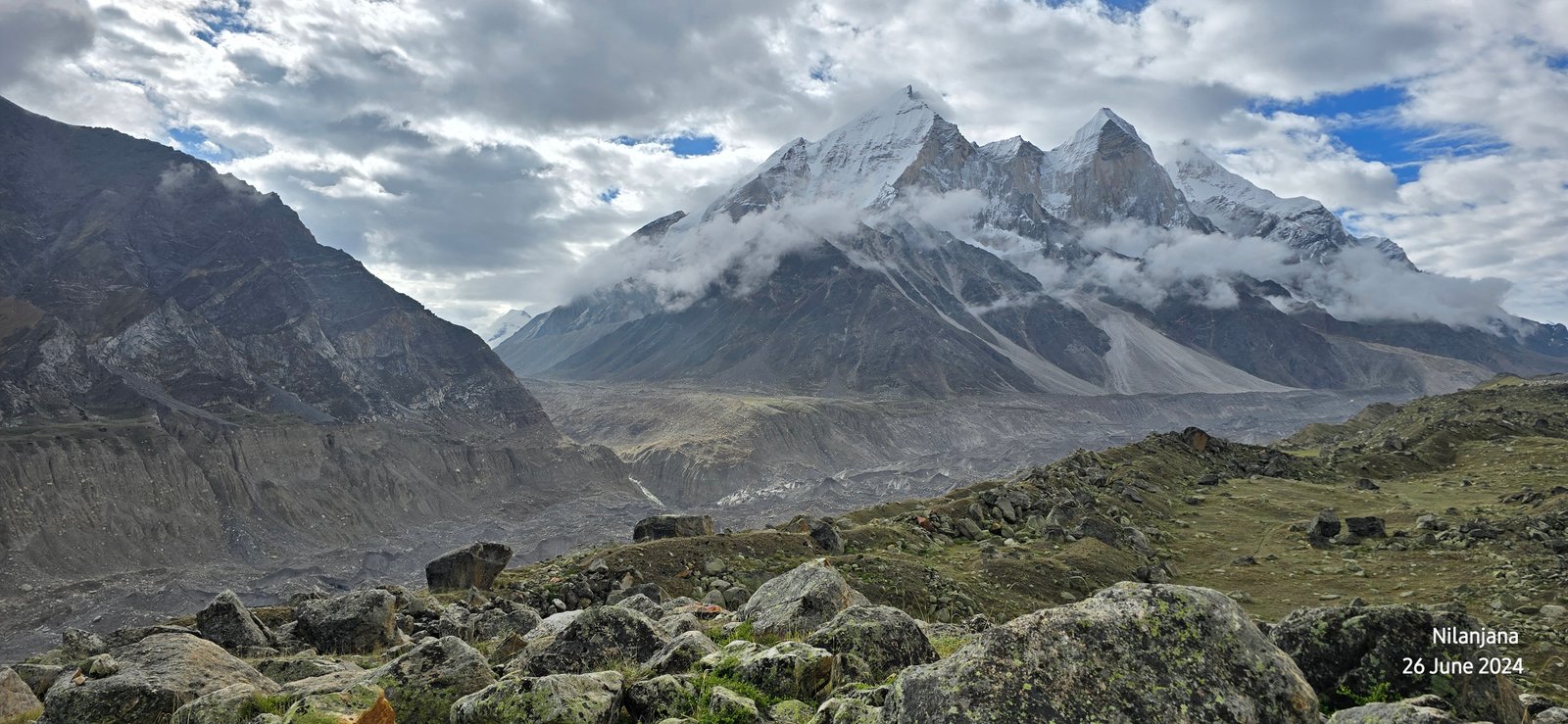


Gaumukh is a sacred site located in the Gangotri National Park is a national park in Uttarkashi District in Uttarakhand state of India, Gaumukh Altitude is 13,452 ft covering about 2,390 kms (920 sq mi) in the Garhwal Himalayas. The name “Gaumukh” translates to “cow’s mouth” in Hindi, and it is named so because the shape of the glacier’s terminus resembles the mouth of a cow. The Gaumukh Trek is one of the most revered and scenic treks in India, leading adventurers to the source of the sacred River Ganga in the Uttarakhand region of the Himalayas.
Here’s an overview of what to expect on this incredible journey.
The trek to Gaumukh Trek is one of the most spiritually and scenically rewarding routes in the Himalayas, often continuing further to Tapovan, Nandanvan, or Vasuki Tal. Kalindi Pass, many more trekking route
Beautiful Campsite During the Gaumukh Trek
One of the most memorable aspects of the Gaumukh Trek is its breathtaking high-altitude campsites, where trekkers rest amid dramatic mountain scenery. Among these, Bhojbasa stands out as the most picturesque and important campsite on the route.
Bhojbasa – The Iconic Campsite
Location: Bhojbasa is situated at an elevation of around 3,800 meters (12,500 feet) above sea level, offering trekkers breathtaking views of the surrounding Himalayan peaks. The campsite is nestled along the banks of the roaring Bhagirathi River, providing a serene and tranquil setting amidst the rugged wilderness.
Gaumukh Glacier: Bhojbasa servesas a midway point between Gangotri and Gaumukh, making it an ideal spot to rest and acclimatize before continuing the trek to the source of the Ganges. From Bhojbasa, trekkers can catch glimpses of the towering peaks and glaciers that lead up to Gaumukh.
Sunrise and Sunset Views: One of the highlights of camping at Bhojbasa is the opportunity to witness spectacular sunrise and sunset views over the Himalayas. As the first light of dawn illuminates the snow-covered peaks, and the last rays of sunlight paint the sky in hues of orange and pink, trekkers are treated to a mesmerizing display of nature’s beauty.
Scenic Beauty: The campsite offers stunning views of nearby peaks and glaciers. Sunrise and sunset at Bhojbasa are particularly mesmerizing, as golden and pink hues illuminate snow-clad summits and the vast glacial valley.
Spiritual Atmosphere: Many yatris and trekkers chant mantras, meditate, or perform Ganga Aarti near Bhojbasa, adding a deeply spiritual dimension to the journey.
Gaumukh Trek Geography and Detailed Route Information
- Starting Point: Gangotri town – 3,100 meters
- Destination: Gaumukh Glacier – 13,452 feet (4,100 meters)
- Trek Distance: Approximately 18 km (one way) from Gangotri to Gaumukh
The trail follows the Bhagirathi River valley, passing through rocky moraines, glacial plains, and stark Himalayan terrain. The region was first mapped by British surveyors in the 19th century, highlighting its historical and geographical significance.
Beyond geography, the Gaumukh region has long been a haven for spiritual seekers. Swami Tapovan Maharaj and Swami Sundaranand, renowned Himalayan sages, spent decades practicing yoga sadhana and deep meditation in and around Gangotri, Bhojbasa, and Gaumukh. Their legacy continues to shape the spiritual aura of the trek.
The route is also dotted with ashrams and hermitages, where saints once lived in isolation, devoted to spiritual practice. This unique blend of sacred mythology, Himalayan geography, and raw adventure makes the Gaumukh Trek a transformative journey—both physically and spiritually.
About Gangotri Dham – The Sacred Origin of the River Ganga
Gangotri Dham Temple is located in the Uttarkashi district of Uttarakhand, India, and is one of the four revered Char Dham of Uttarakhand, along with Yamunotri, Kedarnath, and Badrinath. Nestled at an altitude of around 3,100 meters, the temple stands on the banks of the Bhagirathi River, surrounded by majestic Himalayan peaks and pristine alpine landscapes.
The Gangotri Temple is dedicated to Goddess Ganga, who is worshipped as the divine mother and the ultimate purifier of sins. Although the physical source of the River Ganga lies further ahead at Gaumukh Glacier, Gangotri Dham is traditionally regarded as the river’s spiritual origin. It is believed that Goddess Ganga first descended to Earth at this sacred spot, making it one of the most important pilgrimage destinations in Hinduism.
The present temple structure was built in the early 18th century by Amar Singh Thapa, a Gorkha commander, and showcases simple yet elegant Himalayan stone architecture. Every year, thousands of devotees visit Gangotri during the Char Dham Yatra season to seek blessings, perform rituals, and take a holy dip in the icy waters of the Bhagirathi River.
Legend of King Bhagirath and the Descent of Ganga
According to Hindu mythology, the descent of the River Ganga to Earth is deeply connected with King Bhagirath, an ancestor of King Sagar. It is believed that the sons of King Sagar were reduced to ashes due to a curse, and their souls could attain salvation only if the sacred waters of Ganga touched them. Through years of intense penance and devotion, King Bhagirath pleased Lord Brahma and Goddess Ganga, convincing her to descend from the heavens to Earth.
However, the immense force of Ganga’s descent threatened to destroy the planet. To control her powerful flow, Lord Shiva trapped the river in his matted locks and gently released her onto Earth. The river then followed King Bhagirath to the plains, ultimately liberating the souls of King Sagar’s sons. This divine event is believed to have taken place near Gangotri, giving the region immense religious and mythological importance.
Today, Gangotri Dham not only serves as a sacred pilgrimage site but also acts as the starting point for the Gaumukh Trek, attracting trekkers, spiritual seekers, and nature lovers alike. The blend of mythology, history, and breathtaking Himalayan beauty makes Gangotri Dham a deeply transformative destination before beginning the journey toward the true glacial source of the River Ganga.
Historical View and Spiritual Importance of Gangotri Dham Temple
The Gangotri Temple stands at an elevation of about 3,100 meters (10,200 feet) in the Garhwal Himalayas and is one of the most sacred shrines dedicated to Goddess Ganga. Built from white granite stone, the temple reflects classic Himalayan architecture—simple, resilient, and perfectly adapted to the harsh mountain climate. The present structure dates back to the early 18th century and is believed to have been constructed or significantly renovated by Gorkha General Amar Singh Thapa, who served under the Kingdom of Nepal.
During the period of Gorkha expansion (1768–1815), large parts of present-day Uttarakhand, including Gangotri, came under Nepalese rule for a short time. The Gorkhas were deeply spiritual and held immense reverence for the River Ganga. To preserve and honor sacred pilgrimage routes, they constructed and restored several important Himalayan temples, with Gangotri being one of the most prominent. Their contribution helped protect the religious significance of the region and ensured continued access for pilgrims.
Spiritually, Gangotri Dham holds a unique place in Hindu belief. While the physical source of the River Ganga lies at Gaumukh Glacier, Gangotri is considered the river’s divine and ceremonial origin. It is believed that Goddess Ganga accepted Lord Shiva’s guidance and first manifested here in a calmer, benevolent form before flowing down to the plains as the Bhagirathi and eventually the Ganga.
The temple follows a strict seasonal worship cycle due to extreme winter conditions. It opens every year on Akshaya Tritiya (April–May), marking the beginning of the Char Dham Yatra, and closes on Diwali (October–November). During winter, when heavy snowfall cuts off access, the idol of Goddess Ganga is ceremonially moved to Mukhba village, where worship continues until the temple reopens in summer.
Beyond its religious role, Gangotri Dham also serves as a spiritual gateway to the Gaumukh Trek, drawing pilgrims, trekkers, and seekers alike. The temple symbolizes faith, endurance, and the timeless connection between nature and divinity. Standing at Gangotri, surrounded by towering peaks and the flowing Bhagirathi, visitors experience a rare blend of history, mythology, and profound spiritual calm—making it one of the most meaningful sacred destinations in the Himalayas.
The Curse of Raja Sagar Dynasty: A Mythological Perspective
According to ancient Hindu scriptures—most notably the Ramayana and various Puranas, including the Padma Purana and Bhagavata Purana — the origin of the River Ganga on Earth is deeply connected with the tragic fate of King Sagar’s dynasty.
King Sagar, a powerful ruler and an ancestor of Lord Rama, performed the sacred Ashwamedha Yagna (Horse Sacrifice) to establish his sovereignty over the land. As per tradition, the ceremonial horse was allowed to roam freely, and any kingdom that stopped it was considered conquered. However, Lord Indra, the king of the heavens, feared that Sagar’s growing power might challenge his authority. To disrupt the ritual, Indra secretly stole the sacrificial horse and hid it near the hermitage of Sage Kapila in Patala Loka (the netherworld).
When the horse failed to return, King Sagar sent his 60,000 sons to search for it. After an exhaustive quest, they discovered the horse near Sage Kapila’s ashram. Mistaking the sage for the thief, they disturbed his deep meditation. Enraged by the interruption, Sage Kapila opened his eyes and, through his divine power, reduced all 60,000 princes to ashes. As a result of this curse, their souls were denied liberation and wandered restlessly, unable to attain salvation.
Bhagirath’s Austerities and the Descent of Ganga
Generations later, King Bhagirath, the great-grandson of King Sagar, resolved to free the trapped souls of his ancestors. He undertook intense penance (deep tapasya) for many years to please Goddess Ganga and request her descent from the heavens to Earth. Moved by his devotion, Ganga agreed—but warned that her immense force could destroy the Earth upon landing.
To prevent catastrophe, Bhagirath prayed to Lord Shiva, who promised to control Ganga’s powerful descent. When Ganga finally descended from heaven, Lord Shiva captured her turbulent waters in his matted locks (jata) and gently released her in controlled streams. One of these sacred streams flowed through the Himalayas as the Bhagirathi River, emerging near Gangotri.
With Ganga’s waters finally touching the ashes of King Sagar’s sons, their souls attained moksha (liberation). This divine event is known as “Bhagirath’s Tapasya”, symbolizing unwavering devotion and selfless sacrifice. It is from this legend that the phrase “Bhagirathi” originates, honoring King Bhagirath’s role in bringing the sacred river to Earth.
This powerful mythological narrative not only explains the spiritual origin of the River Ganga but also establishes Gangotri and Gaumukh as sacred landscapes where faith, devotion, and divine intervention converge—making the region central to both Hindu belief and the spiritual journey of the Gaumukh Trek.
Gaumukh Trek Complete Guide
Our mission has always been to ensure that no trekker steps into the Himalayas without the right perspective. A trek is not just a checklist of summits; it is a serious commitment to the outdoors. Having the right information is what separates a reckless climb from a soulful journey.
This section serves as your definitive manual for the Gaumukh Trek. We have distilled years of mountain experience and real-time feedback into this guide to give you a clear, honest picture of the trail.
We provide this depth of information because we want you to be more than just a visitor—we want you to be a prepared, responsible trekker who respects the mountains as much as we do.
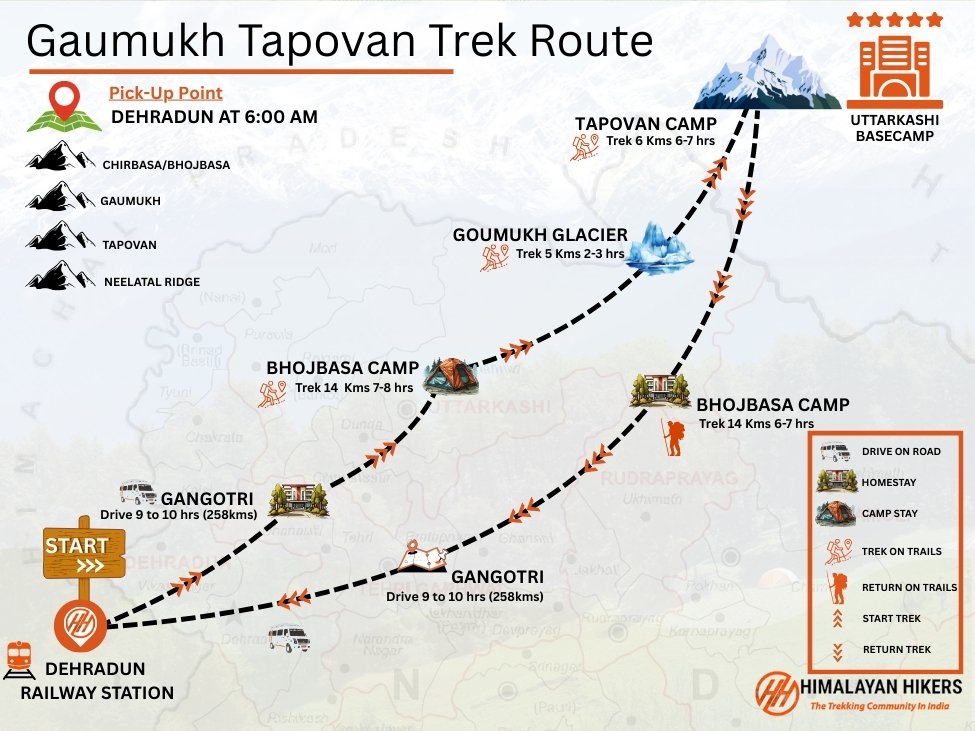
Day 1: Pickup to you from Dehradun and Drive to Gangotri
Total Drive Distance: 258 kms (9/10 Hours) - (3415m) - (10,050 ft) | Overnight stay Hotel.
Mode of journey: By Tempo Traveller 13+D or Taxi
Day 2: Trek from Gangotri to Bhojbasa Camp
Total Drive Distance: 14 kms (7/8 Hours) - (3775 m) - (12,415 ft) | Overnight stay Camp Twin Sharing.
Mode of journey: On foot
Day 3: Trek from Bhojbasa camp to Goumukh Glacier
Altitude: 13452 ft Total Drive Distance: 08 kms (6/7 Hours) Then Back to Bhojbasa Camp | Overnight stay Camp.
Mode of journey: On foot
Day 4: Trek from Bhojbasa Camp to Gangotri
Total Drive Distance: 14 kms (6/7 Hours) - (3415 Meter) | Overnight stay Hotel.
Mode of journey: On foot
Day 5: Drive from Gangotri to Dehradun
Total Drive Distance: 258 km (10/ 11 Hours).
Mode of journey: By Tempo Traveller 13+D Taxi
Day 1
Day 2
Day 3
Day 4
Day 5
Day 1: Pickup to you from Dehradun Railway Station 6:30 am – Drive to Gangotri Overnight Stay Hotel Mandakini Palace
Himalayan Hikers Provide You Transport from Dehradun to Gangotri Traveling from Dehradun Railway Station to Gangotri via Mussoorie, Chinyali sour Uttarkashi, Bhatwari, Gangnani, Harshil, To Gangotri Dham.
Dehradun Railway Station: Your journey starts at Dehradun Railway Station, which is located in the heart of the city.
View or Route
Drive through Dehradun to Mussoorie: From Dehradun Railway Station, you’ll head towards Mussoorie, a popular hill station in Uttarakhand. You’ll drive through the city of Dehradun, passing by landmarks such as Clock Tower and Rajpur Road before ascending towards Mussoorie.
The Mussoorie: You’ll reach Mussoorie, suwakholi, Via Almas Village route known for its scenic beauty and colonial charm. mountain range take breakfast break continue your journey towards Gangotri. The route from Mussoorie to Gangotri takes you through picturesque mountain roads, offering breathtaking views of the Himalayas and the surrounding valleys.
Uttarkashi: En route to Gangotri, you’ll pass through the town of Uttarkashi, which serves as a major stopover for travelers heading to Gangotri. Uttarkashi is known for its temples, including the Vishwanath Temple and Shakti Temple.
Gangotri: Finally, you’ll arrive at Gangotri, via Harshil the holy town nestled in the Garhwal Himalayas. Gangotri is famous for its temple dedicated to Goddess Ganga and serves as the base camp for the Gaumukh Trek. You’ll check into your hotel in Gangotri for an overnight stay.
Please note that the journey from Dehradun to Gangotri via Mussoorie is approximately 270 kilometers and takes around 9//10 hours by road, depending on road conditions and traffic.
Day 2: Trek from Gangotri to Bhojbasa (12,761 fit); 7/8 hours, 14 km. Overnight Stay Camp
Today after breakfast start from Gangotri to Bhojbasa, covering a distance of 14 kilometers.
Starting Point Gangotri (Altitude - 10,055 feet)
Your trek begins from Gangotri, a sacred town in the Uttarkashi district of Uttarakhand, which serves as the gateway to the Gaumukh Trek.
Gangotri is known for its revered Gangotri Temple, dedicated to Goddess Ganga, and its stunning views of the surrounding Himalayan peaks.
The trail from Gangotri to Bhojbasa Via Chirbasa follows the banks of the Bhagirathi River, offering picturesque views of the river and the surrounding mountains.
The trek starts with a gradual ascent through forests of pine and deodar trees, with occasional steep sections.
As you gain altitude, you’ll pass through scenic meadows and rocky terrain, with views of the snow-capped peaks in the distance.
Along the way, you may encounter small streams, waterfalls, and wildlife such as Himalayan birds and mountain goats.
View Check Post:
About halfway through the trek, you’ll come across a view check post where trekkers are required to register their details with the forest department.
The view check post also serves as a resting point where you can take a break, enjoy the scenery, and refuel with snacks and water.
The trail from Chirbasa to Bhojbasa continues along the banks of the Bhagirathi River, gradually gaining altitude.
The trek offers stunning views of the Bhagirathi peaks and the surrounding glaciers as you ascend higher into the Himalayas.
The terrain consists of rocky paths, moraines, and occasional streams, with sparse vegetation at higher altitudes.
Bhojbasa (Altitude - 12,761 feet)
Bhojbasa is the campsite where you’ll be spending the night. with Himalayan Hikers Beautiful Camp.
The campsite is located in a picturesque setting, surrounded by alpine meadows and with panoramic views of the Bhagirathi peaks.
Bhojbasa serves as a midway point on the Gaumukh Trek and offers a peaceful atmosphere for trekkers to rest and acclimatize before continuing their journey.
The trek from Gangotri to Bhojbasa is considered to be of moderate difficulty level.
While the distance is relatively short, the altitude gain and terrain can make it challenging for some trekkers. However, the trek offers breathtaking views of the Himalayan landscape, making it a rewarding experience for those who undertake it.
Day 3: Trek from Bhojbasa to Gomukh. Glacier 08 km (4/5 hours) Back to Camp after take bath and come back Bhojbasa Camp Overnight Stay at Camp
Trekking from Bhojbasa to Gaumukh Glacier is one of the highlights of the Gaumukh Trek, offering trekkers the chance to witness the source of the sacred River Ganga.
Starting Point Bhojbasa (Altitude- Approximately 12,761 feet)
After breakfast Your trek begins from Bhojbasa, the campsite where you spent the previous night. Bhojbasa offers panoramic views of the surrounding Himalayan peaks and serves as a midway point on the Gaumukh Trek.
Trekking Route:
The trail from Bhojbasa to Gaumukh follows a well-defined path along the banks of the Bhagirathi River.
The trek involves ascending gradually through rocky terrain and glacial moraines as you approach the Gaumukh Glacier.
Along the way, you’ll pass through alpine meadows and may encounter wildlife such as Himalayan birds and mountain goats.
The total distance from Bhojbasa to Gaumukh is approximately 4 kilometers, and it typically takes around 2 hours to reach Gaumukh, depending on the pace of the trekking group and trail conditions.
Gaumukh Glacier Altitude 13,452 feet
Gaumukh, also known as Gomukh, is the terminus of the Gangotri Glacier and the source of the River Ganga.The name “Gaumukh” translates to “cow’s mouth” in Hindi, as the shape of the glacier’s terminus resembles the mouth of a cow.
Gaumukh is a sacred site for Hindus and holds immense religious significance, attracting pilgrims and trekkers from around the world. The glacier itself is a vast expanse of ice and snow, with stunning views of the surrounding Himalayan peaks.
Upon reaching Gaumukh, you’ll have time to explore the area, take photographs, and soak in the breathtaking scenery.
After exploring Gaumukh and soaking in its beauty, you’ll trek back to Bhojbasa, retracing your steps along the same trail.
The trek from Bhojbasa to Gaumukh is considered to be of moderate level.
While the distance is relatively short, the altitude gain and terrain can make it challenging for some trekkers.
However, the trek offers breathtaking views of the Bhagirathi peaks, the glacier, and the surrounding Himalayan landscape, making it a rewarding experience for those who undertake it.
Day 4: Trek from Bhojbasa Camp to Gangotri (10,145 ft) 7/8 hours, 14 kms Overnight Stay Hotel at Gangotri
After breakfast trek Bhojbasa camp to Gangotri marks the final leg of the Gaumukh Trek, offering trekkers a chance to reflect on their journey through the stunning Himalayan landscape. Your trek begins from the campsite at Bhojbasa, where you spent the previous night.
Bhojbasa offers panoramic views of the surrounding mountains and serves as a tranquil resting place for trekkers.The trail from Bhojbasa to Gangotri retraces your steps along the same route you took on your way to Gaumukh Glacier.
Descend gradually through rocky terrain and glacial moraines, following the path along the banks of the Bhagirathi River.
The trek involves navigating through alpine meadows and forests of pine and deodar trees as you make your way back towards Gangotri.
The total distance from Bhojbasa to Gangotri is approximately 14 kilometers, and it typically takes around 6 to 7 hours to complete the trek, depending on the pace of the trekking group and trail conditions.
Upon reaching Gangotri, you’ll be greeted by the familiar sights of the sacred town nestled in the Garhwal Himalayas.
Gangotri is known for its revered Gangotri Temple, dedicated to Goddess Ganga, and serves as the starting point of the Gaumukh Trek.
After completing the trek, you’ll check in your hotel in Gangotri for an overnight stay
Today Trek Level
The trek from Bhojbasa to Gangotri involves a significant descent in altitude, which can be taxing on the knees and joints.
While the distance is longer than previous days, the descent makes it slightly easier in terms of physical exertion.
Trekking downhill can be modarate for some trekkers, so it’s essential to pace yourself and take breaks as needed.
Day 5: After breakfast Drive from Gangotri to Dehradun. You will reach Dehradun between 7.00 PM to 8:00 PM
Morning in Gangotri
Start your day early in Gangotri and have breakfast at your hotel.
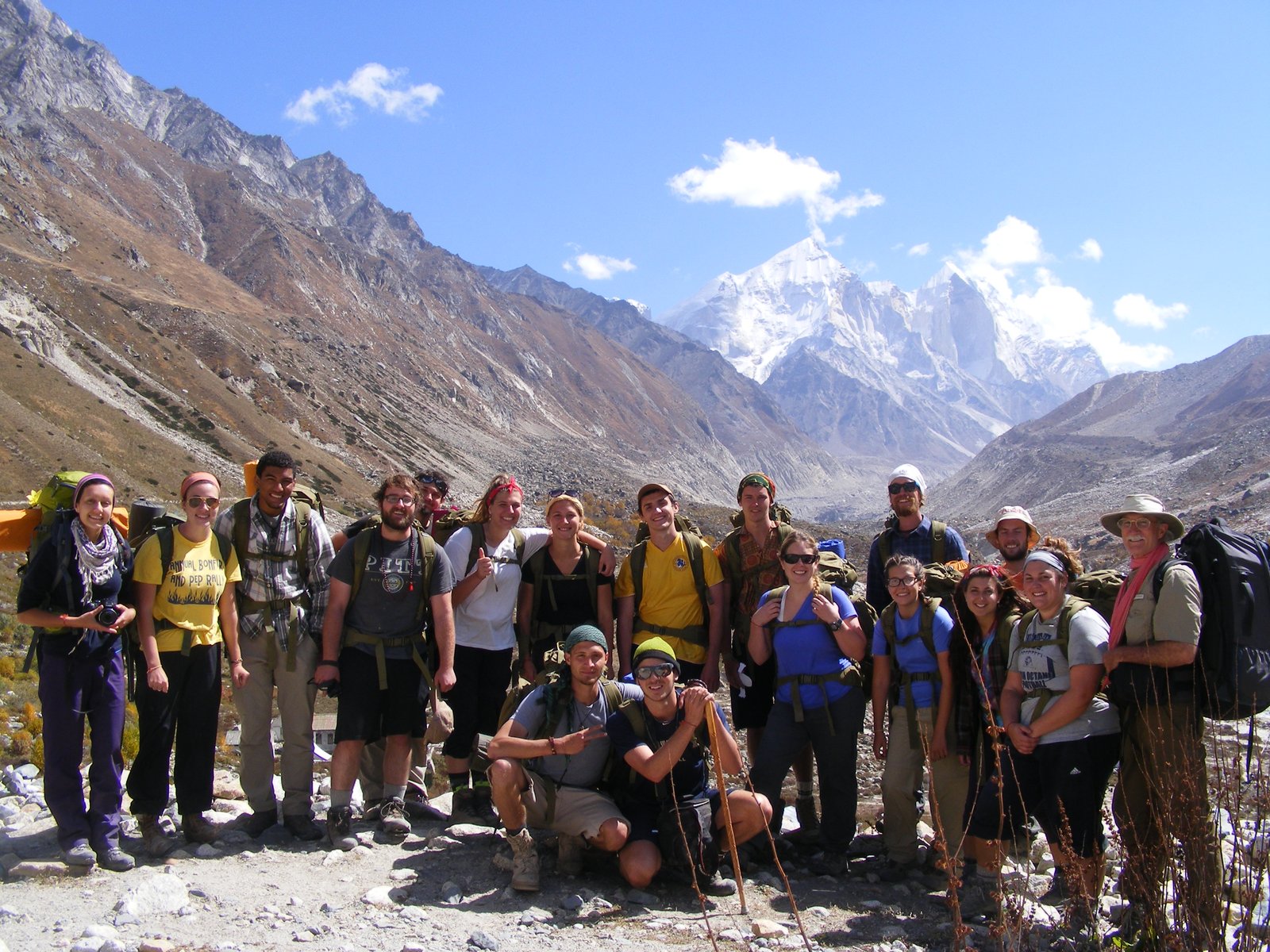
Take last photo with your Himalayan Hikers Team with Your Group some time to explore Gangotri and visit the Gangotri Temple if you haven’t already done so.
Pack your belongings and check out from your hotel, ensuring you have everything you need for the journey back to Dehradun.
Departure from Gangotri
Leave Gangotri by road early in the morning to allow ample time for the journey back to Dehradun.The drive from Gangotri to Dehradun takes approximately 10-12 hours, covering a distance of around 270 kilometers.
The road from Gangotri to Dehradun passes through picturesque landscapes, including mountain valleys, rivers, and forests.
Plan for occasional rest stops and meal breaks along the route to stretch your legs and refuel.
You may consider stopping in Uttarkashi or other towns along the way for lunch or snacks.
Arrival in Dehradun
Depending on road conditions and traffic, you should aim to reach Dehradun between 7:00 pm to 8:00 pm in the evening.
Once you arrive in Dehradun, check into your accommodation for the night and relax after a long day of travel.
You can explore Dehradun in the evening, enjoy a delicious dinner at a local restaurant, or simply unwind and rest after your journey. Thanks for join Team Himalayan Hikers.
The Gangotri Gaumukh Trek is generally classified moderate Trek in terms of difficulty. can vary depending on various factors such as altitude, terrain, weather conditions, and individual fitness levels. the difficulty level and altitude of key points along the Gaumukh Trek, including Chirbasa and Bhojbasa.
Bhojbasa: Bhojbasa is the 01 campsite along the Gaumukh Trek, situated at an altitude 3,800 meters (12,500 feet) above sea level. The trek from Chirbasa to Bhojbasa is relatively short, covering a distance of around 14 kilometers (approximately 7/8 hours ). However, the altitude gain and terrain become more challenging as trekkers ascend higher into the Himalayas.
The trail follows the banks of the Bhagirathi River, with rocky terrain and occasional moraines. Trekkers may experience a moderate to strenuous level of difficulty due to the altitude and terrain, especially if they haven’t acclimatized properly.
Gaumukh trek safe for beginner trekkers?
Yes this is beat trek for beginner trekkers The Gaumukh Trek can be suitable for individuals within a wide age range, including children as young as 10 years old and adults up to the age of 60 and above, provided they are in good health, have a reasonable level of fitness, and take necessary precautions.
Here’s some information about the safety considerations, route, and location of the Gaumukh Trek.
Safety Considerations:
Health and Fitness: It’s essential for all trekkers, regardless of age, to be in good health and have a reasonable level of fitness to undertake the Gaumukh Trek. The trek involves walking for several days at high altitudes, which can be physically demanding.
Proper acclimatization is crucial, especially for older adults and children, to prevent altitude-related illnesses such as altitude sickness. It’s recommended to ascend gradually, stay hydrated, and listen to your body’s signals.
Weather Conditions: Weather in the Himalayas can be unpredictable, with sudden changes in temperature and the possibility of rain or snow. It’s essential to pack appropriate clothing and gear for varying weather conditions.
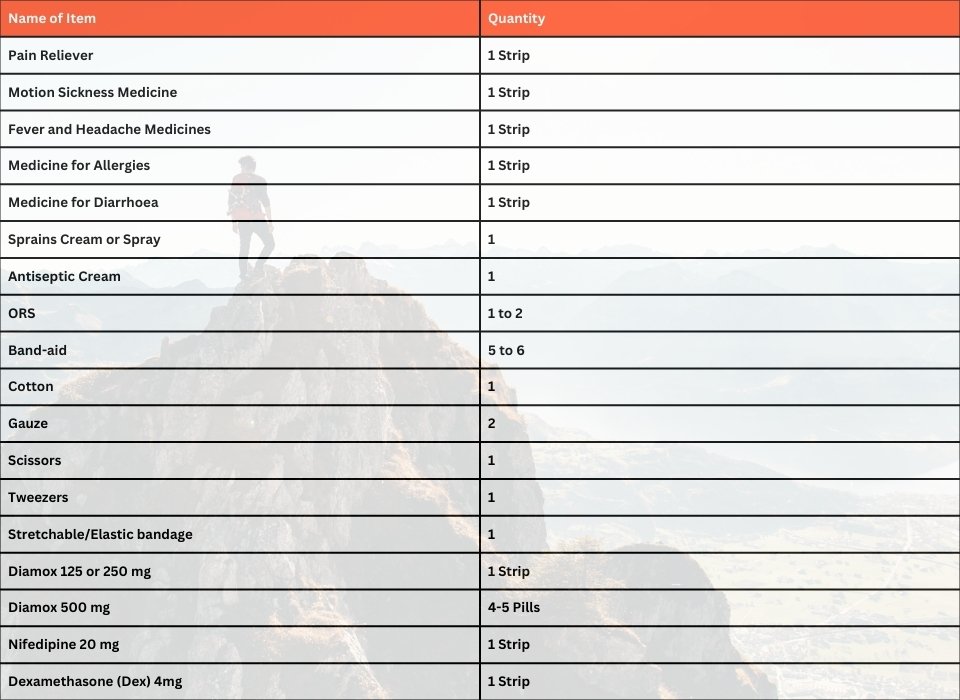
Medical Considerations: Trekkers of all ages should consult with a healthcare professional before undertaking the trek, especially those with pre-existing medical conditions. It’s advisable to carry necessary medications and a basic first-aid kit.
Route and Location:
The Gaumukh Trek starts from Gangotri, a small town in Uttarakhand, India. Gangotri is accessible by road from major cities like Dehradun and Rishikesh.
Trekking Route: From Gangotri, trekkers follow a well-defined trail that passes through scenic landscapes, including forests, meadows, and glacial moraines. The route takes trekkers to key waypoints such as Chirbasa, Bhojbasa, and ultimately Gaumukh, the source of the River Ganga.
Duration: The trek usually takes around 04 nights -5 days to complete, covering a distance of approximately 18 kilometers one way.
Gangotri Gaumukh Trek is a very beautiful and an uphill trek in the Uttarakhand Himalayas, The Gaumukh Trek is great for those people who have a great passion for mountaineering and consider it a special purpose in their life. Gaumukh is such a trek where you get to see more than one Himalayan Mountain range.
Himalayan Hikers are the local Trekking team in the Uttarakhand District of Uttarkashi who are doing this trek for years, we have every experience related to this trek.
The right time to do Gaumukh trek is from April 2st week to the last of June last and then from the September to the last month of November.
especially in the months of April, may, and June, snow is found in abundance here, which makes your trek very memorable and also a little difficult after Gaumukh Glacier. So this trek should not be considered too easy.
Gaumukh Trek month of April to June!
Gaumukh Trek Month in April and June gives a slightly different experience to Trekkers because in May you start getting snow bhojbasa Camp 01.
In April, May & June, you get a combination of both greenery and snow, which makes the trek very spectacular. The weather in April, May and June is quite good and Trek friendly, which makes trekking a lot of fun.
During the day the temperature of Gaumukh trek is around ( 5°C to 10 °C and during the night the temperature comes down to -1 °C to -5 °C.
Gaumukh Trek in September or November
Gaumukh trek is a little different in the months of September and Oct and Nov , this is because you will find snow only summit day. or Gaumukh Glacier.
But the beauty of the trek will not be lacking, the trek and nature adorn themselves with time and in different colors. Month of September and October and November are very good days.
Temperature of Gaumukh trek is around Day time 5°C to 12 °C and during the night the temperature comes down to 5 °C to – 1 °C which is very confirmable, At this time the weather here will be very good for you , At this time it is even safe to trek here and there is no rain.
How to reach dehradun for Gaumukh trek ?
To reach Dehradun for the Gaumukh Trek, you have several options depending on your starting point. Here’s how you can reach Dehradun, which serves as a gateway to the trek:
By Air
- Dehradun has its own airport called the Jolly Grant Airport (DED), which is located approximately 30 kilometers east of the city center.
- You can book a flight to Dehradun from major cities like Delhi, Mumbai, Bangalore, and Kolkata.
- From the airport, you can hire a taxi or use pre-paid taxi services to reach Dehradun city center or directly to Gangotri, the starting point of the Gaumukh Trek.
By Train
- Dehradun is well-connected by rail to various cities across India. The Dehradun Railway Station (DDN) is located in the city center.
- You can book train tickets to Dehradun from major cities like Delhi, Mumbai, Kolkata, Chennai, and Bangalore.
- From the railway station, you can hire a taxi or use public transportation to reach your accommodation in Dehradun or directly to Gangotri for the Gaumukh Trek.
By Road
- Dehradun is well-connected by road to major cities and towns in North India. You can either drive your own vehicle or use bus services.
- Several state-run and private buses operate from cities like Delhi, Chandigarh, Haridwar, and Rishikesh to Dehradun.
- If you’re traveling from Delhi, you can take a bus from the Inter-State Bus Terminal (ISBT) in Delhi to reach Dehradun.
- From Dehradun, you can hire a taxi or use public transportation to reach Gangotri, the starting point of the Gaumukh Trek. The journey from Dehradun to Gangotri takes approximately 10-12 hours by road.

Necessary Items for trekkers
Mandatory Documents
Original and photocopy of government photo identity card- (Aadhar Card, Driving License, Voters ID, etc,)
Passport and Visa important to foreigners
Medical Certificate (First part should be filled by the Doctor and Second part by the Trekker)
Declaration Certificates
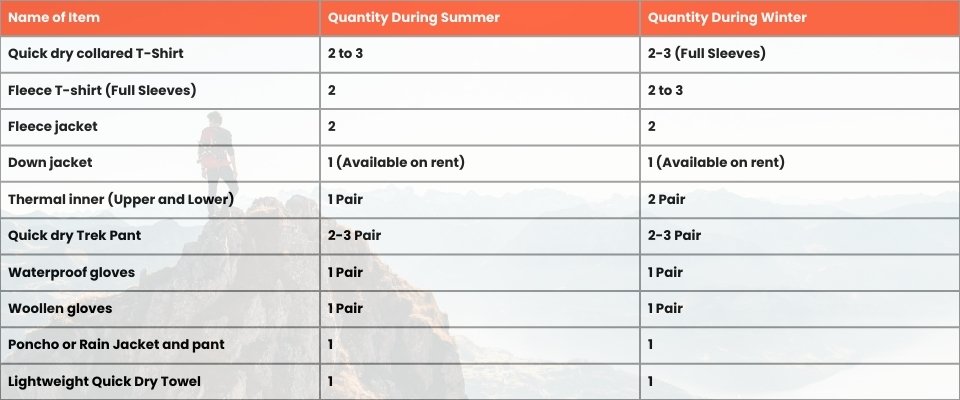
Note: – Many trekkers commit the same mistake of carrying unnecessary items on a trek which only makes the backpack heavy. It is important to know the right items to carry. It differs from season to season if you are trekking in summers then carry less layers of warm clothing and if you are trekking in winters carry enough layers to protect yourself against chilly cold.
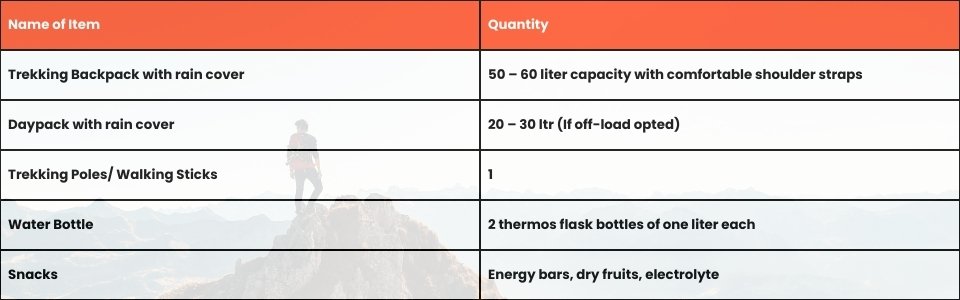
Basic Trekking Gears
The Clothes You Should Bring On Satopanth Expedition
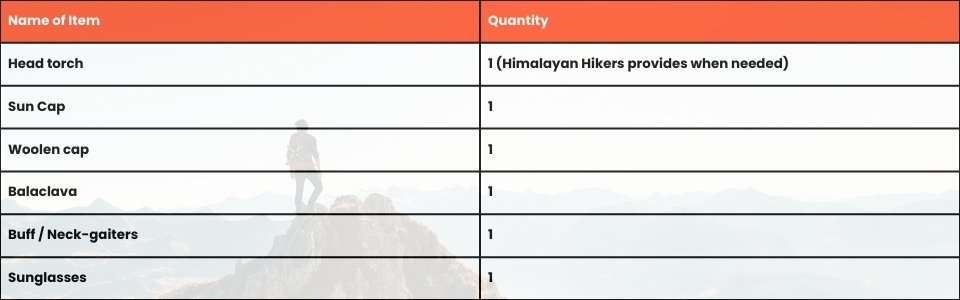
Head Gears
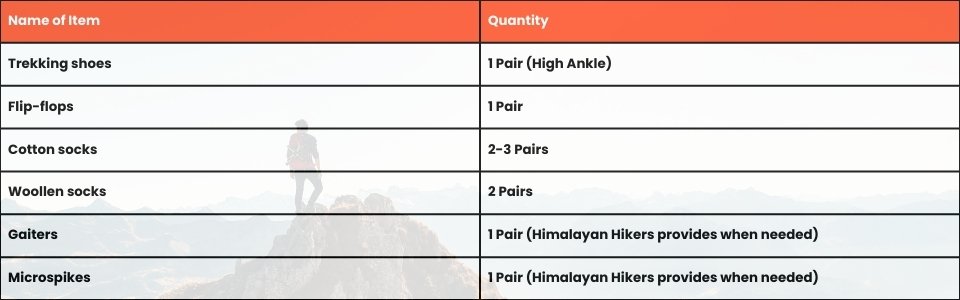
Foot Gears
Personal Care Essentials

Carry a Personal Medical Kit
Are you Looking for Trekking Equipment on Rent?
If any trekker requires trekking equipment on rent, Himalayan Hikers offers the best-quality gear available for rental. Many individuals are in need of such equipment, and renting provides a cost-effective solution, allowing them to access high-quality gear at an affordable price without the need for a significant investment for short-term use.
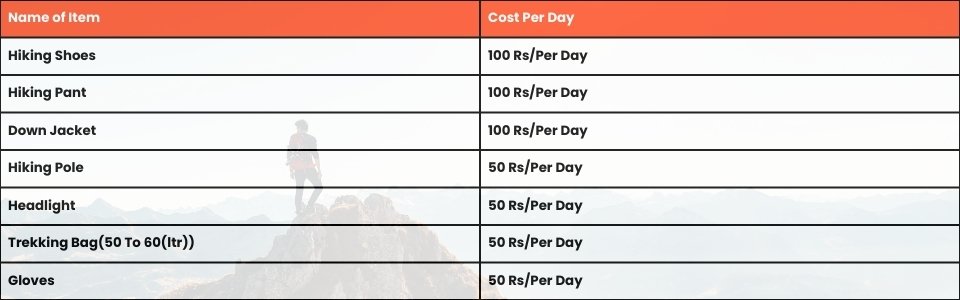
Trek Equipment You can book directly on first day at the Base Camp.
Note:-
Please take all medicines only when prescribed by the doctor. In case you face any problem during your trek,
discuss and take advice from the Professional guide.
The Trek is one of the most popular treks in Uttarakhand, Himachal,Kashmir,Laddakh,Sikkim,Nepal, requiring both physical preparation and mental readiness. Although it is categorized as a moderate trek, reaches an elevation of over 12,720 feet and traverses remote Himalayan terrain, which can be physically and mentally challenging. Here's how you can prepare yourself for a safe and successful accomplishment of the Trek:
Physical Fitness
Building a good fitness base is essential for every trekker. The Trek itinerary involves 5 to 6 hours of walking every day. Though the trails are well-marked, they are often bumpy and include steep uphill sections, which may affect your stamina. You can overcome your physical limitation with a 6-week training program that you can begin about 2 months before your Trek. Your 6-week fitness routine should include

Pro Tip: If you have time, you can skip the Sunday training and go for a long-distance walk or mini day-hike (7–10 km) with a loaded backpack to simulate real trekking conditions. A short 1-day hike around your city/town can help a lot.
Mental Preparation
Physical strength is only half the journey, the other half is mental resilience. The trail takes you through remote clearings, steep climbs, cold starry nights, and no mobile connectivity. Be prepared to:
(I) - Detach from the digital world.
(II) - Embrace basic mountain living (camping, toilet tents, limited electricity).
(III) - Push through moments of fatigue, weather discomfort, or altitude effects.
A positive mindset, patience, and the ability to adapt will carry you farther than muscle ever could.Himalayan Hikers is a reputable trekking company that places a high priority on safety. Here are some of the safety measures they take to ensure the safety of their clients during the Trek:
Experienced Guides: Himalayan Hikers hires experienced and certified guides who are well-versed in the terrain, weather conditions, and local culture. These guides have first-hand knowledge of the routes and are equipped to handle any emergency situations that may arise.
Proper Gear: The company provides all the necessary gear and equipment to their clients to ensure comfort and safety during the trek.
Hygiene and Sanitation: Himalayan Hikers places great emphasis on hygiene and sanitation during the Trek. They provide clean drinking water, hand sanitizers, and toilet tents to ensure that their clients are healthy and comfortable.
Emergency Services: The company has a well-defined protocol for handling emergency situations. They have a team of trained medical professionals who are available 24/7 and can be quickly mobilized in case of an emergency.
Acclimatization: Himalayan Hikers follows a gradual acclimatization process during treks to ensure that their clients adjust to the high altitude gradually. They also monitor the health of their clients regularly and provide necessary medical attention if required.
Overall, Himalayan Hikers places a great emphasis on safety and takes all necessary measures to ensure the safety and well-being of their clients during treks.
| Category | Details |
|---|---|
| Transport | Dehradun to Dehradun round-trip via Tempo Traveller (Pickup & Drop) |
| Permits & Entry | Forest Permit and Entrance Fees |
| Accommodation | Hotel, Tented Accommodation on Twin / Triple Sharing |
| Meals | Breakfast, Lunch, Tea, Coffee, Snacks, Soup, Dinner (All meals included) |
| Camping Gear | High-Quality Dome Tents, Sleeping Bags, Mattress, Liner |
| Sanitation Setup | Separate Toilet Tents (Ladies & Gents), Dining Tent, Dining Table, Camping Chair |
| Support Staff | Kitchen Team, Trek Helpers |
| Communication Tools | Radio Walkie-Talkie |
| Trek Guides | Experienced Trek Leader & Technical Guide |
| Safety Equipment | Medical Kit, Oxygen Cylinders, Pulse Oximeter |
| Trekking Equipment | Crampons, Gaiters, Helmate , Ice axe |
| Category | Details |
|---|---|
| Meals (Not Included) | – Day 1: En route Breakfast & Lunch to base camp– Day 5: En route Lunch & Dinner (not included) |
| Insurance & Documents | – Personal Insurance– Medical Certificate (Mandatory) |
| Personal Essentials | – Personal Toiletry Items– Personal Medical Kit |
| Porter Service | – Porter fee: ₹500 per day (to be paid directly at Gangotri base camp)– Minimum bag weight for porter: 8 kg |
| Foreign Nationals | – ₹1200 extra for trekking permit– Passport and valid Visa required |
Important Note
Himalayan Hikers offers both online and offline booking options for their treks. Here’s a breakdown of both options:
1. Online Booking:
- Website: Himalayan Hikers has an official website where trekkers can browse through different treks, check details (itineraries, costs, difficulty level, etc.), and make bookings. Payment gateways are integrated for secure online transactions.
- Third-Party Platforms: They might also be listed on various trekking or adventure booking platforms, where you can compare prices, read reviews, and make bookings.
- Email Communication: Trekkers can inquire about treks via email and complete the booking process online, following email communication and payment.
2. Offline Booking:
- Direct Office Visit: Himalayan Hikers has physical offices (especially in Uttarakhand), where trekkers can visit in person, discuss treks, and complete bookings directly.
- Phone Booking: You can also call their office to make a booking. Details about payment methods, trek dates, and other logistics can be confirmed over the phone.
Yes, Himalayan Hikers requires a 25% advance payment for booking treks, Via- Google pay or UPI, Directly Himalayan Hikers Account with the remaining amount to be paid in cash at their branch office in Gangotri before the trek starts. This payment structure is typical for ensuring that bookings are confirmed while allowing trekkers flexibility in completing the payment when they arrive.
Gaumukh is located in Uttarakhand, India, within the Gangotri National Park. It is the source of the River Ganga, emerging from the Gangotri Glacier near Mount Shivling.
The trek usually starts from Gangotri, which is accessible by road from Uttarkashi.
The trek from Gangotri to Gaumukh is approximately 18 km one way. Many trekkers extend it to Tapovan, making the total distance about 46 km round trip.
The Gaumukh Trek is considered moderate. It is suitable for fit beginners with some prior trekking experience.
The best time is:
- May to June (spring–early summer)
- September to October (post-monsoon)
Yes. A permit from the Uttarakhand Forest Department is mandatory as the trek lies within Gangotri National Park. Permits can be obtained online or at the forest office in Uttarkashi/Gangotri.
Yes. Only 150 trekkers per day are allowed beyond Gangotri towards Gaumukh to help conserve the fragile ecosystem.
Gaumukh is located at an altitude of approximately 4,000 meters (13,200 feet) above sea level.
- Gangotri to Gaumukh and back: 2–3 days
- Gangotri–Gaumukh–Tapovan–Gangotri: 4–6 days
- Gangotri: Guesthouses, lodges, and ashrams
- On the trail: Basic forest rest houses and campsites (no hotels beyond Gangotri)


.webp)


