
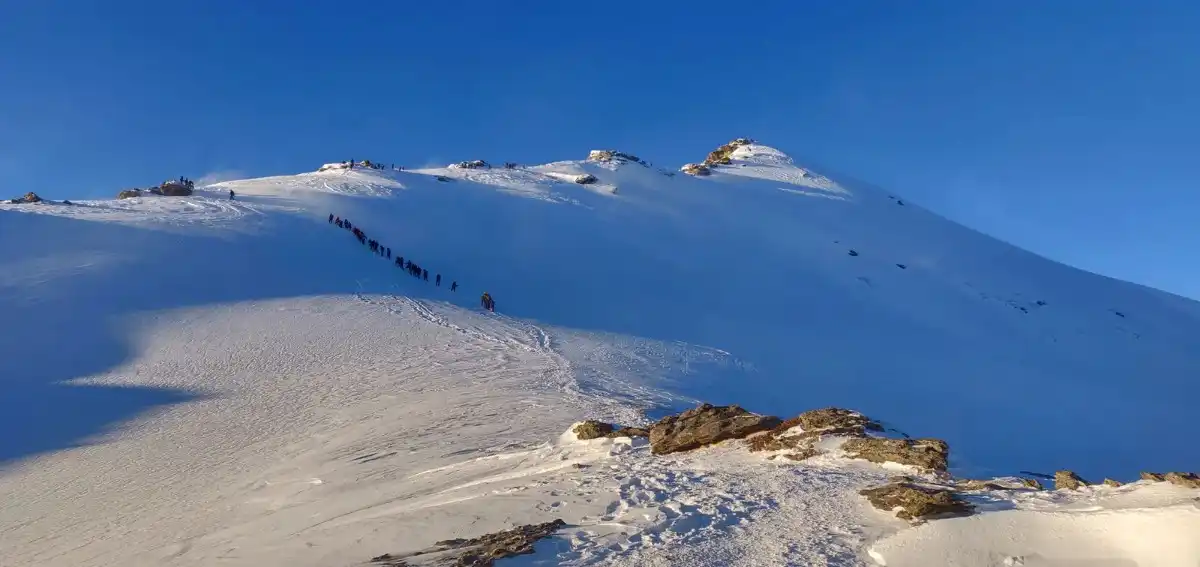


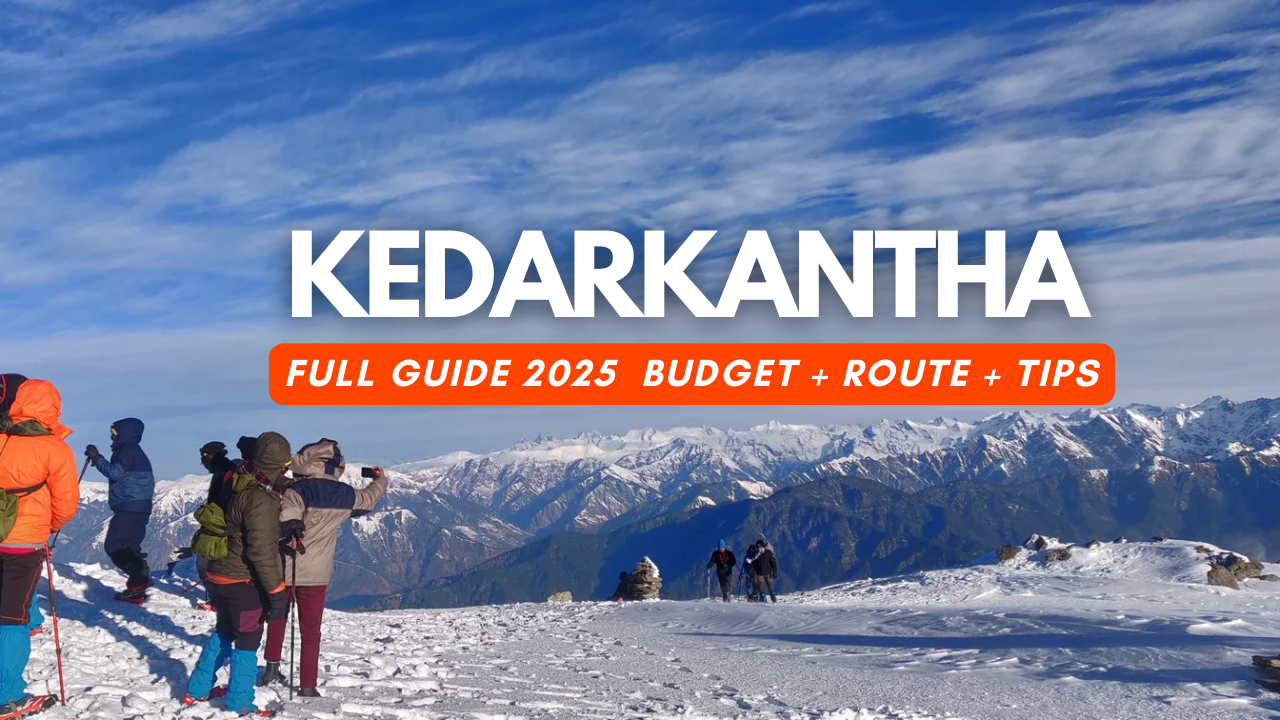
Kedarkantha is a specific mountain peak rather than a town or state, it doesn't have an officially designated individual "area" in square kilometers. However, it is part of the massive Govind Wildlife Sanctuary, which spans an area of about 958 square kilometers
Often crowned the "Queen of Winter Treks," the Kedarkantha Trek is an unparalleled blend of thrilling adventure and breathtaking Himalayan landscapes. If you are looking to experience the true magic of the mountains covered in a thick blanket of pristine white snow, this trek—proudly curated by Himalayan Hikers—is your perfect calling.
The Perfect Beginner’s Playground: While it offers the dramatic thrills of a high-altitude expedition, its gradual slopes make it the perfect opportunity for beginner trekkers to safely experience the magic of snow-clad trails.
A Visual Masterpiece: Wander through dense, snow-dusted pine forests, wide frozen meadows, and witness some of the most spectacular sunrise and sunset views in the entire Indian Himalayas.
Kedarkantha Trek – Best Winter Snow Trek for Beginners ?
The true Beauty of the Kedarkantha Winter Trek unfolds during the snowy season when the entire landscape transforms into a pristine white wonderland. Trekking through snow-laden trails, you’ll be greeted by majestic views of towering peaks like Swargarohini I,II,III Peak, Bandarpoonch Peak, and Kalanag Peak. As night falls, the magic intensifies, offering the unforgettable experience of camping under a dazzling moonlit sky, where the serenity of the Himalayas will leave you spellbound. This winter adventure is a perfect escape into nature’s untouched splendor.
Discover The Cultural Heritage of Kedarkantha Trek
The Kedarkantha Winter Trek isn’t just an adventure through snow-clad trails; it’s a journey steeped in cultural heritage. The trek passes through quaint Himalayan villages Sour, Sankri, where you can witness traditional wooden architecture, local festivals, and the warm hospitality of the Garhwali community. At the Kedarkantha summit, trekkers can find a small temple dedicated to Lord Shiva and Ganesh, on June 15 every year a fair takes place here in which all the local people of this valley takes part and worship Shiva and Ganesh, which is spoken in local language as Meru Bagwan! . According to the legend, Lord Shiva had visited the place with his wife Parvati and made it their temporary home.
3, Things We Love About the Kedarkantha Peak
Traditional village SOUR: This village is bedrock of Kedarkantha trek. It is a small village nestled among mountains at an altitude of 1,950 meters. The village is centered around the temple of local deity Someshwar Mahadev temple with beautiful wooden carving and sculptures showcasing local arts and cultures. Your first and last day stay in sour and sankri gives you an opportunity to explore village their lifestyle, clothing, local food, festivals, terrace farming, Apple orchards and Koti Banal Houses.
Pristine Forests and beautiful Meadows: The forest stretch from village sour to Juda ka talab is most beautiful forest stretch with diverse flora and fauna. Forest is bridged by beautiful meadows which becomes winter wonderland when snow covers them and turn into picturesque location. The trail is lined with dense forests of Pine, Rhododendron, Oak, Deodar trees and various wildflowers and medicinal plant. Fauna includes Himalayan Monal, Himalayan Woodpecker, Langurs, Red Fox and Black Eagle etc. In winter this forest turns into magical wonderland every tree wraps itself in layer of snow glittering when rays of sun fall on it, giving a magical wonderland effect. Trekking through this magical wonderland is a memory for life time to hold and share.
Kedarkantha Summit and sunrise view: when something comes after a struggle it always feels magical something like this is true with Kedarkantha sunrise. Sunrise comes after a hard climb throughout in the dark and when first ray of sun hits you its feel is very special and Magical and moment to remember throughout your life. Sunrise makes your every step throughout the trek worth it. Kedarkantha sunrise is one of the most beautiful stunning and magnificent. The summit gives you 360-degree view. Reaching the summit gives you an immense sense of accomplishment that few other trek offers.
3 Special Campsites on the Kedarkantha route Where you are Staying
1. Juda ka Talab Camp - 01
- Distance from Sankri to Juda ka Talab - 5 kms.
- Altitude:8,858 ft.
- Highlights: Frozen Lake in winter, dense pine forest, beautiful meadows.
Himalayan Hikers gives you the opportunity to camp near the special Juda Ka Talab Frozen Lake, which perhaps no one else can offer. This is our special camping, and surrounded by forest and the frozen lake underneath, spending the nights here is a special experience.
2. Kedarkantha Base Camp- 02
- Distance from Juda Ka Talab to Kedarkantha base Camp -3 kms
- Altitude:10,498 ft
- Highlights: Open meadows, clear views of Swargarohini, Bandarpoonch, Black Peak.
Our Kedarkantha Base Camp is a unique place from where you can see the open Himalayas. This beautiful camping experience can only be had with Himalayan Hikers. From here, wherever you look, you can see only beauty, and the special thing is that from here you can easily see Kedarkantha Peak, which is going to be a special moment of your next day.
3. Hargaon Camp -03
- Usually used during descent
- Distance from Kedarkantha Base Camp to Hargaon Camp - 4 kms
- Altitude:8,498 ft
- Highlights: Forested area, gradual slopes, great for night halt.
Many companies do not organize this camp and take you back in Juda ka talab after Kedarkantha summit, but Himalayan Hikers arranges a stay at a special camp called Hargaon which is a special Bugyal camp. This will be your last camping nights of this Kedarkantha trek.
Sankri Base Camp: Our Hometown & Your Gateway to Adventure
Experience Local Hospitality at Our Own Hotels Swargarohini & The Grand Shiva
Did you know? Sankri is not just a base camp for us—it is our hometown. As locals of Sankri and Saud villages, we at Himalayan Hikers offer a level of hospitality that only a native can provide. Known for the warmth of the Garhwali people, Sankri is the perfect place to immerse yourself in the rich cultural heritage of the Himalayas before you begin your trek.
Stay at Our Private Hotels in Sankri We ensure our trekkers have the most comfortable start to their journey. We own and operate Hotel Swargarohini and The Grand Shiva Homestay right at the base camp. Staying with us means:
- Comfort & Safety: Hot water, cozy rooms, and a secure environment.
- Local Expertise: Guidance from a team that knows every trail and weather pattern of this region.
The Soul of Sankri & Saud Villages Social & Cultural Connection: Experience the heartbeat of the mountains through community gatherings. Our guests often join villagers for traditional music, folk dance, and storytelling sessions.
- Authentic Local Cuisine: We serve nutritious, farm-to-table Pahadi meals. Energize your body with local favorites like Mandwa Roti, Hari Kafuli, Pahadi Potato Gutka, Rajma, and Red Rice—all sourced locally.
The Trekking Hub of Uttarakhand Sankri is the largest trekking base camp in Uttarakhand. It is the starting point for over 25 Himalayan expeditions. Apart from the famous Kedarkantha Winter Trek, it serves as the gateway to:
The Myth of the Incomplete Kedarnath Temple
As local guides born and raised in these mountains, Himalayan Hikers doesn't just show you the path to Kedarkantha—we share the soul of our home. Most guidebooks will tell you that Kedarkantha translates to "The Throat of Lord Shiva." But sitting around a campfire with our local elders in Sankri reveals a far richer, ancient legend whispered down through generations.
The Divine Search for Absolute Solitude
Long before the famous Kedarnath Temple was established deep in the Garhwal Himalayas, Lord Shiva wandered these towering ridges searching for supreme, undisturbed quiet (Vairagya). He sought a realm far removed from the clamor and attachments of mortal life.
When Shiva climbed to the summit of Kedarkantha, he found a pristine, wind-swept sanctuary high above the clouds. Captivated by its stillness, he sat down in profound meditation (Tapasya), intending to establish his permanent divine seat right here.
The Valley’s Echo & The Departed God
As our village elders tell it, while Shiva was immersed in deep trance, a sound echoed up from the lush valley below—the gentle lowing of a cow.
In Himalayan folklore, the call of a cow signifies human settlement, domestic life, and the ties of the earthly world. Realizing that human civilization was close by, Shiva knew this peak could no longer offer complete isolation. Breaking his meditation mid-way, Shiva left the peak unfinished and retreated deeper into the sanctuary of the high Himalayas, ultimately settling at what is now the sacred Kedarnath Temple.
The Local Perspective: Standing on Sacred Ground
When you reach the summit with our Himalayan Hikers team and stand beside the iconic Trishul (Trident) draped in prayer flags, you aren't just completing a trek—you are stepping into living history:
The Whispers of History: Local tradition holds that the summit carries the direct energy of Shiva’s presence before he departed, making the air here feel uniquely sacred.The "Incomplete" Temple: Because the deity left mid-meditation, our elders consider this peak the Incomplete Kedarnath—a holy sanctuary preserved in its raw, untouched, and wild beauty. A Pure Himalayan Connection: With our local guides by your side, standing amidst the panoramic views of Swargarohini, Bandarpoonch, and Black Peak becomes more than a photo opportunity—it becomes a quiet, soulful moment on ground chosen and blessed by the divine.
Kedarkantha Trek: Original Route vs. Alternate Trail
While alternate trails like Gaichawan Gaon or Kotgaon village both offer a glimpse into ancient Koti Banal architecture, Sankri remains the true, original, and undisputed starting point for the Kedarkantha Trek.
Why the Original Sankri Route is Unmatched: The Original & Authentic Trail: Sankri is the legendary base camp where the classic Kedarkantha journey begins. It provides the authentic standard trek experience that has charmed trekkers for decades.
Breathtaking Scenic Views: The trail from Sankri takes you through rich pine and oak forests, opening up to majestic, panoramic views of the Himalayan peaks right from the start.Enchanting High-Altitude Lakes: This route leads you past the famous Juda Ka Talab —a pristine high-altitude lake surrounded by dense woods, offering surreal water reflections and an unforgettable camping atmosphere.
Dense Forest Cover: You walk through lush, quiet forest stretches where the light filters through the canopy, creating a fairytale-like setting before you reach the open meadows and summit.
In Summary: Gaichawan Gaon offers a unique cultural perspective with its heritage architecture, but if you want the classic Kedarkantha experience—complete with iconic lakes, breathtaking ridge views, and picturesque forest trails—Sankri is the original and supreme route.
Kedarkantha Trek Complete Guide
Our mission has always been to ensure that no trekker steps into the Himalayas without the right perspective. A trek is not just a checklist of summits; it is a serious commitment to the outdoors. Having the right information is what separates a reckless climb from a soulful journey.
This section serves as your definitive manual for the Kedarkantha Trek. We have distilled years of mountain experience and real-time feedback into this guide to give you a clear, honest picture of the trail.
We provide this depth of information because we want you to be more than just a visitor—we want you to be a prepared, responsible trekker who respects the mountains as much as we do.
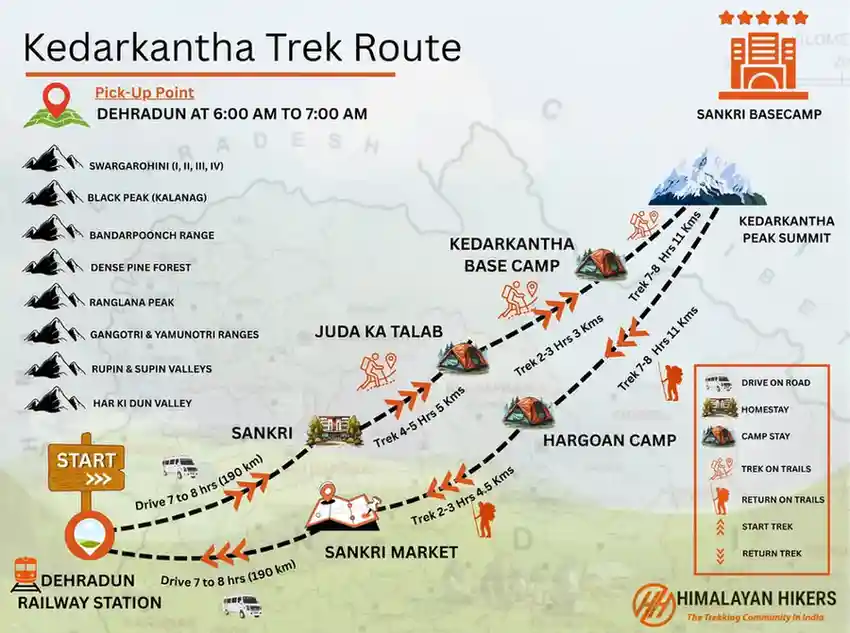
Day 1: Drive from -Dehradun to Sankri Basecamp
- Pickup: 7:00 AM at Dehradun Railway Station.
- Route: Drive via Mussoorie, Kempty Falls, Damta, Purola, and Mori. & Sankri
- Stats: 190 km drive | 8–9 hours. | Altitude: 6,309 ft.
- Stay: Overnight at Swargarohini Hotel or The Grand Shiva Hotel, Sankri.
Day 2: Trek from Sankri to Juda Ka Talab Camp 1
- Trek: Begin the ascent through dense pine forests.
- Stats: 5 km trek | 4–5 hours | Altitude: 8,858 ft.
- Stay: Overnight in lakeside camps (Twin/Triple sharing).
Day 3: Trek from Juda Ka Talab to Kedarkantha Base Camp 2
- Trek: A short but scenic climb offering views of snow-capped peaks.
- Stats: 3 km trek | 2–3 hours | Altitude: 10,498 ft.
- Stay: Overnight in base camp tents (Twin/Triple sharing).
Day 4: Trek from Kedarkantha base to Kedarkantha Summit 12500 ft | then back to Base Camp Or – Hargaon Camp 3
- Summit Push: Early start hiking at 3:30 AM to catch the sunrise at the peak (12,500 ft)
- Descend: Return to Base Camp for lunch, then continue down to Hargaon Camping
- Stats: 08 km total trek | 7–8 hours | Final Altitude: 8,498 ft.
- Stay: Overnight in Hargaon camps.
Day 5: Trek from Hargaon Camp to Sankri & Return to Dehradun
- Trek: Descent from Hargaon to Sankri Market (4.5 km | 2–3 hours).
- Drive: Sankri back to Dehradun (190 km | 7–8 hours).
- Drop-off: Dehradun Railway Station between 9:00 PM – 10:00 PM.
Day 1
Day 2
Day 3
Day 4
Day 5
Day 1: Drive from Dehradun to Sankri base camp market
Himalayan Hikers Pickup to you from Dehradun Railway Station, where our team awaits you at 6:30 am to 7:00 AM. After a warm welcome, we board our comfortable Tempo Travelers for a 190 km journey that serves as a breathtaking introduction to the Garhwal Himalayas. With team Himalayan Hikers
️ Journey Overview
- Total Distance: 190 km
- Duration: 8–9 Hours
- Starting Altitude: 430 m (Dehradun)
- Ending Altitude: 1,920 m (Sankri)
- Accommodation: Our Swargarohini Hotel or The Grand Shiva Homestay – on a twin/three share basis
The Ascent to Mussoorie
We begin by cruising through Rajpur Road, the vibrant heart of Dehradun, before the road begins to snake upward. Within an hour, we reach Mussoorie, famously known as the "Queen of the Hills." As we pass through this iconic hill station, you’ll be treated to sweeping views of the Doon Valley and lush, rolling greenery.
Breakfast at Kempty Falls
Our first major stop is the majestic Kempty Falls. We will pause here for 40–45 minutes to enjoy a hearty breakfast amidst the sound of cascading water. The refreshing mountain air and the sight of the falls against the backdrop of the towering Himalayas provide the perfect morning recharge.
Rural Charm & Lunch in Purola
Continuing deeper into the mountains, the landscape shifts into rugged terrain and terraced fields. We stop at the picturesque town of Purola for a 40–50 minute lunch break. This segment of the drive offers a rare glimpse into authentic Himalayan rural life, characterized by quaint wooden houses and ancient pine forests.
The Majestic Tons Valley
As we approach the final leg of the journey, we enter the Tons River Valley. The road runs alongside the turquoise waters of the Tons River, framed by dense forests and steep cliffs. This stretch is a photographer's dream, showcasing the raw, untamed beauty of the Uttarakhand wilderness.
Arrival at Sankri Base Camp
The final climb takes us through narrow, winding roads enveloped in thick canopy until we reach the charming village of Sankri.
- Arrival & Refreshments: Upon checking into Hotel Swargarohini or The Grand Shiva, head straight to the open-air terrace. Sip on hot tea and enjoy evening snacks while watching the sunset paint the Himalayan peaks in shades of gold.
- Briefing & Leisure: Our trek leaders will conduct an essential safety and route briefing. Afterward, you are free to take a short excursion through the village to soak in the local culture.
- Evening: The day concludes with a delicious, locally-sourced dinner before you retire for a restful night in the crisp mountain air.
Note: The drive is long and involves several hairpin bends. We recommend staying hydrated and keeping your cameras ready—the views change beautifully with every turn!
Day 2: Trek from Sankri The Ascent to Juda Ka Talab – A Walk Through History
Awaken to a "heart-warming" Himalayan morning where the distractions of the modern world fade away. Today, you trade the buzz of connectivity for the symphony of nature. At 2,700 meters, peace and tranquility aren't just concepts—they are your reality.
Trek Specifications
- Trek Distance: 5 km
- Duration: 4–5 Hours
- Trek Type: Steep Ascent through Dense Forest
- Altitude Gain: 1,920 m to 2,700 m
- Accommodation: Alpine camping (Twin-three sharing tents)
Morning Rituals
- 06:00 AM: Wake up to hot coffee or tea served amidst the mountain mist.
- 07:30 AM: A nutritious breakfast to fuel your climb.
- 08:30 AM: Departure from Sankri Base Camp under the guidance of our expert team.
Trail Highlights: The Govind National Park
The Legacy Trail
You are walking on the original and oldest route to Kedarkantha. This trail holds a special place in trekking history. it was first pioneered for winter exploration by Team Himalayan Hikers in 2001, opening the gates for trekkers to experience the magic of the Himalayas in the snow.
Enchanted Forest Canopy
As you leave the village, you are immediately swallowed by the lush, dense forests of Govind National Park. The trail is a sensory delight:
- Flora: Towering Pine, ancient Oak, and vibrant Rhododendrons. In spring, the forest glows with crimson blooms.
- Wilderness: The scent of damp earth and pine resin accompanies every step.
Himalayan Panoramas & Waterfalls
As the forest thins at higher elevations, the horizon opens up. You’ll catch your first glimpses of the Swargarohini Range and the majestic Bandarpunch. Along the way, the path is punctuated by crystal-clear mountain streams—perfect spots to pause, refill your bottle, and soak in the raw beauty of the terrain.
Juda Ka Talab (The Frozen Jewel)
By mid-afternoon, you reach the picturesque Juda Ka Talab, a high-altitude lake steeped in local folklore and surrounded by undulating meadows.
- The Campsite: Experience the exclusivity of camping with Himalayan Hikers. We provide a unique setup near the lake, which transforms into a glistening sheet of ice during the winter months.
- The View: From your tent, witness the Phulara Ridge, the Fachukandi Pass Range, and the looming silhouette of the Kedarkantha Peak itself.
- The Reflection: The lake acts as a natural mirror, reflecting the surrounding peaks and the star-studded sky as night falls.
Day 3: Trek from – Juda Ka Talab to Kedarkantha Base
Today is designed for soaking in the grandeur of the high Himalayas. With a shorter trekking distance, the focus shifts from physical endurance to acclimatization and awe. You are now entering the realm of the giants.
Trek Specifications
- Trek Distance: 3 km
- Duration: 2–3 Hours
- Altitude Gain: 2,700 m to 3,200 m
- Terrain: Gradual ascent through pine forests and expansive meadows.
- Accommodation: High-altitude alpine camping (Twin-three sharing basis).
A Morning of Reflection
There is no rush today. Wake up to a leisurely morning and enjoy a hot breakfast on the banks of Juda Ka Talab. Watching the morning light hit the frozen surface of the lake while sipping tea is an experience that stays with you long after the trek ends.
The Trail: Meadows and Monoliths
Through the Silver Pines
The trek begins at 09:00 AM, weaving through dense, ancient pine forests. The sunlight filters through the tall canopy, creating a play of light and shadow on the snow. As you climb, the trees begin to thin, giving way to vast, undulating snow-covered meadows.
Icy Ridges & Stability
The path becomes more rhythmic but can be slick with ice during the winter months. Under the guidance of our leaders, you’ll navigate these sections using trekking poles, finding your footing as the air grows thinner and crisper.
The Great Himalayan Panorama
As you gain elevation, the horizon explodes with peaks. You are now treated to a legendary 360-degree view of the Gangotri and Yamunotri ranges. The massive massifs of Bandarpunch and the multi-peaked Swargarohini stand as silent guardians of your route.
Kedarkantha Base Camp (3,200 m)
You will arrive at the Kedarkantha Base Camp in time for a warm lunch. This campsite is arguably one of the most beautiful in the Himalayas, situated in a sprawling meadow directly facing the Kedarkantha Summit.
- Acclimatization: Spend the afternoon resting and letting your body adjust to the 3,200 m altitude. The view of the peak from your tent serves as a constant reminder of the challenge awaiting you at dawn.
- Technical Prep: After evening snacks, the Himalayan Hikers team will conduct a mandatory technical briefing. We will provide you with Crampons (Spikes) and Gaiters, ensuring you are fully equipped to tackle the snow and ice during the summit push.
- The Final Night: Enjoy a nutritious dinner and hit your sleeping bags early. The serenity of the base camp, under a sky teeming with stars, provides the perfect backdrop for the mental preparation required for tomorrow’s victory.
Day 4: Trek from Kedarkantha base to Kedarkantha Summit Peak to then back to Hargaon Camp 03
Today is the defining moment of your journey. Standing at 12,500 feet, you will witness the world wake up from the very roof of the mountains. This is a day of grit, triumph, and unparalleled beauty.
Trek Specifications
- Trek Distance: 08 km (Total)
- Duration: 7–8 Hours
- Summit Altitude: 3,800 m (12,500 ft)
- Descent Altitude: 2,645 m (Hargaon Camp)
- Terrain: Steep snow climb followed by a long forest descent.
The Midnight Push: The Road to the Summit
The adventure begins in the dead of night. At 3:30 AM, while the world sleeps, you will gear up with your headlamps, spikes, and gaiters.
- Why the Early Start? Climbing in the pre-dawn hours ensures the snow remains firm and frozen, providing better traction. More importantly, it puts you at the summit exactly when the first rays of light hit the horizon.
- The Ascent: The trail winds through silent alpine meadows. As you push through the thin air and snow-covered rocks, the silhouette of the summit ridge guides your way.
The Golden Hour: Kedarkantha Summit (3,800 m)
Reaching the summit is a spiritual experience. As the sun rises, the "Golden Hour" transforms the landscape:
- The 360° Panorama: From the top, the entire Himalayan range reveals itself. You are surrounded by giants: Swargarohini, Bandarpunch, Kalanag (Black Peak), and the Gangotri peaks.
- The Valley Below: Look down into the vast Har Ki Dun Valley and the winding rivers far below.
- Moment of Triumph: After the mandatory group photos and a few moments of silent reflection at the summit shrine, you’ll realize why this is considered the finest winter trek in India.
Descent & Refueling
The descent to the base camp is often the most fun part, as you might get the chance to slide down the snowy slopes under the supervision of your guides!
- Base Camp Lunch: Upon returning to Kedarkantha Base Camp, the Himalayan Hikers team will have a hot, delicious meal waiting for you. It’s the perfect time to rest your legs and share stories of the summit.
Final Stretch to Hargaon Camp
After lunch, we continue our descent to Hargaon Camp (2,645 m).
- The Trail: This section takes you through beautiful oak and pine clearings. The air becomes thicker and warmer as you lose altitude.
- Evening at Hargaon: You will reach the campsite just in time for evening snacks. Nestled in a lush meadow, Hargaon offers a peaceful atmosphere to celebrate your successful summit.
- Overnight: Enjoy your final night in the wilderness with a celebratory dinner, sharing the bond of a journey well-traveled.
Day 5: Trek from Hargaon Camp to Sankri market -same day Back to Dehradun
Route: Hargaon Thach Camp -3 to Sankri Market -Drive to Dehradun
Distance: 4.5 km Trek (2-3 Hours) | 190 km Drive (10-11 Hours)
Transport: Tempo Traveler or Taxi
Morning: A Forest Farewell
Enjoy your final mountain breakfast at the Hargaon Campsite. Nestled within a serene, wooded clearing, Hargaon offers a peaceful atmosphere filled with the rhythmic sounds of the forest—the perfect setting to reflect on your journey.
The Trek: From Pines to Orchards
The trek back to civilization is a gentle but captivating descent:
- The Sylvan Trail: Wind your way through dense canopies of Pine and Oak. The sunlight filtering through the branches creates a stunning play of light and shadow, offering a different kind of magic compared to the high-altitude meadows.
- Mountain Peaks: Keep your camera ready! As the forest thins, you’ll catch occasional, framed glimpses of the towering Himalayan peaks.
- Local Life: As you approach the valley floor, the trail opens up to vibrant apple orchards and small Himalayan hamlets. You’ll witness the daily rhythms of local villagers, whose warmth and hospitality are the heart of the Uttarkashi district.
Reach Sankri: The Full Circle
Your trek concludes at Sankri, the charming basecamp of the Kedarkantha circuit. Surrounded by snow-capped summits and lush greenery, it’s the ideal place to take your final group photos.
Departure & Certificates
Before we head out, we celebrate your achievement:
- Certification: Himalayan Hikers will present you with your trek completion certificates.
- The Farewell: After a final photo session and a heartfelt goodbye to your guides and trekking crew, we prepare for the drive.
The Drive: Sankri to Dehradun
- Departure: Approximately 11:30 AM from Sankri.
- Arrival: You will reach the Dehradun Railway Station between 9:00 PM and 10:00 PM.
Kedarkantha Trek Difficulty Level: - Easy to Moderate
Kedarkantha Trek a Easy to Moderate trek: While the trail is well-defined, the "Moderate" label ensures that trekkers don't underestimate the physical toll of high-altitude climbing and sub-zero temperatures.
Why Kedarkantha is "Moderate"
Altitude Gain: You start from Sankri at roughly 6,400 ft and climb to 12,500 ft. Gaining over 6,000 feet in a few days is a significant task for the human respiratory system.
The Incline: While the forest sections are gentle, the stretch from the Base Camp to the Summit is a steep, uphill grind. On the way down, this same incline puts immense pressure on your knees.
Winter resistance: Walking through snow isn't like walking on a treadmill. It requires more calories, better balance, and significantly more leg strength.
Beginners: It is the perfect "first" Himalayan trek. The gradient is gentle, and the trail is well-paced by foot traffic.
For Experienced Trekkers: It serves as a beautiful "leisure" trek with high rewards (360-degree views) for minimal technical effort.
The "Moderate" Factor: The difficulty shifts to moderate specifically during peak winter (January/February)when you have to knee-deep snow. Walking on snow consumes 2x more energy than walking on soil.
The Summit Push: The final climb to 12,500 ft is steep and can be windy, which is the only "challenging" section of the entire journey.
Who Can Go?
The Kedarkantha Trek Age limit
- Minimum Age:8–10 years (must be active children).
- Maximum Age: Up to 55–60 years (subject to medical fitness and heart health).
- The Golden Rule: If you can walk5 km comfortably on a flat surface, you can conquer this summit with a steady pace.
Why it is considered "Beginner-Friendly"
- Manageable Distance: The total round-trip distance is approximately23 km, spread over 4 days. From Sankri to Sankri
- Gradual Ascent: Unlike steep technical climbs, this trek offers a gentle incline. This slow gain in altitude helps trekkers acclimatize naturally, significantly reducing the risk of Acute Mountain Sickness (AMS).
- Well-Defined Trails: The paths are well-marked, passing through iconic clearings like Juda Ka Talab and open meadows. No technical climbing skills or mountaineering equipment are required.
The Kedarkantha Trek is a seasonal trek and is operational mainly from September to April. Each month during this period offers a different trekking experience. The best time to visit depends on whether you want greenery, snowfall, or a balanced trekking experience. The best time to visit the Kedarkantha trek for snowfall in Uttarakhand is during the winter months from late December to April. Here’s a closer look at what you can expect during this snow-clad season:
Autumn Season – Clear Trails & Pleasant Weather (September to November)
The trekking season for Kedarkantha officially begins inSeptember. During this time, the monsoon has ended and the trails become safe and dry.
- Required Warm Layers:2–3 warm layers
- Temperature:Day: 10°C to 18°C | Night: 5°C to 8°C
- Snow Conditions:No snow
This season is ideal for trekkers who preferclear mountain views, green forests, and comfortable weather. Visibility is excellent, and the trail is peaceful, making it perfect for beginners and nature lovers.
Early Winter – Beginning of Snowfall (December)
December marks the start of winter at Kedarkantha. Snowfall begins, especially at higher altitudes, and the trek slowly transforms into a winter wonderland.
- Required Warm Layers:3–4 warm layers
- Temperature:Day: 5°C to 10°C | Night: -5°C to -8°C
- Snow Conditions: Fresh snowfall at camps and summit
- Best Winter Months For Trekkers:This is the prime season when the beauty of the Kedarkantha trek is at its peak. The trails, campsites, and the summit are all blanketed in fresh, powdery snow.
- Witness Heavy Snowfall And Frozen Lakes:If you want to experience heavy snowfall, breathtaking white scenery, and frozen lakes, this period is ideal. However, temperatures can drop significantly, often plunging to -5°C to -10°C at night.
This month is suitable for trekkers who want to experience snow but still prefer relatively manageable trail conditions.
Peak Winter – Heavy Snow & Challenging Conditions (January to February)
January and February are the coldest months on the Kedarkantha Trek. Due toheavy snowfall, trekking activity is limited and the trail remains challenging.
- Required Warm Layers:4 warm layers
- Temperature:Day: 3°C to 7°C | Night: -8°C to -10°C
- Snow Conditions:Heavy snow on trails and campsites
- Continuous Snow:The trek still has plenty of snow though snowfall begins to taper off. Higher altitudes remain beautifully blanketed in snow, offering breathtaking views. Temperatures during this period are slightly milder compared to the biting cold of December and January, making it a more comfortable winter trekking experience.
- Trek Comfortably In Moderate Winters:It’s a great time for a winter trek that balances adventure with milder temperatures, this season offers the ideal conditions for winter trekking.
During this period, the trek mostly remains inhiking and snow-walking mode. It is recommended only for trekkers who are prepared for extreme cold and deep snow.
Late Winter – Best Snow Trekking Phase (March)
March is considered one of thebest months to trek Kedarkantha. Snow is still present, but weather conditions start becoming more stable.
- Required Warm Layers:3 warm layers
- Temperature:Day: 5°C to 12°C | Night: -3°C to -5°C
- Snow Conditions:Good snow cover, especially near the summit
This month offers the perfect balance ofsnow trekking and comfort, making it ideal for both beginners and experienced trekkers.
End of Season – Limited Treks (April)
In April, trekking activity on Kedarkantha becomes very limited. Snow starts melting rapidly, especially at lower altitudes.
- Required Warm Layers:2–3 warm layers
- Temperature:Day: 8°C to 15°C | Night: 0°C to 5°C
- Snow Conditions:Snow remains only near the summit
- Snow Beginning To Melt:By late March and April, the snow starts to melt, especially at the lower elevations. However, there is still snow near the summit, making it a good option for trekkers who want a mix of snow and milder weather.
- Transition Season:As spring approaches, you’ll also start to see the first signs of blooming meadows in the lower regions, while higher altitudes remain snowy.
Although the trek still operates, it is done on a very limited basis. April is suitable only for trekkers who want a mix of snow patches and mild weather.
Witness The Winter Wonderland of Kedarkantha Trek to visit December To April
- Required Layers Of Warm Clothing:3-4 warm clothing
- Temperature:Expect cold temperatures, ranging from -5°C to -10°C at night and around 5°C to 10°C during the day. (Add thermometer and day-night icons)
- Snow Conditions:This period offers a 360-degree view of stunning snow-covered landscapes, making it a fantastic time for snow trekking and winter photography.
How To Reach Dehradun railway Station for Kedarkantha Trek?
Reaching Dehradun is the first step in your journey to the Kedarkantha Trek. Here are several ways to get to Dehradun, depending on your starting point:
1. By Air
- Airport:Jolly Grant Airport (Dehradun) is the nearest airport, located about 25 km from Dehradun city center.
- Flight Details:You can book direct flights to Dehradun from major cities in India, such as Delhi, Mumbai, Bangalore, and others.
From Airport to Dehradun
- Taxi Services:Taxis are available at the airport for hire to take you to Dehradun city or directly to your accommodation.
2. By Train
- Train Station:Dehradun Railway Station is well-connected with major cities across India.
- Train Travel:You can take trains from cities like Delhi, Mumbai, Kolkata, and others. Popular trains include the Nanda Devi Express, Dehradun Shatabdi, and Mussoorie Express.
- Travel to City Center:The railway station is located close to the city center, making it easy to reach hotels and other accommodations.
3. By Bus
- Bus Services:Dehradun is well-connected by road, and many private and government buses operate from nearby cities, especially Delhi.
- From Delhi ISBT Kashmiri Gate:You can catch a bus to Dehradun from ISBT Kashmiri Gate in Delhi. Buses include both AC & Non-AC options.
- Travel Time:The journey typically takes around 6-8 hours depending on traffic.
- From Other Cities:Similar bus services are available from cities like Haridwar, Rishikesh, and Mussoorie.
4. By Car
- Self-Drive:If you prefer driving, you can rent a car or drive your own. The distance and approximate travel time are as follows:
- From Delhi:~ 250 km, about 6-8 hours via NH 44 and NH 7.
- From Haridwar:~ 50 km, about 1.5 hours via NH 58.
- From Rishikesh:~ 35 km, about 1 hour via NH 7.
5. Transportation Within Dehradun
- Local Transport:Once in Dehradun, you can use local taxis, auto-rickshaws, or ride-sharing services to reach your accommodation or transport hub.
How To Reach Sankri From Dehradun?
Once you are in Dehradun, now Sankri Base Camp is about 200km from Dehradun Railway Station. If you are Trekking with Himalayan Hikers then all you need to do is to reach at Pickup Location at 6:00–7:00 am Dehradun Railway Station and you will be taken to Sankri via Mussoorie, Kemptifall, Purola, Mori, Sankri.
However, if you trekking without our services then you can follow these options to reach Sankri from Dehradun by road:
- Distance:Sankri is about 200 km from Dehradun.
- Travel Time:The drive usually takes around 8-10 hours, depending on road conditions and traffic.
Transport Options
- Private Taxi:You can hire a taxi from Dehradun, which is convenient and allows for a flexible schedule.
- Shared Jeep/Taxi:There are shared jeep services available from Dehradun to Sankri, which can be more economical.
- Self-Drive:If you prefer to drive yourself, the route is scenic, taking you through beautiful landscapes, villages, and forests.
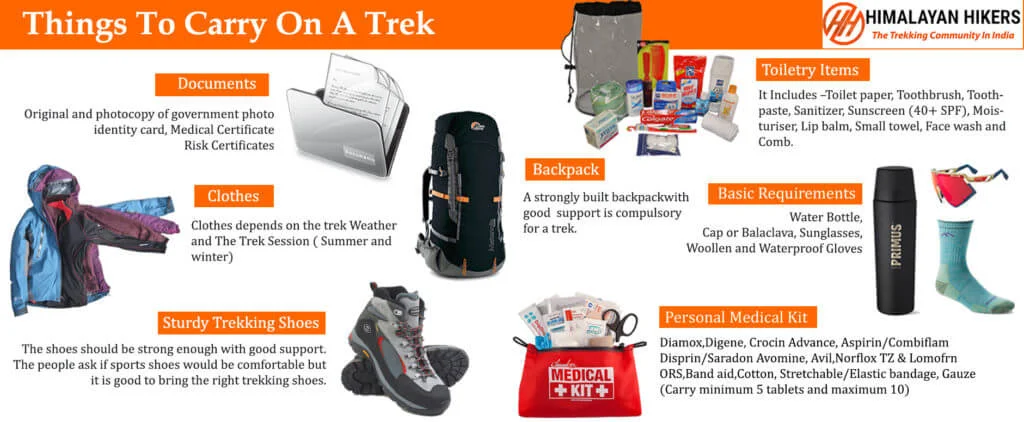
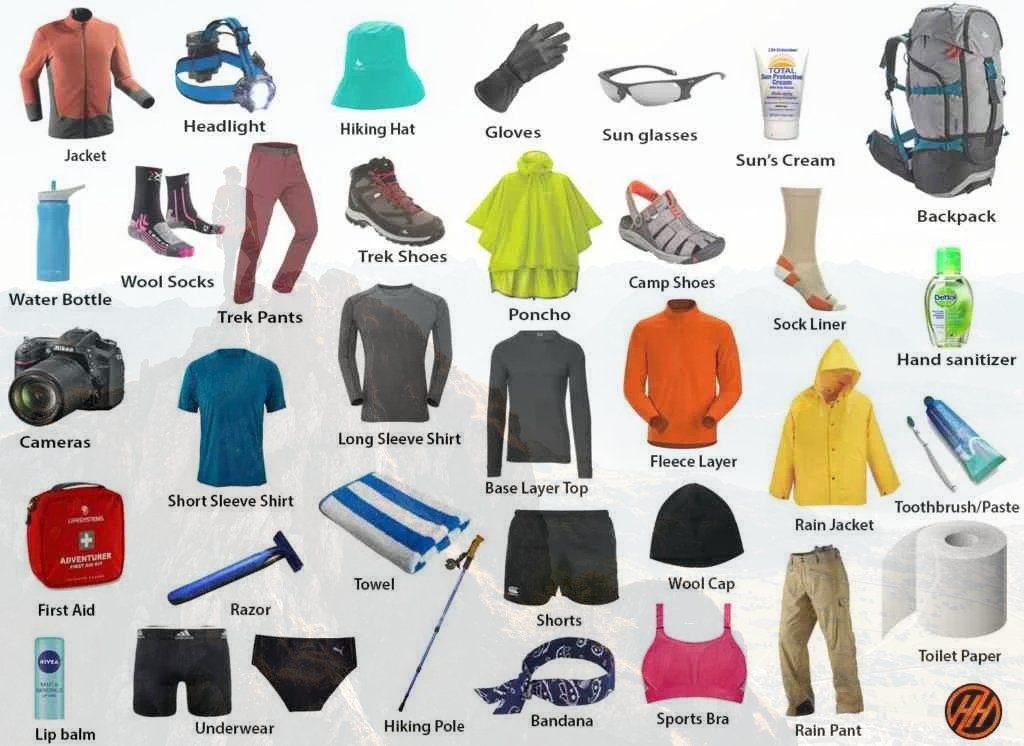
Essential Gear for the Kedarkantha Trek Packing List
1. Trekking Gear & Bags
- Main Backpack (50–60 Liters):Must have good hip support and a rain cover.
- Daypack (20 Liters):Essential if you plan to offload your main bag; carries water, snacks, and a jacket.
- Trekking Poles:Highly recommended for stability on snowy slopes.
2. Clothing (The Layering System)
- Base Layer (2-3 Pairs):Quick-dry, moisture-wicking thermals (top and bottom).
- Mid Layer (2):Fleece jackets or sweaters for insulation.
- Outer Layer (2):A high-quality padded down jacket (rated for -10°C).
- Trekking Pants (2):Water-resistant and windproof pants. Avoid jeans at all costs.
- T-shirts (3):Collared, full-sleeve dry-fit tees to prevent sunburst on the neck.
3. Footwear & Socks
- Trekking Boots:High-anchor, waterproof boots with good grip Decathlon Forclaz or similar MH 100) Asain, Jonmart hiking Shoes .
- Woolen Socks (4 Pairs):For sleeping and extra warmth at night.
- Cotton Socks (4 Pairs):For trekking during the day.
4. Headwear & Accessories
- Sun Cap:To protect against UV rays during the day.
- Woolen Cap/Balaclava:Must cover your ears to prevent heat loss.
- Neck Warmer/Buff:Protects your face from cold winds.
- Gloves:One pair of fleece liners and one pair of waterproof outer gloves.
- Sunglasses:Polarized/UV protected to prevent snow blindness.
5. Personal Hygiene & Toiletries
- Sunscreen (SPF 50+) and Lip Balm.
- Moisturizer and Sanitizer.
- Toilet paper and Biodegradable wet wipes.
- Toothbrush, Toothpaste, and a small quick-dry towel.
6. Health & First Aid
- Personal Medikit:Band-aids, crepe bandage, and antiseptic.
- Anti-Altitude Sickness:Diamox (consult your doctor first).
- Pain Relief:Volini spray or Moov.
- Water Purification:Tablets or a LifeStraw.
Quick Tips for a Successful Trek with Himalayan Hikers
- Hydration:Drink at least 3/4 liters of water daily to help with acclimatization.
- Batteries:Cold drains phone and camera batteries fast. Keep them inside your sleeping bag at night to keep them warm.
- Eco-Friendly:"Pack it in, pack it out." Don't leave any plastic on the trail.
Must-Have Medicines for Kedarkantha Trek
1. Altitude & Breathing
- Diamox (Acetazolamide):The most common medicine for AMS (Acute Mountain Sickness). It helps your body acclimatize faster.
- Note:Start a preventive dose only after consulting your doctor, as it is a diuretic.
- Camphor (Kapur):Carrying a small pouch of camphor to smell can help some people feel more comfortable while breathing in thin air.
2. Pain & Inflammation
- Combiflam / Ibuprofen:For muscle aches, joint pain, or body fever after a long day of climbing.
- Dolo 650 (Paracetamol):For mild fever or headaches (often a first sign of dehydration or AMS).
- Diclofenac Gel/Spray (Volini/Moov):Essential for calf muscle cramps or knee pain during the descent.
3. Digestive Health (Very Important)
- Digene / Pudin Hara:For acidity or bloating caused by heavy meals at high altitudes.
- Ondem (Ondansetron):For nausea or vomiting (common symptoms of altitude sickness).
- Eldoper / Nor-Metrogyl:For loose motions or stomach infections.
- ORS / Electral:To prevent dehydration. Mix one sachet in your water bottle every day.
4. Respiratory & Cold
- Ascoril/Alex Syrup (or Lozenges):For "Khonchi" (dry mountain cough) caused by cold, dry air.
- Cetirizine / Okacet:For allergic reactions or a runny nose.
- Avomine:If you get motion sickness during the bumpy 10-hour drive from Dehradun to Sankri.
5. First Aid Basics
- Band-aids & Cotton:For small nicks.
- Crepe Bandage:In case of a minor ankle sprain on the snowy trail.
- Betadine/Dettol:Antiseptic for any cuts.
- Anti-fungal Powder:To keep your feet dry and prevent fungal infections from wet socks.
Mandatory Documents
- Original and photocopy of government photo identity card- (Aadhar Card, Driving License, Voters ID, etc.
- Passport and Visa important to foreigners.
6-Week Plan specifically tailored for Himalayan Hikers requirements.
1. Himalayan Hikers Fitness Criteria for the Kedarkantha trekking
Himalayan Hikers emphasizes that a trekker should be able to cover a certain distance comfortably to ensure they don't get exhausted before the summit.
- The Benchmark: Cover 5 km in 30 to 35 minutes.
2. The 6-Week "Himalayan Hikers" Training Schedule
Weeks 1-2: Base Building (The "Startup" Phase)
- Running:3 days a week. Run/Walk 3 km.
- Strength:
- Knee Pushups:3 sets of 15 (Total 45).
- Half Squats:4 sets of 18 (Total 72).
- Plank:2 sets of 30 seconds.
- Focus:Getting the heart rate up and opening the lungs.
Weeks 3-4: Endurance Loading (The "Intermediate" Phase)
- Running:4 days a week. Increase distance to 4.5 km.
- Strength:
- Forward Lunges:3 sets of 15 reps per leg.
- Half Squats:4 sets of 20.
- Plank:3 sets of 40 seconds.
Himalayan Hikers Tip:Start walking with your actual trekking shoes once a week to break them in and avoid blisters on the trek.
Weeks 5-6: Peak & Approval (The "Summit" Phase)
- Running:4 days a week.
- Target:5 km in 32-35 minutes.
- Strength:
- Stair Climbing:Climb 3-4 floors 5 times. (Excellent for the Kedarkantha summit slope).
- Knee Pushups:3 sets of 20.
- Plank:1 set of 90 seconds (or 3 sets of 30s).
- Proof:Ensure you have recorded at least 3-4 successful 5km runs on your app.
3. Modified Exercise Breakdown
| Exercise | Target for Kedarkantha | Himalayan Hikers Logic |
|---|---|---|
| Jogging / Running | 5 km (35 mins) | Ensures your heart can handle low oxygen at 12,500 ft. |
| Knee Pushups | 45 Reps (3×15) | Builds shoulder strength for your 10kg rucksack. |
| Half Squats | 72 Reps (4×18) | Protects your knees during the steep descent from the summit. |
| Forward Lunges | 30 Reps (Total) | Essential for balance on slippery “Hard Ice” patches. |
| Planks | 1 Minute (Total) | Keeps your posture straight while climbing with a backpack. |
4. Himalayan Hikers Checked at Sankri Base Camp
- Sankri (Base Camp):This is where your oxygen levels and fitness will first be checked.
- Micro spikes & Gaiters:Himalayan Hikers usually provide these. Your training (specifically lunges) will help you walk comfortably while wearing this extra weight on your feet.
- Hydration (The 4L Rule):Himalayan Hikers guides are very strict about water. Practice drinking 3-4 liters of water during your training weeks.
- AMS (Acute Mountain Sickness):If you are fit, your body uses oxygen better, significantly reducing your chances of headaches or nausea at the summit.
This is a suggestion that will help you on your trek, but if you are generally fit and healthy, you can prepare according to your own preferences.
Why Himalayan Hikers is the Safest trekking organisation Choice for Kedarkantha Trek
At Himalayan Hikers, your safety is not just a protocol; it is our heritage. With over 35 years of experience and our roots in Sankri, we provide a level of security that only locals can offer.
1. Elite Safety Standards
- NIM Certified Leaders:Our trek leaders are certified from the Nehru Institute of Mountaineering (NIM). They are experts in high-altitude rescue and wilderness first aid.
- Daily Health Checks:We conduct twice-daily health screenings using Oximeters and BP Monitors to track your oxygen saturation and pulse.
- Emergency Oxygen & Kits:Every batch carries portable Oxygen Cylinders and a comprehensive medical kit stocked with essential high-altitude medicines.
- Technical Gear:We provide high-quality Micro-spikes (Crampons) for grip on slippery snow and Gaiters to keep snow out of your boots.
2. Premium Accommodation (Hotels & Tents)
- Basecamp Stay (Sankri):Unlike crowded guest houses, we provide comfortable stays in our Himalayan Hikers Hotel/Homestay in Sankri. You get clean rooms, warm hospitality, and a chance to experience authentic Garhwali culture.
- High-Altitude Camping:We use Premium 4-Season Tents designed to withstand heavy snowfall and bone-chilling winds.
- Insulated Bedding:To ensure a warm sleep in -10°C, we provide high-quality sleeping bags rated for extreme temperatures, along with thick foam mats for extra insulation.
3. Reliable Transport Services
- Dehradun to Sankri:We provide pickup and drop services from Dehradun Railway Station Safe Mountain Driving: Our drivers are locals who are experts at navigating the winding, snow-covered roads of the Himalayas.
- Vehicle Fleet:We use comfortable and well-maintained vehicles like Tempo Travelers, Ertiga Taxi, ensuring a smooth 8-10 hour journey to the base camp.
4. Nutritious & Fresh Meals
Note -We Five three meals a day including snacks and soup. A variety of delectable and healthy food is provided which includes: Indian, Chinese and other Western meals. They are nutritious and keep you fit and healthy on the trek (veg food or Jain food & Egg) Daily fruits keep your energy levels high. Hygiene First: Our kitchen staff follows strict hygiene standards, ensuring clean drinking water (boiled/filtered) at all campsites.
| Category | Details |
|---|---|
| Transport | Dehradun to Dehradun round-trip via Tempo Traveler (Pickup & Drop) |
| Permits & Entry | Forest Permit and Entrance Fees |
| Accommodation | Hotel in Sankri: SwargaRohini Hotel & The Grand Shiva Homestay Tented Accommodation on Twin/Triple Sharing |
| Meals | Breakfast, Lunch, Tea, Coffee, Snacks, Soup, Dinner (All meals included) |
| Camping Gear | High-Quality Dome Tents, Sleeping Bags, Mattress, Liner |
| Sanitation Setup | Separate Toilet Tents (Ladies & Gents), Dining Tent, Dining Table, Camping Chair |
| Support Staff | Kitchen Team, Trek Helpers |
| Communication Tools | Radio Walkie-Talkie |
| Trek Guides | Experienced Trek Leader & Technical Guide |
| Safety Equipment | Medical Kit, Oxygen Cylinders, Pulse Oximeter |
| Trekking Equipment | Crampons, Gaiters |
| Category | Details |
|---|---|
| Meals (Not Included) | – Day 1: En route Breakfast & Lunch to base camp – Day 5: En route Lunch & Dinner (not included) |
| Insurance & Documents | – Personal Insurance: Medical Certificate (Mandatory for age 50 and above) |
| Personal Essentials | – Personal Toiletry Items, Personal Medical Kit |
| Porter Service | – The porter fee for the entire trek is ₹1600. (to be paid directly at Sankri base camp) – Minimum bag weight for porter: 8 kg |
| Foreign Nationals | – ₹1600 extra for trekking permit – Passport and valid Visa required |
Important Note
Himalayan Hikers offers both online and offline booking options for their treks.
1. Online Booking:
- Website: Himalayan Hikers has an official website where trekkers can browse through different treks, check details (itineraries, costs, difficulty level, etc.), and make bookings. Payment gateways are integrated for secure online transactions.
- Third-Party Platforms: They might also be listed on various trekking or adventure booking platforms, where you can compare prices, read reviews, and make bookings.
- Email Communication: Trekkers can inquire about treks via email and complete the booking process online, following email communication and payment.
2. Offline Booking:
- Direct Office Visit: Himalayan Hikers has physical offices (especially in Uttarakhand), where trekkers can visit in person, discuss treks, and complete bookings directly.
- Phone Booking: You can also call their office to make a booking. Details about payment methods, trek dates, and other logistics can be confirmed over the phone.
Yes, Himalayan Hikers requires a 25% advance payment for booking treks, Via- Google pay or UPI, Directly Himalayan Hikers Account with the remaining amount to be paid in cash at their branch office in Sankri before the trek starts. This payment structure is typical for ensuring that bookings are confirmed while allowing trekkers flexibility in completing the payment when they arrive.
The trek is rated Easy to Moderate. It is perfect for beginners. The only "hard" part is the summit day, which involves a steep climb in the snow, but with a guide, it is very manageable.
The Kedarkantha summit stands at 12,500 feet (3,810 meters). You start from Sankri, which is at 6,400 feet.
The total distance is approximately 25 km spread over 4 trekking days. On average, you walk 4–6 km per day.
Network (BSNL/Jio) usually disappears once you leave Purola or Mori. At Sankri, you might get a faint signal, but above that, there is zero connectivity. Inform your family beforehand.
No. The last reliable ATM is in Purola. Sankri is a remote village, always carry enough cash for rentals, offloading, and personal expenses.
- For Snow: Mid-December to February.
- For Greenery: April to June.
- For Clear Views: October to November.
- Avoid July-August due to heavy monsoons.
During the day, it’s pleasant (8°C to 12°C). However, at night, temperatures at the Base Camp can drop to -5°C to -15°C.
Yes, Himalayan Hikers and most reputed agencies ensure a safe environment. You will usually be paired with other female trekkers in tents (3-person sharing).
You get nutritious vegetarian Indian meals per day five times (breakfast, lunch, Evening snacks, Soup), Dinner every day best meals different -Eggs are often served at breakfast. You also get soup and snacks in the evening to keep you warm.
While it's beginner-friendly, you should be able to jog 4-5 km in 40 minutes. Basic leg strength and cardio will make the experience much more enjoyable and less painful for your knees.
No. This is a common mistake. Kedarnath is a temple/pilgrimage site about 370 km away from Kedarkantha. Kedarkantha is a mountain summit.
At the campsites, dry pit toilets (toilet tents) are used. You are expected to use toilet paper/wet wipes and dispose of them in the bins provided. Please don't litter.
Usually, anyone from 8 to 60 years can do this trek, provided they are physically fit and have no heart or breathing issues.
Yes. They stock high-ankle, water-resistant shoes. It’s a great option if you don't want to invest in expensive trekking boots for a single trip.
If you prefer not to carry your main rucksack, you can hire a mule/porter through them for approximately ₹1,200 for the full trek.
Yes, Himalayan Hikers provides a Cloak Room facility at Sankri. You can safely leave your city clothes and extra suitcases there for free or a nominal fee
.png)


.webp)


