
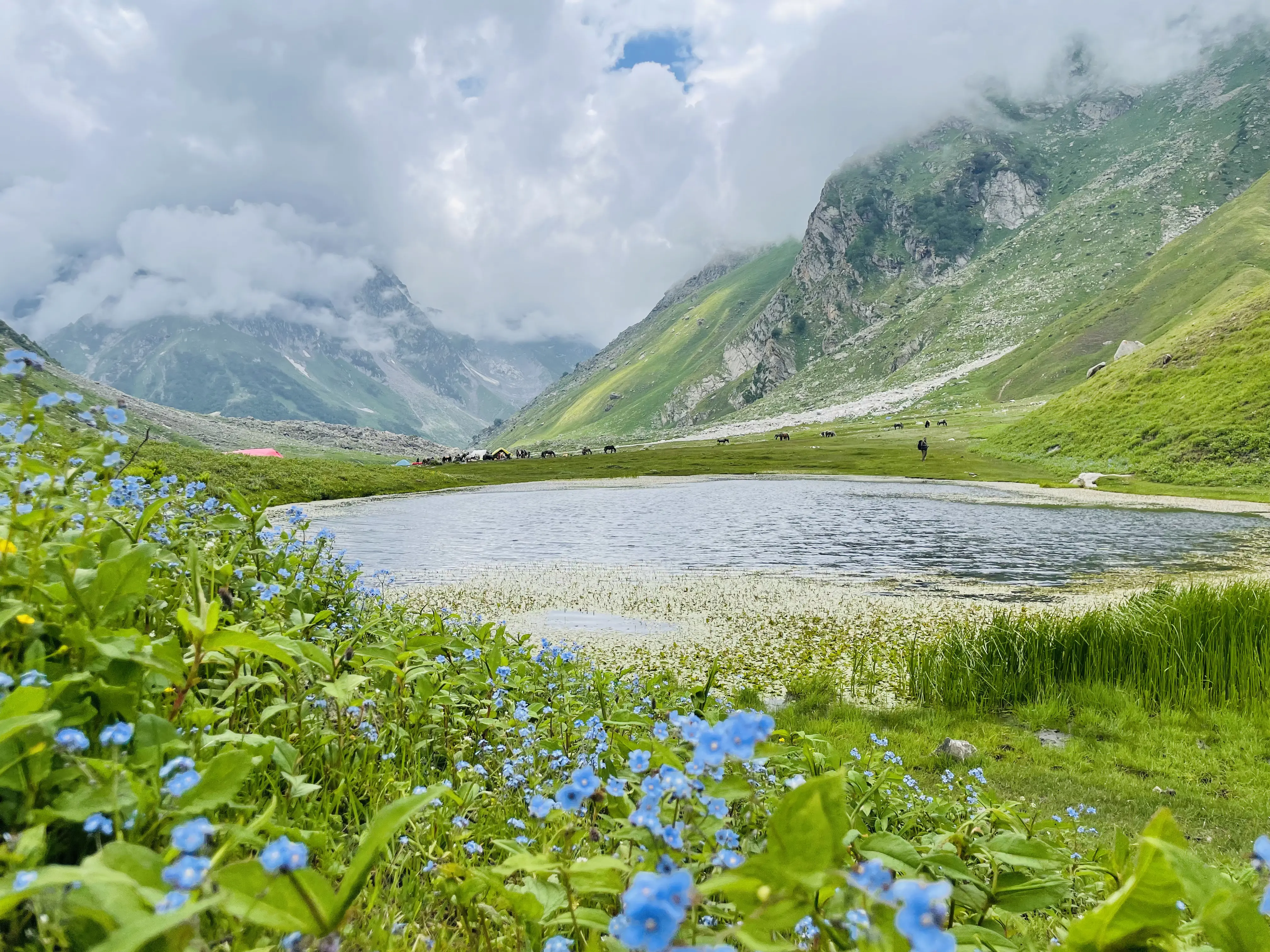


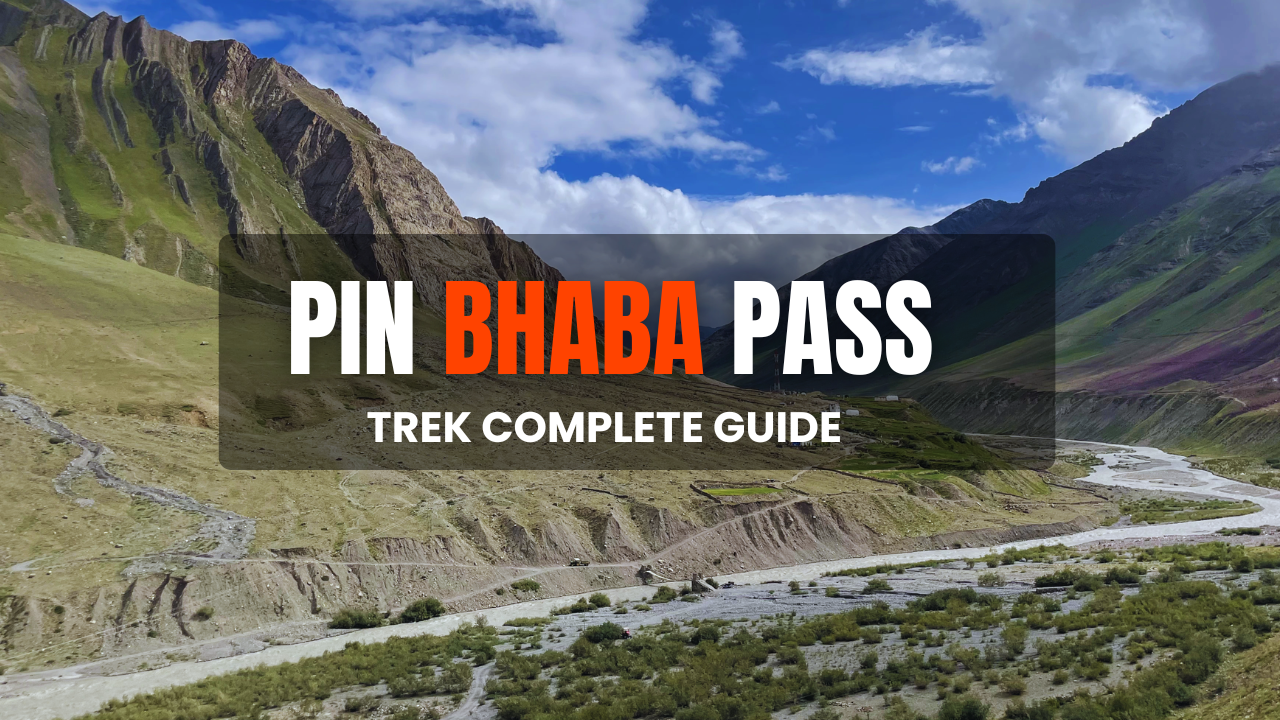
The trek begins from the quaint village of Kafnu base camp, the Pin Bhaba Pass trek route follows the lively Bhaba River, threading through dense alpine forests of oak, pine, and silver birch. Along the trail, trekkers encounter pristine brooks, vibrant grasslands, and enchanting meadows. These spots lead up to mountain campsites like Mulling and Kara, giving a real sense of adventure. As you ascend, the landscape transforms: greenery gives way to snowfields and glacial moraines, and finally, to the multicolored mountains of Pin Valley.
At the pass, trekkers are rewarded with panoramic views of Hansbeshan Peak, Nimish Khango, and Tari Khango, with the surreal Mudh formations (Mudh series) spread out in the valley below. The Pin Bhaba Pass is a geological marvel and one of Spiti’s best-kept secrets that inspires trekkers and geology enthusiasts to explore this region. This striking contrast between the verdant Bhaba side and the arid beauty of Pin Valley is unmatched. Pin Bhaba trek is a combination of Kashmir’s lush meadows and Ladakh’s arid beauty.
The Pin bhaba pass trek best time to visit is from mid-June to late September, which offers clear skies and stable weather conditions, making it one of the best monsoon trek in Himachal.
Key Highlights Pin Bhaba Pass Trek
- Scenic beauty: The trek offers stunning views of snow-capped peaks, lush green valleys, and beautiful alpine forests.
- Pin Parvati National Park: The trek passes through the Pin Parvati National Park, which is home to a wide variety of flora and fauna, including the elusive snow leopard.
- Pin Bhaba Pass: The highlight of the trek is the Pin Bhaba Pass, which is located at an altitude of 4,650 meters. It offers breathtaking views of the surrounding mountains and valleys.
- Cultural experience: The trek takes you through several small villages, where you can experience the local culture and interact with the friendly locals.
- Adventure activities: The trek involves crossing a glacier, a high-altitude pass, and a river. It offers a thrilling adventure experience to the trekkers.
- Camping: The trek involves camping in some of the most beautiful locations, which offers a unique experience of spending a night under the starry sky.
Pin Bhaba Pass Trek is a perfect blend of adventure, scenic beauty, and cultural experience. Drop-dead gorgeous landscapes of Kara which is in Kashmir. The high-altitude meadows of Karah are the closest you’ll get to the grasslands of Kashmir. This is one of the prettiest campsites. Watch the snow-capped mountains and enjoy the beauty of lush meadows
A Thrilling Crossing of Pin Bhaba Pass Trek
The Pin Bhaba Pass Trek offers one of the most thrilling pass crossings in Himachal Pradesh, perfect for adventure seekers and seasoned trekkers. As you climb to the high-altitude Pin Bhaba Pass, the landscape transforms into a stunning moraine amphitheater that rivals the trek’s lush beginnings. The Pin Bhaba Pass Trek Difficulty Level falls into moderate to difficult trek. It challenges your endurance while rewarding you with jaw-dropping views of Kashmir’s lush meadows and rugged barren geographical features of Ladakh. If you’re craving a high-adrenaline experience amidst the raw wilderness of the Himalayas, the Pin Bhaba Pass crossing is a once-in-a-lifetime journey through two strikingly different worlds.
Why to choose Pin Bhaba Pass Trek?
See firstly, the Pin Bhaba Pass Trek Distance is a total of 238 km by taxi and on foot 60 km, which is to be covered in the trek duration of 8 days and 7 nights.
Here are the Pin Bhaba Pass Trek Highlights to choose this trek:
- Pin Bhaba Pass trek is a high-altitude mountain trek Altitudes is 4909 Meters
- The Starting trail is easy to moderate – difficult as compare to other treks this is Moderate – Difficult trek. So, this trek is for the people who have done high altitude treks before. Not meant for beginners, or family or school tour
- Need proper gear & clothing for sub-zero temperature?
- You got to see so many heavenly bodies at one place like the panoramic view of the Himalayan ranges like Kinnaur Range, Pir Panjal and Lahaul and Spiti Range, you can see pine forests, different variety of flora and fauna surpassing
- I think Do spare time in Interaction with our local’s team, and you will get to know about some of the ancient tales of Indian mythology and our local cultures, this is good ideas for trekkers
- Beautiful landscapes so carry proper photo gear & Extra battery backup.
- The backpack should not exceed 12 kg only.
What should you keep in mind for the Pin bhaba pass trek?
Pin bhaba pass trek is as good as it is said, you also need to be prepared. Pin bhaba trek is a moderate or Difficult trek which starts from from Shimla/ Kafnu village and ends after trek Mudh/ Manali in Himachal
So what are the special things to keep in mind before coming on this trek?
Pin bhaba pass trek is one such trek, which you can do this trek 1st week of July to Last week of October, this is very safe trek in Himachal pardesh Spiti valley.
Pin Bhaba Pass Trek Complete Guide
Our mission has always been to ensure that no trekker steps into the Himalayas without the right perspective. A trek is not just a checklist of summits; it is a serious commitment to the outdoors. Having the right information is what separates a reckless climb from a soulful journey.
This section serves as your definitive manual for the Pin Bhaba Pass Trek. We have distilled years of mountain experience and real-time feedback into this guide to give you a clear, honest picture of the trail.
We provide this depth of information because we want you to be more than just a visitor—we want you to be a prepared, responsible trekker who respects the mountains as much as we do.
Day 1: Drive from Shimla to Kafnu Base Camp
Drive Distance: 208 km | Drive Duration: 6-7 hours | Pick up location: Shimla Old Bus Stand 7:00 am Transport includes
Day 2: Trek from Kafnu to Mulling
Trek Distance: 11.3 km | Trek Duration: 8 hours | Altitude Gain: 8,275 ft to 10,636 ft | Trek Difficulty: Moderate
Easy walk on the motor road for 2.5 km, followed by about a 5 km ascent. Level walk for about 1 km then ascend all the way to Mulling campsite
Day 3: Trek from Mulling to Kara Campsite
Trek Distance: 6.3 km | Trek Duration: 5 hours | Altitude Gain: 10,636 ft to 11,653 ft | Trek Difficulty: Moderate
Steady ascent for 3.3 km followed by 1.8 km of steep climb, easy walk for about 1.5 km to Phutsirang campsite.
Day 4: Trek from Karah to Phutsirang
Trek Distance: 4.9 km | Trek Duration: 4 hours | Altitude Gain: 11,653 ft to 13,474 ft | Trek Difficulty: Moderate
Steep ascent throughout the day
Day 5: Trek from Phutsirang to Bwalder Camp via Pin Bhaba Pass
Trek Distance: 13 km | Trek Duration: 10 hours | Altitude Gain and Loss: 13,474 ft to 13,435 ft via 16,105 ft
The trail involves a steep climb of nearly 3.5 km to reach the Pin Bhaba Pass. Afterward, travelers cross a river and then enjoy a gentle descent through moraines and scree fields all the way to the Mangrungse campsite.
Day 6: Trek from Bwalder Camp to Mudh Village same day Drive to Kaza (Drive Distance 50 km) 2 hours
Trek Distance: 13 km | Trek Duration: 7 hours | Altitude Loss: 13,674 ft to 12,283 ft | Trek Difficulty: Moderate-difficult
Day 7: After Breakfast departure from Kaza, to Manali Volvo Bus stand
Drive from Kaza to manali Via Atal Tunnel Route: Approximately 182 km (This is the route most travelers prefer)Drive Time The journey takes between 07 to 08 hours.
Note: The travel time heavily depends on road conditions, water crossings, and high-altitude mountain passes (such as Kunzum Pass, situated at around 15,060 feet).
Note :- Kaza to Manali Transport Costs Not includes your package, This costs pay to Directly your Driver ,
Day 1
Day 2
Day 3
Day 4
Day 5
Day 6
Day 7
Day 1 (Pick-up Day): Drive from Shimla to Kafnu Village (Pickup time 7:00 am OLD Bus Stand Shimla
Distance. 200 km - Duration 8 to 10 Hours -Starting Altitude7,467 ft (Shimla) Ending Altitude7,878 ft (Kafnu) Road - NH-5 (Hindustan-Tibet Highway) with winding river-side roads
Welcome to the start of your Pin Bhaba Pass Trek with Himalayan Hikers. Today is about leaving the civilization of Shimla behind and driving deep into the heart of Kinnaur to our base camp in the Bhaba Valley
Himalayan Hikers Service Excellence
- Scenic Drive on NH-5: We travel along one of the world’s most famous highways. You will witness the dramatic transition from the lush green hills of Shimla to the massive, rocky gorges of Kinnaur.
- River-Side Journey: Most of the drive follows the roaring Sutlej River. We will pass through major landmarks like Narkanda, Rampur, and the engineering marvels of the Nathpa Jhakri project.
- The Gateway to Bhaba: At Wangtoo, we leave the highway and enter the pristine Bhaba Valley, reaching the charming village of Kafnu, nestled by the river and a majestic dam.
Evening Protocol at Base Camp Kafnu
Once you arrive at our home stay in Kafnu, the Himalayan Hikers team begins the official trek preparation:
- Welcome & Allotment: Warm welcome by our local staff and room allotment. Have evening snacks’ tea coffee
- Medical Baseline Check: Our Trek Leader will record your SpO2 (Oxygen levels) and Pulse in the health diary to monitor your acclimatization from Day 1.
- Technical Briefing: A detailed session on how to pack your rucksack, how to use trekking poles, and a safety overview for the days ahead.
- Permit Processing: Collection of ID proofs for forest department formalities.
- Dinner: A nutritious, hot Himalayan meal Dinner
Day 02- Trek Kafnu to Mulling Camp
Starting from Kafnu Village we hit the trail early. Just 200 meters in, look for the Bhaba Hydro Project. As India’s first underground dam, it’s a marvel of engineering hidden inside the mountain.
- Expert Note: Remember, photography is strictly prohibited here. Keep your cameras tucked away until we hit the forest!
- The Crossing: At the 2 km mark, we cross the bridge to the left bank of the roaring Bhaba River.
2. The Enchanted Forest Ascent (2 km - 6.4 km)
Shortly after the bridge, we leave the motorable road for a narrow, rising trail. This is where the magic happens.
- The Biodiversity Frame: You are now in a rare zone where Silver Birch (Bhojpatra), Pine, and Oak live together in a single frame.
- The Experience: Himalayan Hikers loves this 4.4 km stretch for its "Nature Symphony"—the sound of the river clashing with the chirping of high-altitude birds. After the climb, we hit a 1 km flat clearing—a perfect place to find your trekking rhythm on the mud and grass terrain.
3. Champoria: The River Transition (6.8 km)
We reach Champoria, a serene campsite nestled in the trees. This is a critical junction.
- The Log Bridge (Katal): We cross back to the right bank of the Bhaba River using a traditional log bridge. This is a classic Himalayan experience—feeling the raw power of the glacial melt rushing beneath the timber.
4. The Final Push: Jhandi Top to Mulling (10 km - 11.3 km)
After crossing a small tributary, the trail demands respect. We slow down our pace for the final ascent.
- Jhandi Top: At the 10 km mark, we reach this vantage point. It’s the perfect "breather" spot. From here, you get your first majestic view of the Mulling meadows and the forest hut below.
- The Home Stretch: A short 1.3 km descent/hike brings us to the Mulling campsite (10,636 ft).
Day 3: Trek from Mulling to Kara Campsite
Shortly after leaving the Mulling campsite, after breakfast you will encounter the most famous mystery of the Bhaba Valley: The Underground River.
- The Sight: The massive Bhaba River, which has been roaring next to you, suddenly vanishes underneath a massive rock and silt formation.
- The Experience: You will actually walk over the "roof" of the river. You can hear the muffled thunder of the water deep beneath your boots, but you won't see a drop of it until it emerges further up the valley. This is a top-tier "high content" moment for any trekker.
2. The Valley of Waterfalls
As you climb higher, the valley walls become steeper and more dramatic.
- The View: Because you are in a glacial "U-shaped" valley, you will see dozens of silvery waterfalls cascading down from the hanging glaciers above.
- The Scale: The scale of the granite cliffs here makes you feel tiny—this is the true "Himalayan High" feeling.
3. Transition to Alpine Meadows
Today, you officially leave the last of the trees behind.
- The Flora: You enter the high alpine zone. The ground is carpeted with wildflowers (depending on the season) and thick, nutritious grass.
- The Wildlife: Keep your eyes on the cliffs. This is Blue Sheep (Bharal) and Himalayan Ibex territory. The Himalayan Hikers guides often carry binoculars for this very reason.
4. Reaching Kara: The Shepherd’s Paradise
The climb ends as you reach the vast, bowl-shaped meadow of Kara.
- The Confluence: Kara is situated at the meeting point of two valleys. To your left, a trail leads toward the Tari Khango Pass, and to your right is your path toward the Pin Bhaba.
- The Vibe: Kara is famous for its "Gaddi" (shepherd) camps. Hundreds of sheep grazing against the backdrop of snow-capped peaks make this one of the most photogenic campsites on the entire trek.
Day 4: Trek from Karah to Phutsirang Camping
- Distance: 5 km
- Duration: 3.5 – 4 hours
- Altitude Gain: Karah (11,627 ft) to Phutsirang (13,474 ft)
- Difficulty: Moderate (Steep in sections, but short)
1. The River Crossing Adventure
The day starts with an adrenaline kick. Almost immediately out of Karah, you have to cross a cold glacial stream.
- Expert Context: Depending on the water level, the Himalayan Hikers team might set up a human chain or use trekking poles to stabilize the group. It’s a refreshing (icy!) wake-up call that reminds you you're in the high Himalayas.
2. The Final Greenery of Kinnaur
This is your last chance to see the vibrant, flower-carpeted meadows.
- The View: As you ascend, look back toward the Karah valley. You’ll see the confluence of three valleys (Karah, Mulling, and the path to Tari Khango).
- The Flora: You’ll notice the grass getting shorter and the wildflowers changing to hardy, high-altitude species like Brahma Kamal (if in season) or blue poppies.
3. The Dramatic Mountain "Wall"
As you approach Phutsirang, the landscape shifts from soft meadows to harsh rock and moraine.
- The View: You are now heading toward the base of the Pin Bhaba Pass. The massive peaks of Hansbeshan and other unnamed Spiti giants start to loom over you.
- The Landscape: Phutsirang is a high-altitude basin. It feels like a natural amphitheater made of stone and ice.
4. Phutsirang: The Summit Basecamp
Phutsirang (also called Pushtirig) is your final camp before the big Pass Day.
- The Vibe: The air is noticeably thinner here. The campsite is rugged, rocky, and surrounded by glaciers. It’s a "hushed" campsite—everyone is focused and preparing for the 16,000+ ft pass crossing tomorrow.
- The Sunset: The sunset at Phutsirang is legendary. The peaks across the valley turn deep shades of gold and purple as the sun dips below the Kinnaur range.
Day 05- Trek Pushtirang to Pin Bhaba Pass (16,105 ft) & Down to Bwalder Camp (The Grand Crossover)
Today is the "Big Day." You will leave the lush green meadows of Kinnaur and cross over into the stark, high-altitude cold desert of Spiti Valley.
- Trek Distance: 11 - 12 km
- Duration: 9 to 10 Hours (Long and strenuous)
- Max Altitude: 16,105 ft (Pin Bhaba Pass)
- Elevation Gain/Loss: Steep ascent to the pass, followed by a sharp descent.
- Difficulty: Moderate to Difficult
Route Highlights & Terrain
- The Steep Ascent: The day starts very early (usually 5:00 AM). The climb from Pushtirang to the pass is a steady, steep incline on rocky moraine and snow patches (depending on the month).
- The Pass (The Pinnacle): Reaching the Pin Bhaba Pass (16,105 ft) is a spiritual experience. You will see two different worlds at once: the green Bhaba Valley behind you and the purple-hued, barren mountains of Spiti in front.
- The Descent: The initial descent into the Spiti side is steep and requires careful footwork on scree and loose rocks.
- Entering Spiti: As you descend, the landscape changes dramatically. The air becomes drier, and the mountains take on unique "chocolate" and "ochre" colors.
- Bwalder Camp: Your campsite is located on a ridge overlooking the confluence of the Pin River and its tributaries.
Day 6: Trek from Bwalder Camp to Mudh Village Same day Drive to Kaza
Bwalder Camp to Mudh village ) is the "Victory Lap." This is the day you finally reconnect with civilization, but in the most surreal setting imaginable—the heart of Spiti Valley.
Bwalder Camp (13,674 ft) to Mudh Village (12,427 ft)
- Distance: 13 km (Long but mostly flat/downhill)
- Duration: 6 – 7 hours
- Difficulty: Easy to Moderate (Endurance is key, but the terrain is gentle)
1. The Martian Landscape (Pin Valley National Park)
As you leave Mangrungse, you are officially trekking through the Pin Valley National Park.
- The Colors: Unlike the green of Kinnaur, the mountains here are "painted" in shades of maroon, purple, burnt orange, and chocolate brown. This is due to the unique mineral composition of the Spiti rocks.
- The Scale: The valley is massive and wide. You’ll feel like a tiny dot in a vast, desert-mountain landscape.
2. The Confluence of Pin & Bhaba
You will walk along the banks of the Pin River, which is a stark contrast to the Bhaba River. While the Bhaba was a crashing torrent, the Pin River is braided, spreading out across a wide, pebbly flood plain.
- Wildlife Watch: This is prime Snow Leopard territory (though they are very shy). Keep an eye out for Ibex and Red Fox on the high ridges.
3. The Suspension Bridge Thrill
Before reaching Mudh, you’ll cross a long, iconic suspension bridge over the Pin River.
- The Vibe: As the bridge sways, you’ll see the village of Mudh perched on a cliff ahead of you. It’s the ultimate "I’ve made it" photo-op.
4. Mudh Village: The White Jewel
Mudh is the first village you will see after 6 days. It looks like something out of a dream—white-washed houses with red-bordered windows, surrounded by green pea and barley fields that contrast sharply with the dry mountains.
- The Culture: This is a Tibetan Buddhist village. You’ll see prayer flags (Lungta) fluttering in the wind and Mani stones carved with mantras.
The "Home Stay" Experience
Tonight, you trade your tents for a traditional Spiti Home Stay. This is a high-content cultural immersion:
- The Food: Say goodbye to trek food and hello to authentic Thukpa, Skyu, or Momos, and the famous Sea Buckthorn tea (rich in Vitamin
Celebration: Tonight at Kaza , is about celebrating the successful crossing of the Pin Bhaba Pass. It’s a time to share stories with your guides and fellow trekkers.
Day 7: Drive from Kaza To Manali
Total Distance: Approximately 180 km to 200 km (depending on your exact starting point in Kaza and whether you take the Atal Tunnel or Rohtang Pass at the end). (Note Transport not including your package Costs pay Directly your Driver )
The
Route Path: Kaza -Losar - Kunzum Pass - Batal - Chhatru - Gramphu -
Atal Tunnel - Manali. 2. Scenic Views Along the Way This route transitions dramatically from cold, barren
high-altitude deserts to lush green valleys:
3. Estimated Travel Time & Schedule
Pin Bhaba Pass trek is Moderate trek , this trek comes in a moderate and difficult level, I myself have done this trek sometimes with me, people who are trekking for the first time, we have done the entire trek, they used to need help somewhere, which we and our team used to help.
Pin Bhaba Pass trek to Base Camp are very easy, but a bit difficult after that, uphill from Base Camp to the pass, and then complete Down Hill Trek after summit Pin Bhaba Pass trek, but if your fitness is good and you have it in your mind that I want to trek then you can do it absolutely. Where help is needed, our guides will support you, you just have to be strong and capable of the trek. One thing is that all you can do is to have courage and I myself am passionate.
Pin Bhaba Pass Trek safe for me?
Yes, Pin Bhaba Pass trek is a safe trek if you are going with a good trekking team which you must know before booking yourself, It is important for you to know that the bow trekking organization with which we are going is right or not, And if possible, trek with local trekking organization, you can do the same help all the time. then your trek can be very good and memorable. The minimum age required to trek Pin Bhaba Pass trek Pass is 18 years and maximum 55 years. The rest depends on your fitness.
Weather conditions
The weather and temperature of Pin Bhaba Pass trek always changes with time to time, which is always suitable for your trek, Months from May to October experience moderately good temperatures during the day with substantially colder nights accompanied by little to snow Pin Bhaba Pass trek surrounding peak, You can get more information from us by phone or email.
Pin Bhaba Pass Trek Best Time and Season : The Ultimate Cross-Over Experience
The Pin Bhaba Pass is widely regarded as one of the most beautiful and diverse treks in India. It is classified as a Moderate-Difficult challenge, making it perfect for trekkers looking to level up their adventure. While the journey is demanding, the transition from the velvet-green meadows of Bhaba Valley to the kaleidoscopic colors of the Pin Valley is a reward like no other.
Is it Right for You?
While we have successfully guided first-time trekkers through this pass, it does require a "mind over matter" approach.
- The Terrain: The walk to the Base Camp is relatively gentle and scenic. However, the push from Base Camp to the Pass involves a steep, exhilarating ascent, followed by a long, technical descent.
- Our Support: Our expert local guides are with you every step of the way. Whether you need a hand on a steep section or a boost of motivation, we ensure you are never alone.
- Fitness Matters: If you have a solid fitness foundation and the mental grit to conquer the mountains, you can absolutely do this.
Safety & Expertise
Is the Pin Bhaba Pass safe? Yes, provided you choose the right team. At Himalayan Hikers, we prioritize safety through:
- Local Knowledge: We are a local organization with deep roots in these mountains. Our guides understand the terrain and weather patterns better than anyone.
- Professional Logistics: From medical kits to high-quality camping gear, we ensure a secure environment.
- Age Guidelines: Generally, we recommend a minimum age of 18 and a maximum of 55. However, age is just a number—your physical fitness and medical history are the ultimate deciders.
Weather & Best Time to Visit
The weather in the high Himalayas is dynamic. The trekking season runs from July to September second week
- Daytime: Pleasant and suitable for trekking.
- Nighttime: Temperatures drop significantly; expect cold nights and potential snow on the surrounding peaks.
- The View: Expect crystal clear skies and a dusting of snow on the pass during the shoulder months.
Detailed Daily Altitude
|
Day |
Destination |
Altitude |
Highlights |
|
1 |
Kafnu |
2,401 m |
Arrival, apple orchards, and briefing. |
|
2 |
Muling |
3,242 m |
Walk through dense pine & oak forests. Tree-line ends. |
|
3 |
Kara |
3,552 m |
Lush meadows, "invisible" river, and sheep grazing. |
|
4 |
Phutsirang |
4,107 m |
View of three passes: Tari Khango, Nimish Khango, and Pin Bhaba. |
|
5 |
Bhaba Pass |
4,865 m |
Summit Day! Dramatic color change from Green to Brown. |
|
6 |
Mudh |
3,744 m |
Flat walk-through Pin Valley to a quaint Spiti village. |
Your travel plan for the Pin Bhaba Pass Trek in Himachal
- You can book train, air flight, and bus tickets for your journey only according to the information given by us.
- The pin bhaba pass trek will be of 7 days and 01 days of your journey total of 08 Days from Shimla to Manali
- First of all, all the trekkers will have to book their flight and train bus according to our time table as our pick up is from 6:00 am to 7:00 am, you will have to reach Shimla Old Bus stand in the morning.
- A taxi from Himalayan hikers will link you to Shimla old bus stand.
- Himalayan Hikers organize transport to Kafnu base camp from Shimla old bus stand. Our vehicles leave at 6:00 am to 7:00 am sharp from Shimla.The
- Sharing taxi costs is includes your package.
- In Shimla old bus stand you will get our taxi staff that will arranged transport for you. The contacts no Transport coordinator or our office team will be give you a week ago to your departure.
- Please you guys book your transport facility according to your own time table, after Himalayan Hikers take all the responsibility of Shimla to Kafnu base camp, that you will not face any problem.
- Your trek ends at Manali day 08 road head. Manali is a beautiful city in himachal here available public transport for all over State in India. Booked your bus tickets directly manali bus stand.
How to Reach Pin Bhaba Pass Trek
If you are travelling from Kolkata, Bangalore, Chennai, Pune, Mumbai or Gujarat any other city, so you will have to come to Delhi, you will get a train/flight from Delhi for Chandigarh comfortably.
Option 01:- By Air
Himalayan hikers tell you that whenever you travel, you should reach your destination within 2 hours. Chandigarh airport is the nearest airport in Shimla. Located about 122 km for the Shimla city. There are flights available from all states to Chandigarh, you can go online and book your tickets. These are easy and easy ways for you and you also save your time, If you find the flight to Chandigarh expensive, then you come by flight to Delhi or travel by bus from Delhi to Shimla, and it will be easy for you.
Option 02:- By Bus
If you have to go from Chandigarh to Shimla by bus then you will get a bus from Sector 43. Chandigarh, you will arrive here on time and book your bus ticket. You can reach Shimla from Delhi by a bus, board it from (Delhi) Kasmiri get ISBT; it is good if you are booked the seats. It is a 10-11 hour bus journey from Delhi to Old bus stand Shimla
(Reach Shimla old bus stand between 7:00 am to 7:30 am and vehicle will be arranged from there.)
ATM Point and Mobile Connectivity in Pin Bhaba Pass Trek
ATM Point
Before starting the journey to Pin Bhaba Pass Trek, make sure that you need payments, and then take out the cash on the way Shimla to Kafnu (If you want to withdraw money then do it in Shimla old bus stand )
Mobile Connectivity
The phone does not work on this trek. Therefore, you should ensure that you do not have to make any important calls. So make sure you finish all your important work and calls before starting the trek.
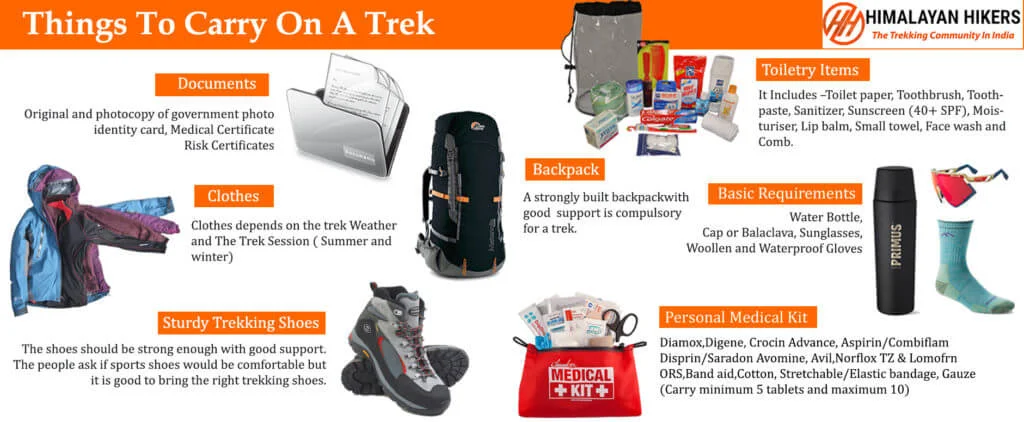
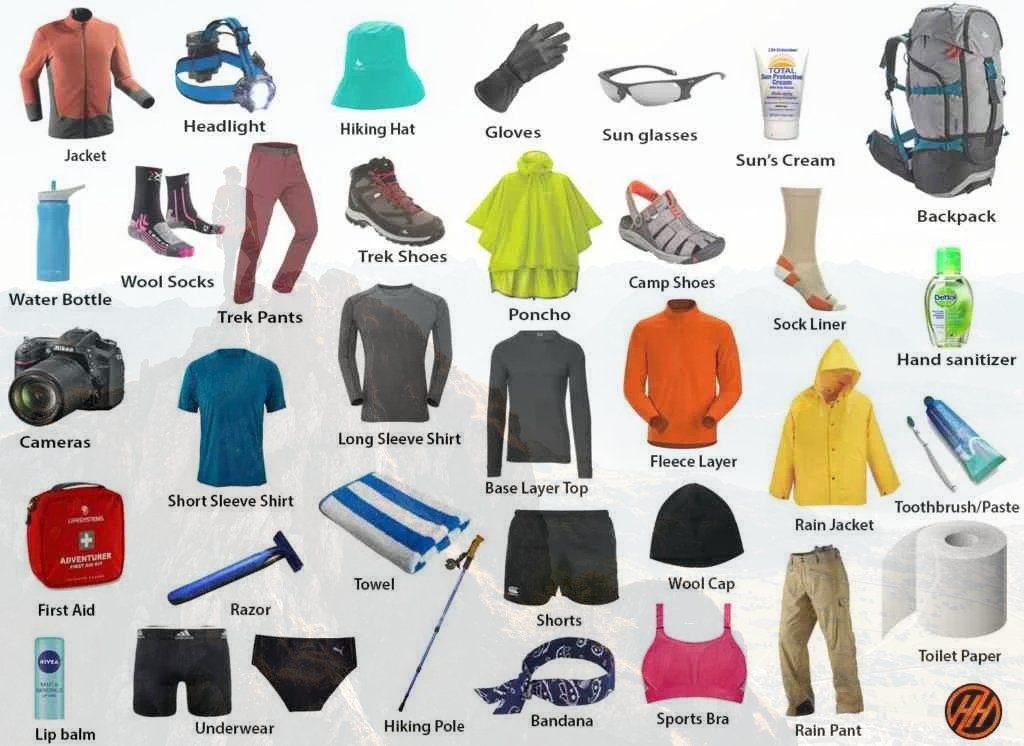
Essential Gear for the Pin bhaba Pass Trek Packing List
1. Trekking Gear & Bags
- Main Backpack (50–60 Liters): Must have good hip support and a rain cover.
- Daypack (20 Liters): Essential if you plan to offload your main bag; carries water, snacks, and a jacket.
- Trekking Poles: Highly recommended for stability on snowy slopes.
2. Clothing (The Layering System)
- Base Layer (2-3 Pairs): Quick-dry, moisture-wicking thermals (top and bottom).
- Mid Layer (2): Fleece jackets or sweaters for insulation.
- Outer Layer (2): A high-quality padded down jacket (rated for -10°C).
- Trekking Pants (2): Water-resistant and windproof pants. Avoid jeans at all costs.
- T-shirts (3): Collared, full-sleeve dry-fit tees to prevent sunburst on the neck.
3. Footwear & Socks
- Trekking Boots: High-anchor, waterproof boots with good grip Decathlon Forclaz or similar MH 100) Asain, Jonmart hiking Shoes.
- Woolen Socks (4 Pairs): For sleeping and extra warmth at night.
- Cotton Socks (4 Pairs): For trekking during the day.
4. Headwear & Accessories
- Sun Cap: To protect against UV rays during the day.
- Woolen Cap/Balaclava: Must cover your ears to prevent heat loss.
- Neck Warmer/Buff: Protects your face from cold winds.
- Gloves: One pair of fleece liners and one pair of waterproof outer gloves.
- Sunglasses: Polarized/UV protected to prevent snow blindness.
5. Personal Hygiene & Toiletries
- Sunscreen (SPF 50+) and Lip Balm.
- Moisturizer and Sanitizer.
- Toilet paper and Biodegradable wet wipes.
- Toothbrush, Toothpaste, and a small quick-dry towel.
6. Health & First Aid
- Personal Medikit: Band-aids, crepe bandage, and antiseptic.
- Anti-Altitude Sickness: Diamox (consult your doctor first).
- Pain Relief: Volini spray or Moov.
- Water Purification: Tablets or a LifeStraw.
Quick Tips for a Successful Trek with Himalayan Hikers
- Hydration: Drink at least 3/4 liters of water daily to help with acclimatization.
- Batteries: Cold drains phone and camera batteries fast. Keep them inside your sleeping bag at night to keep them warm.
- Eco-Friendly: "Pack it in, pack it out." Don't leave any plastic on the trail.
Must-Have Medicines for Pin bhaba pass Trek
1. Altitude & Breathing
- Diamox (Acetazolamide): The most common medicine for AMS (Acute Mountain Sickness). It helps your body acclimatize faster.
- Note: Start a preventive dose only after consulting your doctor, as it is a diuretic.
- Camphor (Kapur): Carrying a small pouch of camphor to smell can help some people feel more comfortable while breathing in thin air.
2. Pain & Inflammation
- Combiflam / Ibuprofen: For muscle aches, joint pain, or body fever after a long day of climbing.
- Dolo 650 (Paracetamol): For mild fever or headaches (often a first sign of dehydration or AMS).
- Diclofenac Gel/Spray (Volini/Moov): Essential for calf muscle cramps or knee pain during the descent.
3. Digestive Health (Very Important)
- Digene / Pudin Hara: For acidity or bloating caused by heavy meals at high altitudes.
- Ondem (Ondansetron): For nausea or vomiting (common symptoms of altitude sickness).
- Eldoper / Nor-Metrogyl: For loose motions or stomach infections.
- ORS / Electral: To prevent dehydration. Mix one sachet in your water bottle every day.
4. Respiratory & Cold
- Ascoril/Alex Syrup (or Lozenges): For "Khonchi" (dry mountain cough) caused by cold, dry air.
- Cetirizine / Okacet: For allergic reactions or a runny nose.
- Avomine: If you get motion sickness during the bumpy 8/9-hour drive from Shimla to Kafnu Village
5. First Aid Basics
- Band-aids & Cotton: For small nicks.
- Crepe Bandage: In case of a minor ankle sprain on the snowy trail.
- Betadine/Dettol: Antiseptic for any cuts.
- Anti-fungal Powder: To keep your feet dry and prevent fungal infections from wet socks.
Mandatory Document Checklist for Pin bhaba Pass Trek
1. Government Identity Proof (Original + 2 Photocopies)
You must carry a valid, government-issued photo ID. This is required for forest check-posts at and Kafnu village
- Accepted: Aadhar Card, Voter ID, Driver's License, or Passport.
- Note: Keep two photocopies handy as one will be submitted at the Forest Office for your entry permit.
- Trek Insurance mandatory
2. Medical Fitness Certificate
Himalayan Hikers prioritizes safety. You cannot start the trek without a certified medical report.
- Requirement: The certificate must be signed and stamped by a registered medical practitioner (MBBS Doctor).
- Validity: It should usually be issued within 15–30 days of the trek start date.
- Criteria: It should state that your blood pressure, heart rate, and lung health are normal for high-altitude trekking.
3. Disclaimer & Waiver Form
This is a standard indemnity bond provided by Himalayan Hikers.
- What it is: A document stating that you understand the risks of high-altitude trekking and are participating voluntarily.
- Process: You can usually download this from their website, sign it, and hand it over at the Kafnu Base camp.
Training & Safety Plan specifically optimized for Himalayan Hikers and the unique challenges of the Pin Bhaba Pass Trek
6-Week Pin Bhaba "Grand Contrast" Training Plan
Weeks 1-2: The Aerobic Foundation
- Running: 4 days a week. Target 6 km. Pin Bhaba involves long trekking days (7–9 hours); you need an "engine" built for distance.
- Strength:
- Squats: 3 sets of 25.
- Glute Bridges: 3 sets of 20. (Strong glutes prevent knee pain during the steep mud-climb toward Karah).
- Himalayan Hikers Logic: We focus on "Base Mileage" early. Your lungs must be prepared for the sudden oxygen drop once we leave the treeline at Phustirang.
Weeks 3-4: The "Spiti-Shift" (Endurance & Load)
- Running: 4 days a week + Hill Repeats. Find a steep incline and run up for 40 seconds, then walk down. Repeat 10 times.
- Weight Factor: Walk 10 km with a 8–10 kg backpack. The meadows of Bhaba are vast; you need to be comfortable under load for long durations.
- Strength:
- Side Lunges: 3 sets of 15 per leg. (Crucial for stability on the shifting moraine and loose rocks of the Pin Valley).
- Plank: 90 seconds. A rock-solid core prevents stumbles during the river crossings.
Weeks 5-6: Peak Trans-Himalayan Endurance
- Target: Run 5 km in 28–30 minutes.
- The "Final Test": A 16 km walk on uneven terrain with a 10 kg backpack.
- Technical Prep:
- Burpees: 3 sets of 15. (Builds the explosive lung capacity needed for the final $4,850$ m push).
- Box Step-ups: 100 reps with weights. (Simulates the relentless vertical gain from Phustirang to the Pass).
Pin Bhaba Specific Training Table
|
Exercise |
Target for Pin Bhaba |
Why it's different from Buran Ghati pass trek |
|
Weighted Step-ups |
100 Reps total |
The climb to the pass is a long, steady vertical grind, not just a short wall. |
|
Pressure Breathing |
10 Mins Daily |
Essential for the dry, thin air of Spiti where every breath feels like half a breath. |
|
Trekking Pole Drills |
1 Hour Walk |
You will use poles for 40% of the trek for balance on the long scree slopes. |
|
Calf Endurance |
3 Sets / 30 Reps |
Essential for the "toe-pointing" descent into the sandy terrain of Mudh. |
Why Choose Himalayan Hikers for Pin Bhaba Pass?
- Strategic Acclimatization Ladder: Most trekkers fail at the pass because they rush the Bhaba side. Himalayan Hikers uses a "Slow-Burn" itinerary, camping at Karah and Phustirang to ensure your body is 100 %ready for the 16,000 feet altitude.
- Expert River Crossing Protocols: The Pin River on the Spiti side is notoriously unpredictable. Our guides are trained in Anchored Crossing techniques, using ropes to ensure everyone crosses the glacial melt safely.
- The "Spiti-Desert" Logistics: Unlike the forest-heavy Buran Ghati, Pin Bhaba ends in a remote desert. We have a dedicated Kaza-based backup team and specialized transport waiting at Mudh village the moment you arrive.
- Glacier Navigation: The top of Pin Bhaba is a vast, flat snowfield that can become a "white-out" in minutes. Our leads carry High-Accuracy GPS and Satellite Comms to navigate even in zero-visibility.
Essential Pin Bhaba Layering
- The "Khumbu" Buff: The Pin Valley is incredibly dusty and windy. A high-quality buff/mask is mandatory to prevent the "Dry Cough" common in Spiti.
- High-Altitude Sun Shield: You are moving from a shaded forest to a high-UV desert. SPF 50+ and Category 3 Polarized Sunglasses are non-negotiable to prevent snow-blindness at the pass.
- Technical Footwear: Mid-to-high ankle boots with a stiff sole. Soft boots will fail you on the sharp rocks of the Spiti-side moraine.
This is a suggestion that will help you on your trek, but if you are generally fit and healthy, you can prepare according to your own preferences. If you are regular trekker, come and join
Why Himalayan Hikers is the Safest Choice for Pin Bhaba Pass: The Ultimate 4,850 m
Pin Bhaba is more than a trek; it’s a geological marvel. You start in the thickest pine forests of Himachal and end in a landscape that looks like Mars. Crossing the pass requires crossing the "Dead Zone" of moraine and ice where navigation is the biggest challenge.
1. Technical Safety & Desert Navigation
The Pin Bhaba Pass is notorious for shifting weather and hidden crevasses on the Pin side glacier.
- NIM & IMF Certified Expedition Leaders: Our leads are trained in Glacier Navigation. Unlike other passes, Pin Bhaba has a vast, flat snowfield at the top where getting lost in the mist is easy. Our team uses GPS and traditional "cairn" marking to lead the way.
- Crevasse & Moraine Protocol: The descent into Spiti is over loose scree and hidden ice. We use Micro-spikes and Trekking Pole synchronization to ensure no ankle injuries occur during the steep 60-degree descent from the summit.
- The "River-Crossing" Expertise: The Bhaba River and Pin River can swell suddenly. Himalayan Hikers' staff are experts in Human-Chain and Rope-Anchor techniques to get you across these freezing torrents safely.
- Real-Time Weather Updates: Using satellite-linked communication, we monitor the "Spiti-Mist." If the visibility is low, we have the local expertise to hold at the Phustirang camp until a safe window opens.
2. Expert Logistics: From Lush Green to Cold Desert
Moving from Kinnaur to Spiti is a logistical challenge. We manage the state-to-state transition perfectly.
- The 5-Day Acclimatization Ladder: We don't rush to the pass. We camp at Mudra and Karah to ensure your body is producing enough red blood cells to handle the thin air of the 15,900 ft summit.
- Spiti-Ready Equipment: The Pin Valley side is incredibly windy and dusty. We provide Dust-Proof Alpine Tents and sub-zero sleeping bags rated for -15°C to ensure you recover well after the crossing.
- The Mudh-Kaza Connection: Our service doesn't end at the trail's end. We have dedicated vehicles waiting at Mudh Village to take you to Kaza, ensuring a smooth transition into the Spiti culture.
3. Nutrition: The Spiti Survival Diet
In the dry air of Spiti, your body dehydrates 3x faster. We change our menu as the landscape changes.
- Anti-Hypoxia Diet: We serve garlic-heavy soups and Oatmeal-based breakfasts to provide sustained energy for the 12-km pass day push.
- Hydration Command: We enforce the "6-Liter Rule" once we enter the Pin Valley. Our staff provides warm electrolyte-infused water even at the highest camps.
Pin Bhaba Pass Technical Safety Table
|
Safety Feature |
Benefit to the Trekker |
The Himalayan Hikers Edge |
|
Glacier Roping |
Safety from hidden cracks/crevasses. |
We use specialized 8mm climbing ropes for the snowfield crossing. |
|
Moraine Guidance |
Prevents slips on loose Spiti rock. |
Our guides create a "Human Path" to stabilize trekkers on scree. |
|
Oxygen & Oximeter |
Vital for the 4,850 m altitude. |
Medical-grade oxygen is kept at the Phustirang and Pin-Base camps. |
|
Satellite Comms |
Emergency evacuation & weather. |
Constant contact with our base in Kaza and Shimla for safety. |
Why Himalayan Hikers is Different for Pin Bhaba
|
Feature |
Others Agencies |
Himalayan Hikers |
|
Route Strategy |
Standard "Rush" route. |
Acclimatization Focus: We include an extra night at Karah for better success rates. |
|
River Crossing |
Trekkers cross on their own. |
Guided Anchoring: Our team stays in the water to support every trekker. |
|
Basecamp Comfort |
Basic setup in Kafnu. |
HH Specialized Homestay: Get a full technical briefing and gear check-up before starting. |
|
Post-Trek Support |
Ends at Mudh Village. |
Full Spiti Experience: We coordinate your stay in Kaza and your return journey via Rohtang/Atal Tunnel. |
| Category | Details |
|---|---|
| Transport | Shimla to Kafnu via Tempo Traveler & Taxi (Pickup & Drop) Day 7 Drop Kaza Bus Stand |
| Permits & Entry | Forest Permit and Entrance Fees |
| Accommodation | Homestay, Tented Accommodation on Twin / Triple Sharing |
| Meals | Breakfast, Lunch, Tea, Coffee, Snacks, Soup, Dinner (All meals included) |
| Camping Gear | High-Quality Dome Tents, Sleeping Bags, Mattress, Liner |
| Sanitation Setup | Separate Toilet Tents (Ladies & Gents), Dining Tent, Dining Table, Camping Chair |
| Support Staff | Kitchen Team, Trek Helpers |
| Communication Tools | Radio Walkie-Talkie |
| Trek Guides | Experienced Trek Leader & Technical Guide |
| Safety Equipment | Medical Kit, Oxygen Cylinders, Pulse Oximeter |
| Trekking Equipment | Crampons, Gaiters, Helmate , Ice ax |
Note: Please bring your own lunch box for the hot lunch.
| Category | Details |
|---|---|
| Meals (Not Included) | –Day 1:En route Breakfast & Lunch to base camp–Day 7:En route Lunch & Dinner (not included) |
| Insurance & Documents | – Personal Insurance– Medical Certificate (Mandatory) |
| Personal Essentials | – Personal Toiletry Items– Personal Medical Kit |
| Porter Service | – The porter fee for the entire trek is ₹3,500. (to be paid directly at Shimla base camp)– Minimum bag weight for porter:8 kg |
| Foreign Nationals | – ₹2400 extra for trekking permit–Passport and valid Visa required |
Important Note
Himalayan Hikers offers both online and offline booking options for their treks. Here’s a breakdown of both options:
1. Online Booking:
- Our Official Website Himalayan Hikers has an official website where trekkers can browse through different treks, check details (itineraries, costs, difficulty level, etc.), and make bookings. Payment gateways are integrated for secure online transactions.
- Third-Party Platforms: They might also be listed on various trekking or adventure booking platforms, where you can compare prices, read reviews, and make bookings.
- Email Communication: Trekkers can inquire about treks via email and complete the booking process online, following email communication and payment.
2. Offline Booking:
- Direct Office Visit: Himalayan Hikers has physical offices (especially in Uttarakhand), where trekkers can visit in person, discuss treks, and complete bookings directly.
- Phone Booking: You can also call their office to make a booking. Details about payment methods, trek dates, and other logistics can be confirmed over the phone.
Yes, Himalayan Hikers requires a 25% advance payment for booking treks, Via- Google pay or UPI, Directly Himalayan Hikers Account with the remaining amount to be paid in cash at their branch office in Shimla before the trek starts. This payment structure is typical for ensuring that bookings are confirmed while allowing trekkers flexibility in completing the payment when they arrive.
Map not available for this trek.
The highest point is the Pin Bhaba Pass summit, which sits at approximately 16,105 ft (4,910 m).
A standard itinerary takes 7 to 8 days, covering a total distance of about 50–60 km. This includes travel days from Shimla and a buffer day for acclimatization.
The best window is from July to September. Since Spiti is in a rain-shadow region, it’s one of the few high-altitude treks safe to do during the Indian monsoon.
. While the trails are well-defined, the pass-crossing day is strenuous with steep ascents, potential snow patches, and a long descent into Spiti.
No. It is recommended for trekkers with at least 1–2 prior high-altitude experiences (above 13,000 ft). However, fit beginners with a disciplined training regime can attempt it.
You should be able to run 5 km in 30–35 minutes. Focus on cardiovascular endurance and leg strength (squats and lunges), as you will be trekking 6–8 hours daily with a backpack.
you will likely encounter significant snow near the pass. By August and September, most of the snow melts, leaving behind rocky moraine and scree.
Clothing: 3-layer system (base layer, fleece, padded jacket).
- Gear: Trekking poles (must-have), headlamp, 50-60L backpack.
- Protection: High UV-protection sunglasses (to prevent snow blindness) and sunscreen.
Yes, since you cross 16,000 ft. Proper acclimatization at the Pushtirang campsite (base of the pass) and staying hydrated are crucial to prevent AMS.
No. There is no network after leaving Kafnu until you reach Mudh/Kaza. There are no charging points; carry a power bank (20,000 mAh).
You need Forest Department permits and, in some cases, an Inner Line Permit if you are a foreigner. Most trekking agencies handle these for you.
The "Crossover" moment. Standing at the pass, you see the lush green Bhaba Valley on one side and the stark, chocolate-colored mountains of Spiti on the other.
The most common way is to reach Shimla and then take a taxi or HRTC bus to Kafnu (approx. 7–9 hours drive).


