


The trek commences from Dhundi village nestled in the famous Solang Valley, known for paragliding and adventure sports. As you trek forward, crowds thin out and you walk alongside the thunderous Beas, crossing numerous streams and trekking through oak and pine forests with a woody scent lingering all over the trail. Then you press on to Bakarthach, a broad meadow ringed by snow-streaked ridges, where your tents are pitched for the 1st night.
Further in the trek, scenery transitions from thick forests to a sea of wildflowers covering the slopes; one can even compare the scenery to the famous Valley of Flowers Trek in Uttarakhand. Another one of the main highlights of this trek is the close-up view of Himachal’s most iconic mountains, such as Hanuman Tibba, Shitidhar, Ladhakhi Peak, and the Indrasan Massif, all looking down upon you and adding to the panorama that very few treks of this length can match. We at Himalayan Hikers believe that it is one of the best short treks in India, with an easy to moderate difficulty level.
Highlights of Beas Kund Trek
1. A Skyline of Giants Within Reach
Few Himalayan treks bring you this close to serious peaks without asking for technical climbing skills. Beyond Bakarthach, the valley tightens into a rocky bowl, and Hanuman Tibba, Shitidhar, Ladakhi Peak and Friendship Peak fill the horizon in one sweeping arc of rock and ice. You stand near the foot of the mountains, admiring the grandeur of the peaks. The light keeps changing: dawn tints the summits, midday turns the glaciers hard white, and dusk leaves them glowing against a darkening sky.
2. A Beautiful Glacial Lake
Beas Kund sits at roughly 3,700 metres, a compact lake fed by glacier meltwater and honoured as the beginning of the Beas River. Local tradition ties the river’s name to the sage Vyasa. Many trekkers sit here for hours and meditate, soaking in all the tranquility. The fact that such a small stream from the pond grows into such a crucial river crossing Himachal and Punjab gives the destination a meaning that goes well beyond scenery.
3. Three Days, Three Different Landscapes
The route keeps reinventing itself, so the walk never feels repetitive. You begin in cool woods of pine, oak and maple, where sunlight arrives in thin golden strips. Next come wide grazing meadows dotted with shepherd shelters and flowers that change with the season. Higher up, the vegetation thins out, and the path crosses stony moraine, with patches of old snow lingering well into summer. Rivers, bridges and waterfalls appear at regular intervals, giving your legs and eyes constant variety. By the time you reach the lake, you have passed through several mountain worlds without ever leaving a single valley.
4. Camping Under an Uncrowded Sky
Nights on this trek are a highlight of their own. Tents are pitched on an open meadow such as Bakarthach, far from towns and streetlights, so the darkness is deep, and the stars look startlingly sharp. On a clear evening, you can trace the Milky Way from one ridge to the other. Temperatures fall quickly after sunset, so warm layers matter, and hot soup around the group feels phenomenal.
5. A Friendly First Step into the Himalayas
Beas Kund is graded moderate, and it suits people who are new to high-altitude walking but willing to prepare. The trailhead lies a short drive from Manali, the daily gradients are mostly gentle, and the path is clear enough that you can focus on the scenery instead of navigation. The altitude gain is gradual, giving your body time to adjust. Regular walking, stair climbing, and some jogging for a few weeks beforehand make the experience far more enjoyable.
Beas Kund Trek Complete Guide
Our mission has always been to ensure that no trekker steps into the Himalayas without the right perspective. A trek is not just a checklist of summits; it is a serious commitment to the outdoors. Having the right information is what separates a reckless climb from a soulful journey.
This section serves as your definitive manual for the Beas Kund Trek. We have distilled years of mountain experience and real-time feedback into this guide to give you a clear, honest picture of the trail.
We provide this depth of information because we want you to be more than just a visitor—we want you to be a prepared, responsible trekker who respects the mountains as much as we do.
Day 1: Drive from Manali to Dhundi & trek to Bakarthac
Pickup: At 7:00 AM from Mall Road, Manali
Stats: 24 km drive + 4 km trek | 4 hours | Altitude: 3,270m
Stay: Overnight at the Bakarthach campsite
Day 2:Trek from Bakarthach to Beas Kund & Back
Stats: 12 km trek | 7 hours | Altitude: 3,700m to 3,270m
Stay: Overnight at the Bakarthach campsite
Day 3: Trek from Bakarthach to Dhundi & Drive to Manali
Trek: A short but scenic climb offering views of snow-capped peaks.
Stats: 4 km trek + 24 km drive | 4 hours |
Drop-off: Mall Road, Manali
Day 1
Day 2
Day 3
Day 1: Drive from Manali to Dhundi & trek to Bakarthach
Himalayan Hikers will pick you up from Mall Road, Manali, where our team awaits you at 7:00 AM. After a warm welcome, we board our comfortable Tempo Travelers for a 24 km journey that serves as a breathtaking introduction to the Beas Kund Trek.
️ Journey Overview
Total Distance: 28 km
Duration: 4 Hours
Starting Altitude: 2050 m (Manali)
Ending Altitude: 3,270 m (Bakarthach)
Accommodation: Overnight stay at the Bakarthach campsite in tents on a twin/three share basis
Your journey begins at 7:00 AM on Mall Road, where the group gathers, and the vehicle sets off along the Beas Valley. Within minutes, Manali’s traffic and shopfronts give way to apple orchards, deodar-lined slopes and the hum of the river beside the road. The route rises gradually towards Solang. After the 24 km drive, the road ends at Dhundi, the starting point for the trek. The trail follows the Beas upstream, crossing small wooden footbridges and climbing through pine, oak and birch woods, where sunlight falls in soft patches on the ground.
As the trees thin out, the valley widens into a green bowl, and Hanuman Tibba slowly appears at the head of it, its snow glinting against the sky. After about 4 km of walking, you arrive at Bakarthach, a broad meadow at 3,270 m where your tents are waiting. Shepherd shelters dot the slopes, ridges of snow hang overhead, and the stream nearby keeps up a constant, soothing murmur. Spend the late afternoon resting, exploring the meadow and photographing the changing light, and once the sun drops, the cold arrives quickly, so keep your jacket close. The sky above camp is wide and dark, which makes it a fine place for stargazing.
Day 2:Trek from Bakarthach to Beas Kund & Back
Journey Overview
Total Distance: 12 km
Duration: 7 Hours
Starting Altitude: 3,270 m (Bakarthach)
Ending Altitude: 3,700 m (Beas Kund)
Accommodation: Overnight stay at the Bakarthach campsite in tents on a twin/three share basis
This is the day everything has been leading to, so the morning starts early. Breakfast is served while the meadow is still stiff with frost and the high peaks catch the first gold of sunrise. You set off on a roughly 12 km round trip. The path climbs steadily over open grassland and then onto rocky moraine, where trees disappear, and the scenery becomes grand and bare. As you gain elevation, with each step, Deo Tibba, Indrasen, and the glaciated walls of Shitidhar, Ladakhi Peak, and Friendship Peak close in around the valley head.
After a long, steady ascent, you reach Beas Kund at 3,700 m. This small glacial lake is regarded as the birthplace of the Beas River. The water is cold and still, the wind often falls silent, and the peaks lean into its surface. Take your time here. Eat your packed lunch, take photographs, or simply sit and look. Then begin the descent, returning to 3,270 m and the warmth of Bakarthach. After about seven hours on the trail, tired legs and a hot dinner make for an easy, satisfying night.
Day 3: Trek from Bakarthach to Dhundi & Drive to Manali
Journey Overview
Total Distance: 28 km
Duration: 4 Hours
Starting Altitude: 3,270 m (Bakarthach)
Ending Altitude: 2,050 m (Manali)
Drop-off: Mall Road, Manali
This is the final day of the trek. After breakfast, pack up and begin the 4 km walk down to Dhundi. Because you are now facing the valley mouth, the views come from a new angle: the river glimmers below, the meadows slip behind you, and snow-capped peaks stay in the corner of your eye. The descent passes through the same quiet woods, now familiar and welcoming.
By the time you reach Dhundi, the trek is behind you, and your vehicle is ready for the 24 km drive back to Manali. You return with nothing but even more love for the mountains and fond memories of the friends you made in this beautiful and fulfilling journey.
The Beas Kund trek is generally considered to be an easy to moderate trek, suitable for beginners and experienced trekkers alike. It offers a beautiful and relatively accessible trail through the lower Himalayas in Himachal Pradesh, India.
The trek usually takes around 2 nights and 3 days to complete, covering a distance of approximately 20 km round trip. The trail involves moderate ascents and descents, with some steep sections, rocky paths, and occasional river crossings. However, compared to other high-altitude treks in the region, the Beas Kund trek has a relatively gradual ascent, making it more manageable for beginners.
The highest point on the trek is the Beas Kund, which is situated at an altitude of around 3,700meters (12,139 feet). Altitude sickness is generally not a major concern on this trek unless you have a pre-existing condition or are particularly sensitive to altitude.
While physical fitness and stamina are important for any trek, including this one, it is advisable to prepare yourself with regular exercise and some pre-trek training to enhance your endurance and strength.
Best Trek for beginners?
Yes, the Beas Kund trek is generally considered safe and suitable for beginners. While it is always important to be prepared and take necessary precautions when embarking on any trek, this trek offers a relatively moderate level of difficulty that can be managed by beginners who are physically fit and prepared.
Here are a few reasons why the Beas Kund Trek is often recommended for beginners:
Moderate Difficulty: The trek involves moderate ascents and descents, with gradual climbs and manageable terrain. While there are some steep sections and rocky paths, they can be tackled with proper care and trekking techniques.
Well-Defined Trail: The trail for Beas Kund is well marked and well defined, making navigation easier for beginners. This reduces the chances of getting lost or straying off the intended path.
Trekking Infrastructure: The trek is quite popular among trekkers, and there is decent infrastructure in place, including trekking guides, local support staff, and well-established campsites along the route. This provides a level of comfort and assistance
1. May to June: Snow and Fresh Green
Early season is a lovely time to
walk to Beas Kund if you like your mountains with a bit of winter still
attached. Patches of old snow linger on the higher stretches, the meadows
around Dhundi and Bakarthach are just turning green, and the surrounding peaks
wear a thick white coat that makes every photograph look dramatic. Daytime
weather is mostly comfortable for walking, while nights at camp turn properly
cold, so thermals and a good sleeping bag matter. The trail is also calmer than
in peak months. This window suits trekkers who want snow underfoot and open
views, without the uncertainty of the rains that arrive later.
2. July to August: The Monsoon Months
These are the least predictable months on the Beas Kund trail. Rain and low
cloud can hide the big peaks for days, paths turn slick and muddy, and the road
from Manali may be disrupted by showers or slides. At the same time, the valley
is at its lushest, with deep green meadows, swollen streams, and alpine flowers
spreading across the slopes. If you choose this season, keep your dates
flexible, watch the forecast closely, and carry reliable rain gear and
waterproof packing for your bag. Treat it as a moody, atmospheric trek rather
than a guaranteed viewpoint trip, and listen carefully to your guide’s daily
advice.
3. September: Clear Skies and Sharp Views
Many guides regard the few weeks in September as the finest of the year.
With the rains behind us, the air turns clean and crisp, the skies open up, and
Hanuman Tibba, Shitidhar, Friendship Peak and Deo Tibba stand out in sharp
outline. The meadows take on a golden tone, the lake reflects the surrounding
ridges more clearly, and evenings at camp are cold but wonderfully starlit.
Photographers will find reliable light from sunrise to sunset, and first-time
trekkers will enjoy the steadier conditions. Expect chilly mornings and nights,
though, so pack warm layers, gloves, and a woollen cap even if the afternoons
feel pleasantly mild.
To reach Manali for the Beas Kund Trek, you have several options depending on your location and preferences. Manali is well connected by road and is accessible from major cities like Delhi and Chandigarh. Here’s a step-by-step guide:
1. By Air
Nearest Airport: Kullu-Manali Airport (Bhuntar Airport), about 50 km from Manali.
Flights Available: Flights from Delhi and Chandigarh to Bhuntar are limited but available. Airlines like Air India and SpiceJet offer flights.
From Airport to Manali: You can hire a taxi or take a local bus from Bhuntar to Manali, which takes about 1.5 to 2 hours.
Pro Tip: Flights to Bhuntar can be expensive and are sometimes canceled due to weather conditions. Plan accordingly or have an alternate option in mind.
2. By Train
Nearest Railway Stations:
Chandigarh Railway Station (310 km from Manali)
Ambala Cantt Railway Station (335 km from Manali)
Since there’s no direct train to Manali, you’ll need to take a train to one of these stations and then travel by road.
From Chandigarh/Ambala to Manali: After reaching either Chandigarh or Ambala, you can hire a taxi or board a bus to Manali. The drive takes around 8 to 10 hours, depending on traffic and road conditions.
3. By Road
Manali is well connected by road and is one of the most popular ways to reach the town.
From Delhi to Manali (about 550 km)
By Bus: Regular overnight Volvo buses run by HRTC and private operators from Delhi ISBT Kashmere Gate. Buses take around 12-14 hours to reach Manali.
By Car: Driving or hiring a cab from Delhi to Manali takes about 12 to 14 hours depending on traffic. Route: Delhi → Chandigarh → Kullu → Manali.
From Chandigarh to Manali (about 310 km)
By Bus: Frequent buses from Chandigarh ISBT to Manali, taking 8 to 10 hours.
By Car: Driving from Chandigarh to Manali takes about 8 to 9 hours.
4. Reaching the Trek Start Point (Dhundi)
Once you’ve reached Manali, the Beas Kund Trek starts from Dhundi, about 24 km from Manali.
How to Get to Dhundi:
Himalayan Hikers will pick you up from Mall Road, Manali, where our team awaits you at 7:00 AM. After a warm welcome, we board our comfortable Tempo Travelers for a 24 km journey that serves as a breathtaking introduction to the Beas Kund Trek.
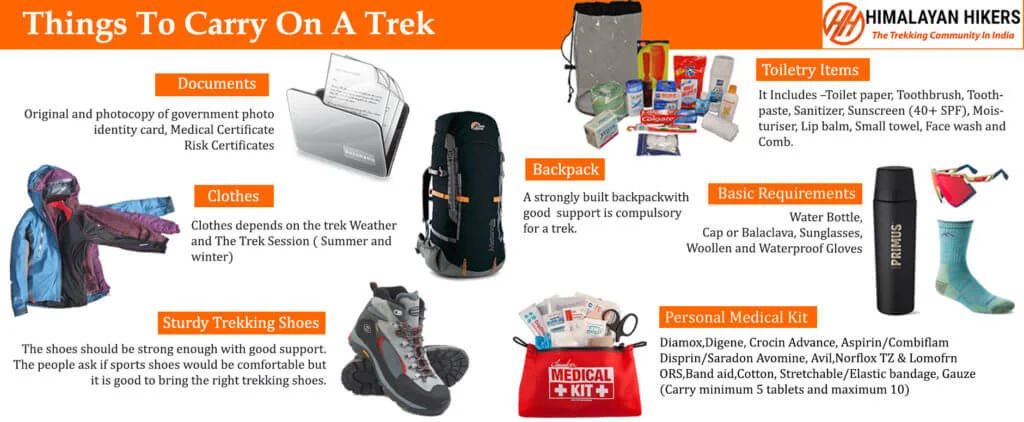
1. Trekking Gear & Bags
- Main Backpack (50–60 Liters): Must have good hip support and a rain cover.
- Daypack (20 Liters): Essential if you plan to offload your main bag; carries water, snacks, and a jacket.
- Trekking Poles: Highly recommended for stability on snowy slopes.
2. Clothing (The Layering System)
- Base Layer (2-3 Pairs): Quick-dry, moisture-wicking thermals (top and bottom).
- Mid Layer (2): Fleece jackets or sweaters for insulation.
- Outer Layer (2): A high-quality padded down jacket (rated for -10°C).
- Trekking Pants (2): Water-resistant and windproof pants. Avoid jeans at all costs.
- T-shirts (3): Collared, full-sleeve dry-fit tees to prevent sunburst on the neck.
- Trekking Boots: High-ankle, waterproof boots with good grip Decathlon Forclaz or similar; MH 100) Asian, Jonmart hiking Shoes.
- Woolen Socks (4 Pairs): For sleeping and extra warmth at night.
- Cotton Socks (4 Pairs): For trekking during the day.
- Sun Cap: To protect against UV rays during the day.
- Woolen Cap/Balaclava: Must cover your ears to prevent heat loss.
- Neck Warmer/Buff: Protects your face from cold winds.
- Gloves: One pair of fleece liners and one pair of waterproof outer gloves.
- Sunglasses: Polarized/UV protected to prevent snow blindness.
- Sunscreen (SPF 50+) and Lip Balm.
- Moisturizer and Sanitizer.
- Toilet paper and Biodegradable wet wipes.
- Toothbrush, Toothpaste, and a small quick-dry towel.
- Personal Medkit: Band-aids, crepe bandage, and antiseptic.
- Anti-Altitude Sickness: Diamox (consult your doctor first).
- Pain Relief: Volini spray or Moov.
- Water Purification: Tablets or a LifeStraw.
- Hydration: Drink at least 3/4 liters of water daily to help with acclimatization.
- Batteries: Cold drains phone and camera batteries fast. Keep them inside your sleeping bag at night to keep them warm.
- Eco-Friendly: "Pack it in, pack it out." Don't leave any plastic on the trail.
Must-Have Medicines for Beas Kund Trek
1. Altitude & Breathing
- Diamox (Acetazolamide): The most common medicine for AMS (Acute Mountain Sickness). It helps your body acclimatize faster.
- Note: Start a preventive dose only after consulting your doctor, as it is a diuretic.
- Camphor (Kapur): Carrying a small pouch of camphor to smell can help some people feel more comfortable while breathing in thin air.
- Combiflam / Ibuprofen: For muscle aches, joint pain, or body fever after a long day of climbing.
- Dolo 650 (Paracetamol): For mild fever or headaches (often a first sign of dehydration or AMS).
- Diclofenac Gel/Spray (Volini/Moov): Essential for calf muscle cramps or knee pain during the descent.
3. Digestive Health (Very Important)
- Digene / Pudin Hara: For acidity or bloating caused by heavy meals at high altitudes.
- Ondem (Ondansetron): For nausea or vomiting (common symptoms of altitude sickness).
- Eldoper / Nor-Metrogyl: For loose motions or stomach infections.
- ORS / Electral: To prevent dehydration. Mix one sachet in your water bottle every day.
- Ascoril/Alex Syrup (or Lozenges): For "Khonchi" (dry mountain cough) caused by cold, dry air.
- Cetirizine / Okacet: For allergic reactions or a runny nose.
- Avomine: If you get motion sickness during the bumpy 8/9-hour drive.
- Band-aids & Cotton: For small nicks.
- Crepe Bandage: In case of a minor ankle sprain on the snowy trail.
- Betadine/Dettol: Antiseptic for any cuts.
- Anti-fungal Powder: To keep your feet dry and prevent fungal infections from wet socks.
1. Government Identity Proof (Original + 2 Photocopies)
You must carry a valid, government-issued photo ID. This is required for forest check-posts.
2. Medical Fitness Certificate
Himalayan Hikers prioritizes safety. You cannot start the trek without a certified medical report.
- Requirement: The certificate must be signed and stamped by a registered medical practitioner (MBBS Doctor).
- Validity: It should usually be issued within 15 to 30 days of the trek start date.
- Criteria: It should state that your blood pressure, heart rate, and lung health are normal for high-altitude trekking.
This is a standard indemnity bond provided by Himalayan Hikers.
- What it is: A document stating that you understand the risks of high-altitude trekking and are participating voluntarily.
- Process: You can usually download this from our website, sign it, and hand it over at the Base camp.
6-Week Plan specifically tailored for Himalayan Hikers requirements
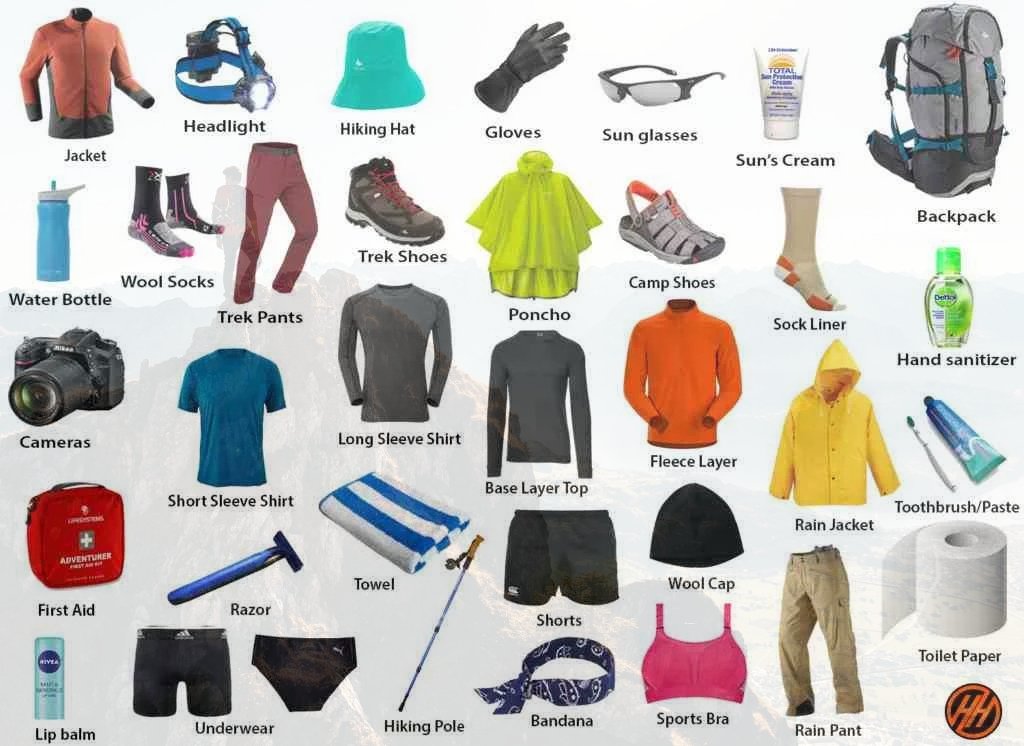
1. Himalayan Hikers Fitness Benchmark: Beas Kund Trek
The climb to Beas Kund has some steep and rocky sections.
- The Benchmark: You must be able to cover 5 km in 30 to 32 minutes comfortably.
- The Endurance Goal: Since you will walk nearly 20 km over 3 days, leg endurance is more important than raw speed.
2. The 6-Week Training Schedule
Weeks 1-2: The "Foundation" Phase
- Running: 3 days a week. Focus on a steady 3 km jog.
- Strength:
- Squats: 3 sets of 20 (Total 60).
- Plank: 2 sets of 45 seconds.
- Step-ups: Step up/down for 5 minutes.
Himalayan Hikers Tip: Start increasing your daily water intake to 3 liters to prep your kidneys for altitude.
Weeks 3-4: The "Incline & Endurance" Phase
- Running: 4 days a week. Increase distance to 5 km.
- Strength:
- Walking Lunges: 3 sets of 20 reps. (Crucial for steep sections).
- Stair Climbing: Climb up and down 5 floors, 4 times.
- Calf Raises: 3 sets of 25. Prevents cramps during descents.
Weeks 5-6: The "Summit Ready" Phase
- Running: 5 days a week. Target: 5 km in 30 to 33 minutes.
- Strength:
- Stair Climbing with a Bag: Carry a 5kg backpack for 15 minutes.
- High Knees: 3 sets of 1 minute each for lung capacity.
- Mental Prep: Practice Pranayama for 10 minutes daily.
Himalayan Hikers Key Points for Fitness
- Dhundi Checkpoint: The HH trek leaders will check your oxygen level. Better fitness improves oxygen saturation.
- Monsoon Humidity: Fitness helps your body regulate temperature while you sweat under a poncho.
- Knee Care: Squats and lunges are your best insurance against "trekker’s knee."
- The Golden Rule: Insist on 4 liters of water daily to keep AMS at bay.
- Fitness App Proof: 4-week history on Strava/Google Fit showing 5km runs.
- Medical Certificate: Signed by an MBBS doctor, within 15 days of the trek.
- Recovery Note: If you can run 5km today and feel fresh tomorrow, you are "Trek-Fit".
Safety Standards and Expertise
At Himalayan Hikers, your safety is not just a protocol; it is our heritage. With over 35 years of experience, we provide a level of security that no other organisation can.
1. Elite Safety Standards
- NIM Certified Leaders: Our trek leaders are certified by the Nehru Institute of Mountaineering (NIM). They are experts in high-altitude rescue and wilderness first aid.
- Daily Health Checks: We conduct twice-daily health screenings using Oximeters and BP Monitors to track your oxygen saturation and pulse.
- Emergency Oxygen & Kits: Every batch carries portable Oxygen Cylinders and a comprehensive medical kit stocked with essential high-altitude medicines.
- Technical Gear: We provide high-quality microspikes (Crampons) for grip on slippery snow and Gaiters to keep snow out of your boots.
- High Altitude Camping: We use Premium 4-Season Tents designed to withstand heavy snowfall and bone-chilling winds.
- Insulated Bedding: To ensure a warm sleep in -10°C, we provide high-quality sleeping bags rated for extreme temperatures, along with thick foam mats for extra insulation.
- Manali to Manali: We provide pickup and drop services from Mall Road, Manali. Safe Mountain Driving: Our drivers are locals who are experts at navigating the winding, snow-covered roads of the Himalayas.
- Vehicle Fleet: We use comfortable and well-maintained vehicles like Tempo Travelers and Ertiga taxis, ensuring a smooth journey to the starting point.
4. Nutritious & Fresh Meals
Note: We provide three meals a day, including snacks and soup. A variety of delectable and healthy food is provided, which includes Indian, Chinese, and other Western meals. They are nutritious and keep you fit and healthy on the trek (veg food). Daily fruits keep your energy levels high. Hygiene First: Our kitchen staff follows strict hygiene standards, ensuring clean drinking water (boiled/filtered) at all campsites.
|
Category |
Details |
|
Transport |
Manali to Manali round-trip via Tempo Traveler (Pickup & Drop) |
|
Permits & Entry |
Forest Permit and Entrance Fees |
|
Accommodation |
Tented Accommodation- Twin/Triple Sharing |
|
Meals |
Breakfast, Lunch, Tea, Coffee, Snacks, Soup, Dinner (All meals included) |
|
Camping Gear |
High-Quality Dome Tents, Sleeping Bags, Mattress, Liner |
|
Sanitation Setup |
Separate Toilet Tents (Ladies & Gents), Dining Tent, Dining Table, Camping Chair |
|
Support Staff |
Kitchen Team, Trek Helpers |
|
Communication Tools |
Radio Walkie-Talkie |
|
Trek Guides |
Experienced Trek Leader & Technical Guide |
|
Safety Equipment |
Medical Kit, Oxygen Cylinders, Pulse Oximeter |
|
Trekking Equipment |
Crampons, Gaiters |
|
Category |
Details |
|
Meals (Not Included) |
– Day 1: En route Breakfast & Lunch – Day 3: En route Lunch & Dinner |
|
Insurance & Documents |
– Personal Insurance: Mandatory Medical Certificate (Mandatory for age 50 and above) |
|
Personal Essentials |
– Personal Toiletry Items, Personal Medical Kit |
|
Porter Service |
– The porter fee for the entire trek is ₹1500. (to be paid directly at the base camp) – Minimum bag weight for porter: 8 kg |
|
Foreign Nationals |
– ₹1600 extra for trekking permit – Passport and valid Visa required |
Important Note
We offer both online and offline booking options for our treks.
Online Booking:
Website: Himalayan Hikers has an official website where trekkers can browse through different treks, check details (itineraries, costs, difficulty level, etc.), and make bookings. Payment gateways are integrated for secure online transactions.
Third-Party Platforms: We might also be listed on various trekking or adventure booking platforms, where you can compare prices, read reviews, and make bookings.
Email Communication: Trekkers can inquire about treks via email and complete the booking process online, following email communication and payment.
Offline Booking:
Direct Office Visit: Himalayan Hikers has physical offices (especially in Uttarakhand), where trekkers can visit in person, discuss treks, and complete bookings directly.
Phone Booking: You can also call their office to make a booking. Details about payment methods, trek dates, and other logistics can be confirmed over the phone.
Himalayan Hikers requires a 25% advance payment for booking treks via UPI or direct transfer to the Himalayan Hikers Account, with the remaining amount to be paid in cash at their branch office in Sankri or Dehradun before the trek starts. This payment structure is typical for ensuring that bookings are confirmed while allowing trekkers flexibility in completing the payment when they arrive.
Map not available for this trek.
It is near Manali in Himachal Pradesh, starting from Solang Valley. The route is roughly 18.4 km round trip and takes 4 days.
It is easy to moderate and suits beginners
with reasonable fitness. The climbs are gradual, and the trail is clear for
most of the route.
The lake sits at about 3,700 m (around
12,772ft). Campsites are lower: Dhundi at about 2,884 m and Bakarthach at about
3,300 m.
May to June and September to October are the
best windows.
You should be able to walk 5 km in about 30
minutes. Start cardio such as brisk walking, jogging, or stair climbing 3 to 4
weeks before, and add leg-strengthening exercises.
The risk is low because the ascent is gradual
and the highest point is under 4,000 m. Still, stay hydrated, walk at a steady
pace, and descend if you get a persistent headache, nausea, or dizziness.
Layered warm clothing, a waterproof jacket, and sturdy trekking shoes
A cap, sunglasses, sunscreen, a rain cover, and a headlamp
Water bottles, a personal first-aid kit, and your ID
Forest entry and camping charges apply, and we
arrange them for you. Network is patchy at Solang and mostly absent beyond
Dhundi, so tell family your plan before you start. Check current rules with
your operator or the local forest office, as they can change.
High-quality waterproof trekking boots with good ankle support and deep lugs (Grip) are mandatory. Avoid sneakers or sports shoes at all costs.


