
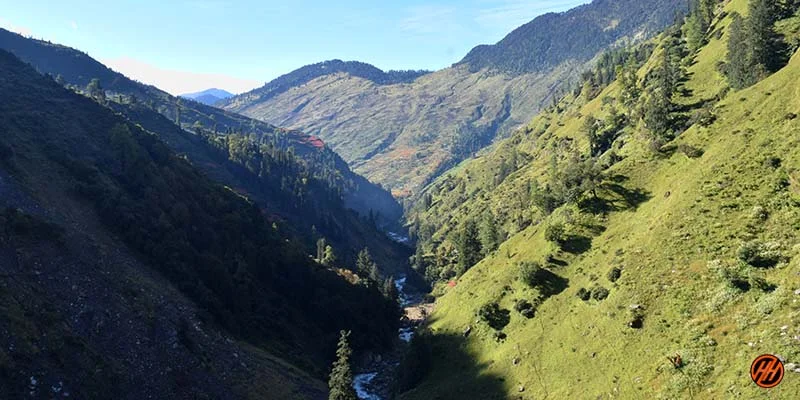


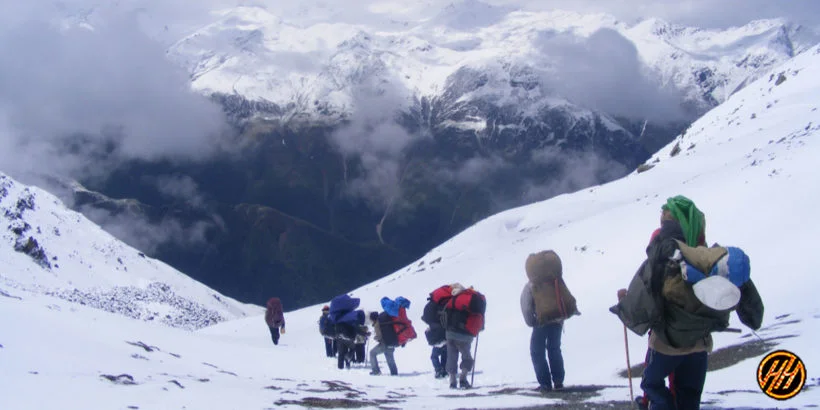
You would be stunned to know that this pass is traversed by one expedition team because it looks like it cannot be crossed. The difficulty level is high, it has crevassed glacier and walls very steep.
Khimloga Pass isn’t easy to conquer not even locals visit this place, the people who are looking for great adventure can for this expedition. You can explore this pass with team “Himalayan Hikers” we have Sherpa’s and professionals in our teams who have completed the expeditions successfully.
Explore “Chitkul” the last village in Khimloga Pass
Chitkul is Baspa valley’s last village, there are beautiful wooden houses of villagers and cultivated green fields. Nardu Gadu Gad comes from the right ridge it can be seen from here, head of it is Khimloga Pass.
Khimloga Pass Trek Complete Guide
Our mission has always been to ensure that no trekker steps into the Himalayas without the right perspective. A trek is not just a checklist of summits; it is a serious commitment to the outdoors. Having the right information is what separates a reckless climb from a soulful journey.
This section serves as your definitive manual for the Khimloga Pass Trek. We have distilled years of mountain experience and real-time feedback into this guide to give you a clear, honest picture of the trail.
We provide this depth of information because we want you to be more than just a visitor—we want you to be a prepared, responsible trekker who respects the mountains as much as we do.
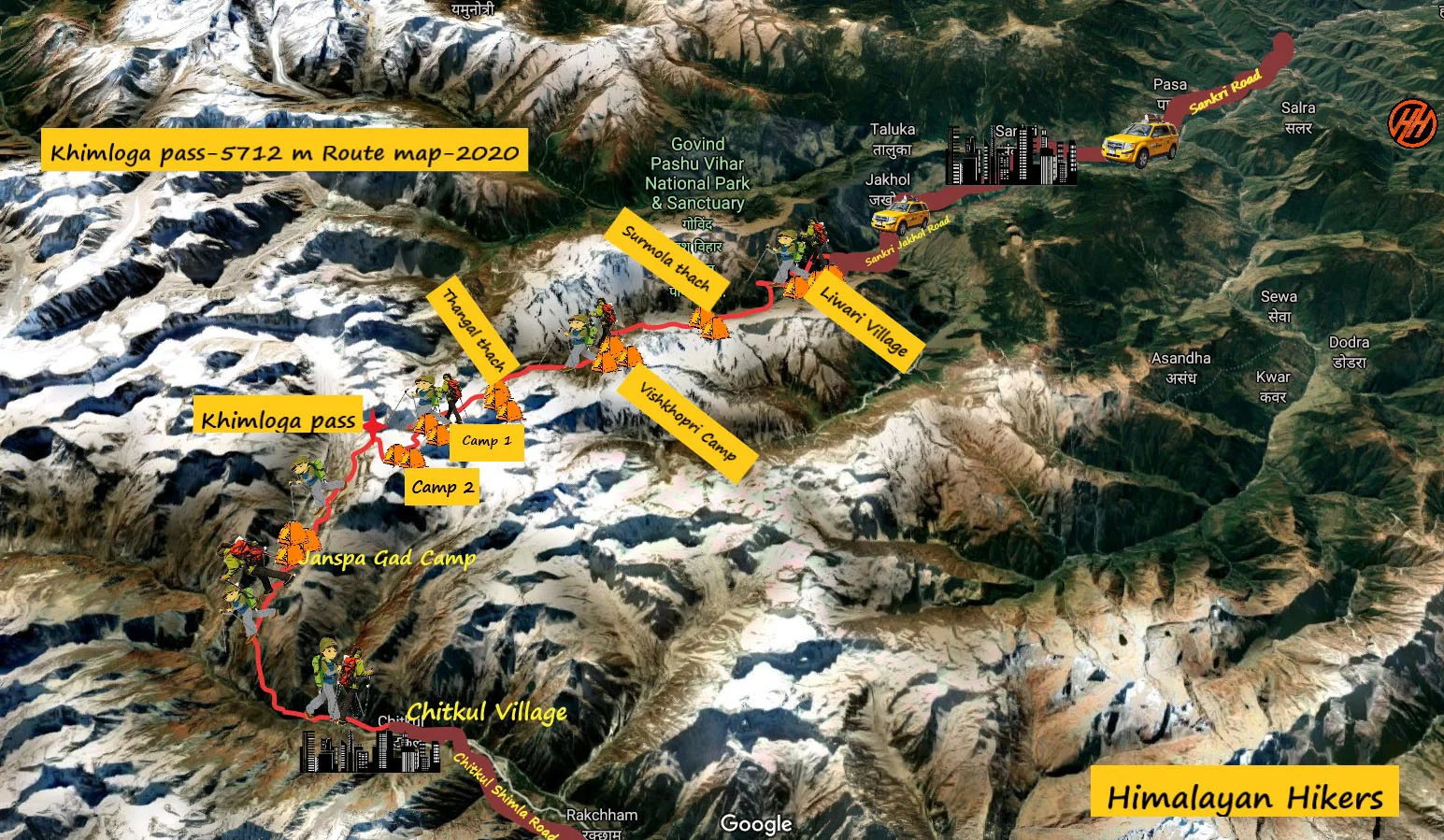
Day 1 – Dehradun to Sankri (210 km) (7/8 hours) (1920 m)
Day 2 – Sankri to Jakhol (19 km) (2200 m) Jakhol to Liwari via Baicha (8 km) (4/5 hours)
Day 3 – Liwari to Surmola Thach (10 km) (4/5 hours) (3460 m)
Day 4 – Surmola Thach to Vishkhopri (9 km) (4/5 hours) (3600 m)
Day 5 – Vishkhopri to Lower Thangal Thach via Nishani Thach (8 km) (4/5 hours) (3960 m)
Day 6 – Lower Thangal Thach to Khimloga camp 1 (7 km) (4/5 hours) (4920 m)
Day 7 – Khimloga camp 1 to Khimloga camp 2 (5 km) (5100 m)
Day 8 – Khimloga camp 2 to Janspad Gad via Khimloga Pass (5712 m)
Day 9 – Janspad Gad to Chitkul village (6 km) (3450 m)
Day 1
Day 2
Day 3
Day 4
Day 5
Day 6
Day 7
Day 8
Day 9
Day 1: Dehradun to Sankri (210 km) (7/8 hours) (1920 m)
Our vehicle picks you up from Dehradun railway station then leaves for Sankri (210 km), it takes 7-8 hours to reach there. The drive to Sankri is a picturesque one and you will come across plethora of sceneries on the way.
The scenic beauty of valley attract the visitor’s eye. You will see Yamuna River and Tons valley across the Yamuna Bridge, the crystal clear water gives a very refreshing feeling if you feel tired on the way. Drive is through some splendid places i.e. Mussoorie, Damta, Nowgao, Netwar and Purola.
These are the villages where you can see people working in fields and you can have a glimpse of their lifestyle. When you go through the forests, peep out of your window and look at the combination of dark and light greenery, it looks picture perfect.
We cross an entry gate of Govind Wildlife Sanctuary, Sankri lies there. When the Baraadsar mountain range and other snow-capped mountains are visible then you are about to reach Sankri, it will take 15-20 minutes more.
Sankri is a small village with less number of houses, there is a famous mini market of Sankri with few wooden huts serving traditional and delicious food. From here you can have a glance of some mountain ranges, it is surrounded by the mountains and the environment is pollution free, relish the beauty of Sankri. We own a hotel named “Swargarohini”, enjoy your dinner and relaxing stay there.
Day 2 : Sankri to Jakhol (19 km) (2200 m) Jakhol to Liwari via Baicha (8 km) (4/5 hours)
Jakhol is 19 km away from Sankri, it is the last village of Supin valley at an altitude of 2200 metres. You can reach there in two hours.
Trek starts from Jakhol on along the left bank of River Supin, after you cross a bridge you will reach Baicha. From this point Obra Gad is visible and one can also go Devkiyara through this Gad. Now the trek is again along the Supin River from here you can have sight of Fithari village, there are fields and wooden huts visible.
Now the difficult climb starts and you will reach fields that are present on left bank of Supin. Trek through potato fields and after last ridge reach Liwari village (2,750 m). There is a temple of “Someshwar Devta” worshipped by the villagers. Setup your camps here and retire for the night.
Day 3 : Liwari to Surmola Thach (10 km) (4/5 hours) (3460 m)
Wake up early and visit Someshwar Devta’s temple, bow down and ask everything to go well. When your trek starts the first section is through potato fields and Sural Dhar is visible from here.
The other section of the trek starts through forests, there are different variety of trees like Deodar, Walnut and Pine, trek for 1 km and reach a bridge over Supin. The area is landslide prone and the some paths have been damaged. Now to reach Surmola Thach trek is tough through ice bridges and boulder zone.
Surmola Thach have green pasturelands, it is at an altitude of 3460 metres. At ridge top is a Lake “Badasu” and as the belief of locals they say that this Lake is sacred and pure. Set your tents at this beautiful campsite and stay comfortably for the night in tents.
Day 4 : Surmola Thach to Vishkhopri (9 km) (4/5 hours) (3600 m)
Bid goodbye to the alluring fields of Surmola Thach and follow the right bank of Supin. Now, walk carefully through landslide prone region because the routes are washed away and some paths are damaged.
Climbing the ridge get because of the damage parts but when you reach the top there is a land which blooms, it becomes a relief to legs after ascending so hard. The scenic beauty is just heart-warming, there are colourful flowers and all green fields they together make a picturesque setting. Start descend towards Supin to reach your campsite Vishkhopri it is present at the confluence of Supin and Guggal Gad.
Vishkhopri is a wide place and you can see the colourful flowers blooming there. It is feast for the eyes and relief for legs because now you will be relaxing in the tents.
Day 5 : Vishkhopri to Lower Thangal Thach via Nishani Thach (8 km) (4/5 hours) (3960 m)
After having breakfast leave for Thangal Thach and when
start trekking Guggal Gad is visible which comes down from Baslawatha. By
following the stream one can reach Baspa valley and Devkiyara Ridge.
Ridge top offers unexpected magnificent 360 degree views of Khimloga Glacier,
on the left views of other peaks are visible. This glacier is divided into two
parts (Front is the main one) (part of North glacier on left). We will explore
the Northern part.
Move along Basalwa Thach and reach Nishani Thach by moving along boulder area. From here you can also go to Baspa valley through Pataki Dhar. Reach your campsite Thangal Thach which is 1 km ahead and have comfortable stay in tents.
Day 6 : Lower Thangal Thach to Khimloga camp 1 (7 km) (4/5 hours) (4920 m)
Today you have to reach Khimloga camp 1, start trekking over snow through moraine area and ahead is a glacier with crevasses. Be very careful because they can turn very dangerous.
There is a wall of moraine approximately of 70 degree and it will lead you to sharp top of the ridge. Have the views of huge Khimloga Glacier the sights may scare you and make you happy at the same time. The rocks and snowballs falling from above can be frightening but use your skills to overcome these challenges.
The glacier on North is broken which will make the climb
difficult. Cross the moraine ridge it is risky because one slip can turn very
risky, be attentive and you will cross the part easily.
Now you will come to the sharpest ridge top, have a sight of Khimloga Pass
(5,712 m). Reach Khimloga Camp 1, rest after setting your camps and our
professional leaders will go and look for the route conditions for a safer
trek. Have food and sleep early in the tents.
Day 7 :Khimloga camp 1 to Khimloga camp 2 (5 km) (5100 m)
You have to start your trek early because you have to reach snout of the glacier. After starting descend and cross the wall of moraine ridge through boulder zone and be careful of falling rocks.
Now, you can see a hanging glacier, a black snout which looks very scary. The trail isn’t difficult or very steep you have to only cross the ice ridges and you have to reach a last snow ridge top. Then the sudden sight of Khimloga Pass and semi-circular Khimloga glacier will surprise you.
Further is an ice field with crevasses, you keep walking on the right side of glacier until you reach a glacial pond. Have lunch in middle of the trek, packed lunch will be provided. Reach you campsite Khimloga camp 2.
Setup your tents and discuss about tomorrows trek because tomorrow is the summit day and it will be the toughest. Pray together to God to keep the weather conditions good and the trek safe. Have healthy food and retire for the night.
Day 8: Khimloga camp 2 to Janspad Gad via Khimloga Pass (5712 m)
Wake up early pack up things and leave on time. Start climbing along the left ridge through a snow field. Have clearer views of Khimloga Pass and see that the path is bifurcated by a rocky projection.
Take right because the other path is very risky, by trekking for some time you will reach Khimloga Pass it is 10 feet wide, the closer view of peaks will amaze you. When you will stand at the top the feeling would be of great achievement and happiness. You will feel great that you have conquered the Pass which looks uncrossable and frightening.
Do not spend extra time there because descending isn’t easy and it will take time. Take out your ropes to descend towards North east is Nardu Gad glacier. The route to get down is through Janspa Gad, slide down wherever required, come down along Nardu Gad glacier and reach the ice fields.
Your campsite is Janspa Gad today is the last day of camping and tomorrow is the last day of Expedition. Set your camps here, celebrate conquering the pass and retire for the night.
Day 9 : Janspad Gad to Chitkul village (6 km) (3450 m)
Capture pictures with every member with you to have memories captured and then leave the campsite. When you will cross the ice fields you will see flowers blooming they will make you feel good by just being there.
Ahead Chitkul will be visible, it is the last village of Baspa valley with beautiful wooden houses and cultivated green pasturelands. They together look beautiful the environment there is fresh and serene. Go further and reach a ridge with abundant Rhododendrons and then you will trek the forest of pine.
Reach bank of Baspa and with a rope of steel reach Chitkul, a beautiful Himalayan village. Frome there you can see Nardu Gad coming from the left ridge and head of it is Khimloga Pass. Celebrate the success of your expedition.
Key Points of Khimloga Pass
Level is Difficult (this trek is not for beginners)
Proper conditioning & training of body required
Need proper gear & clothing for sub-zero temperature?
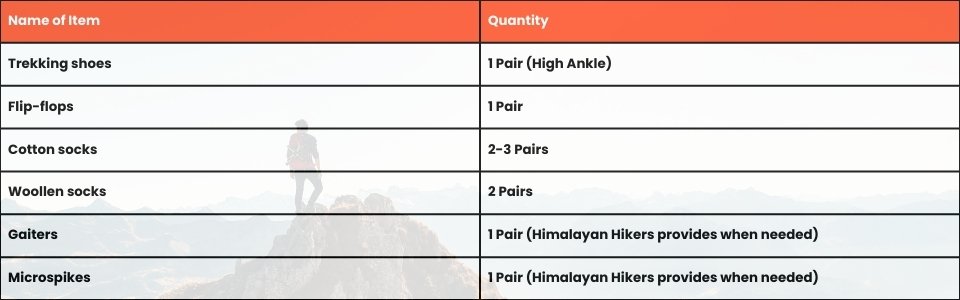
Shoes are the single most important equipment.
High Altitude requires proper acclimatization.
Beautiful landscapes so carry good photo gear & Extra battery backup.
Travel light
The backpack should not exceed 10kgs.
Best Season – May, June, Sep and Oct
No How to Reach the Base Camp available.
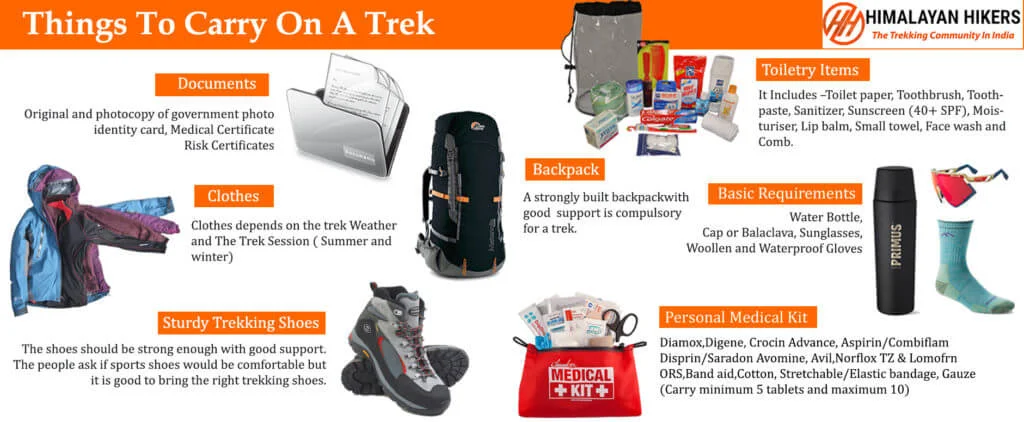
Necessary Items for trekkers
Mandatory Documents
Original and photocopy of government photo identity card- (Aadhar Card, Driving License, Voters ID, etc,)
Passport and Visa important to foreigners
Medical Certificate (First part should be filled by the Doctor and Second part by the Trekker)
Declaration Certificates
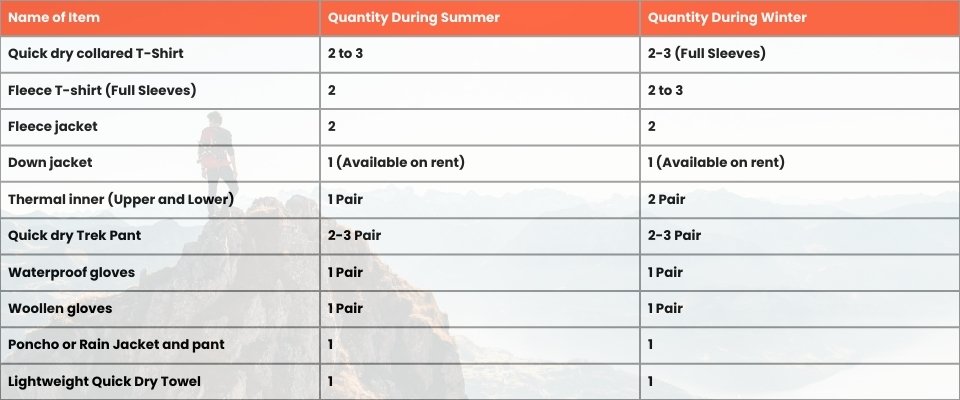
Note: – Many trekkers commit the same mistake of carrying unnecessary items on a trek which only makes the backpack heavy. It is important to know the right items to carry. It differs from season to season if you are trekking in summers then carry less layers of warm clothing and if you are trekking in winters carry enough layers to protect yourself against chilly cold.
Basic Trekking Gears
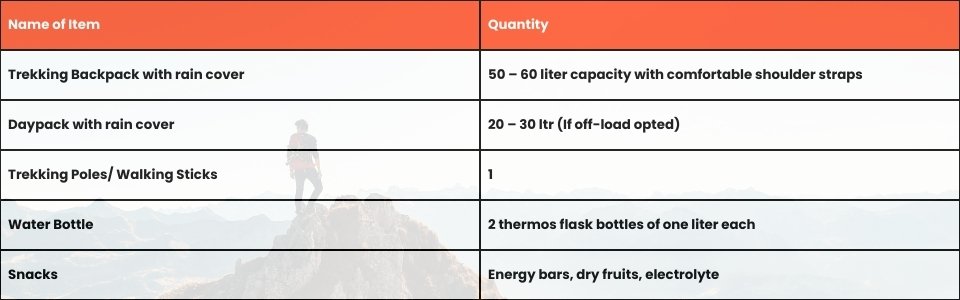
The Clothes You Should Bring On Satopanth Expedition
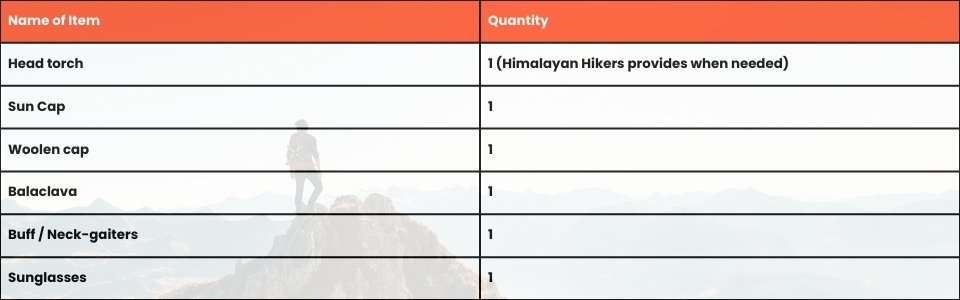
Head Gears
Foot Gears
Personal Care Essentials

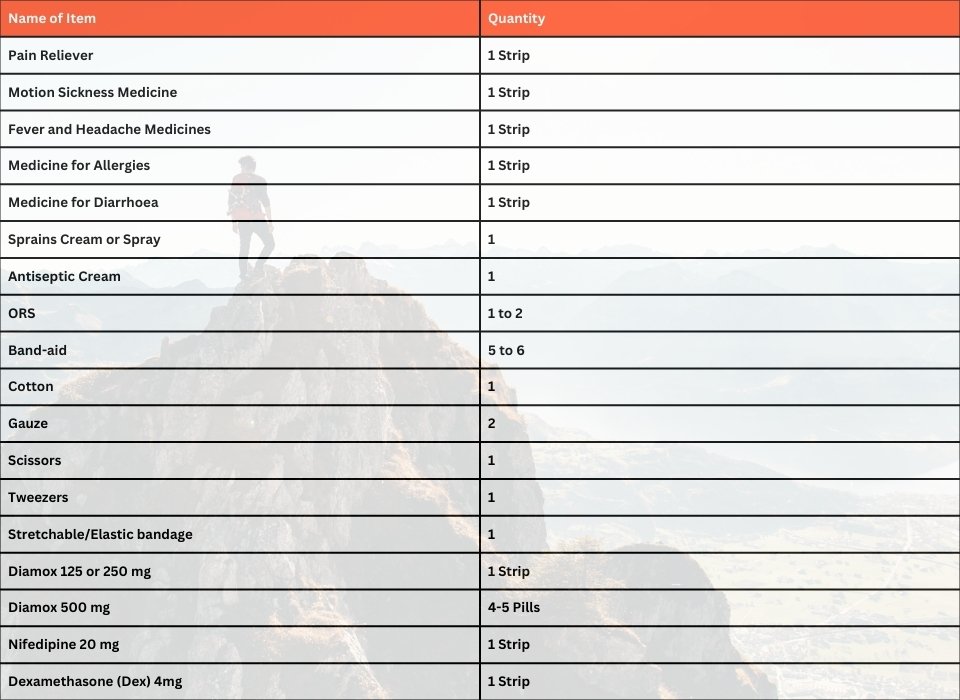
Carry a Personal Medical Kit
Are you Looking for Trekking Equipment on Rent?
If any trekker requires trekking equipment on rent, Himalayan Hikers offers the best-quality gear available for rental. Many individuals are in need of such equipment, and renting provides a cost-effective solution, allowing them to access high-quality gear at an affordable price without the need for a significant investment for short-term use.
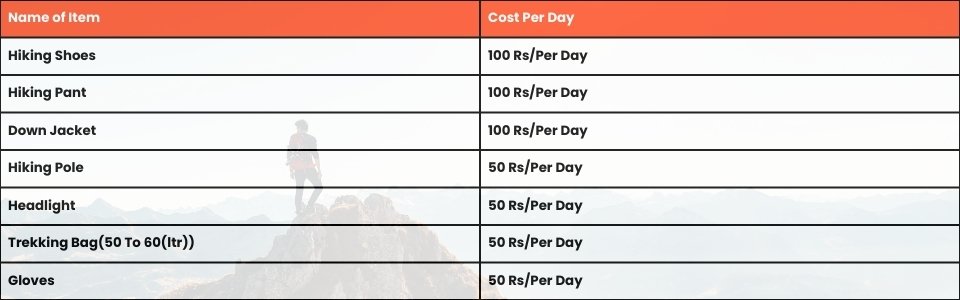
Trek Equipment You can book directly on first day at the Base Camp.
Note:-
Please take all medicines only when prescribed by the doctor. In case you face any problem during your trek,
discuss and take advice from the Professional guide.
The Trek is one of the most popular treks in Uttarakhand, Himachal,Kashmir,Laddakh,Sikkim,Nepal, requiring both physical preparation and mental readiness. Although it is categorized as a moderate trek, reaches an elevation of over 12,720 feet and traverses remote Himalayan terrain, which can be physically and mentally challenging. Here's how you can prepare yourself for a safe and successful accomplishment of the Trek:
Physical Fitness
Building a good fitness base is essential for every trekker. The Trek itinerary involves 5 to 6 hours of walking every day. Though the trails are well-marked, they are often bumpy and include steep uphill sections, which may affect your stamina. You can overcome your physical limitation with a 6-week training program that you can begin about 2 months before your Trek. Your 6-week fitness routine should include

Pro Tip: If you have time, you can skip the Sunday training and go for a long-distance walk or mini day-hike (7–10 km) with a loaded backpack to simulate real trekking conditions. A short 1-day hike around your city/town can help a lot.
Mental Preparation
Physical strength is only half the journey, the other half is mental resilience. The trail takes you through remote clearings, steep climbs, cold starry nights, and no mobile connectivity. Be prepared to:
(I) - Detach from the digital world.
(II) - Embrace basic mountain living (camping, toilet tents, limited electricity).
(III) - Push through moments of fatigue, weather discomfort, or altitude effects.
A positive mindset, patience, and the ability to adapt will carry you farther than muscle ever could.Himalayan Hikers is a reputable trekking company that places a high priority on safety. Here are some of the safety measures they take to ensure the safety of their clients during the Trek:
Experienced Guides: Himalayan Hikers hires experienced and certified guides who are well-versed in the terrain, weather conditions, and local culture. These guides have first-hand knowledge of the routes and are equipped to handle any emergency situations that may arise.
Proper Gear: The company provides all the necessary gear and equipment to their clients to ensure comfort and safety during the trek.
Hygiene and Sanitation: Himalayan Hikers places great emphasis on hygiene and sanitation during the Trek. They provide clean drinking water, hand sanitizers, and toilet tents to ensure that their clients are healthy and comfortable.
Emergency Services: The company has a well-defined protocol for handling emergency situations. They have a team of trained medical professionals who are available 24/7 and can be quickly mobilized in case of an emergency.
Acclimatization: Himalayan Hikers follows a gradual acclimatization process during treks to ensure that their clients adjust to the high altitude gradually. They also monitor the health of their clients regularly and provide necessary medical attention if required.
Overall, Himalayan Hikers places a great emphasis on safety and takes all necessary measures to ensure the safety and well-being of their clients during treks.
What is Included In This Trek?
Transport Facility Leh To Leh
Forest Permit and entrance fee
Accommodation in tents on twin share basis
All meals: breakfast, packed lunch, tea, coffee, snacks, soup and dinner
(All camping gears)
High quality tents
Sleeping bags
Mattress
Liner
Pillow
Separate Toilet tents – Ladies and Gents
Dining Tent
Dining Table
Porters
Helper
Mules
Kitchen team
Radio Walkie Talkie for Communication
Good Experience Trek Leader guide and Technical guide
Medical Kit
Oxygen Cylinders
Crampons and Gaiters
What is Not Include In This Trek?
Personal Insurance
Medical Certificate
Personal toiletry Items and Personal Medicine kit
On first day En Route to base camp the Breakfast and Lunch are Not Included
Last Day En Route Lunch and Dinner are Not Included
Important Note
No important note.
No FAQs available for this trek.


.webp)


