
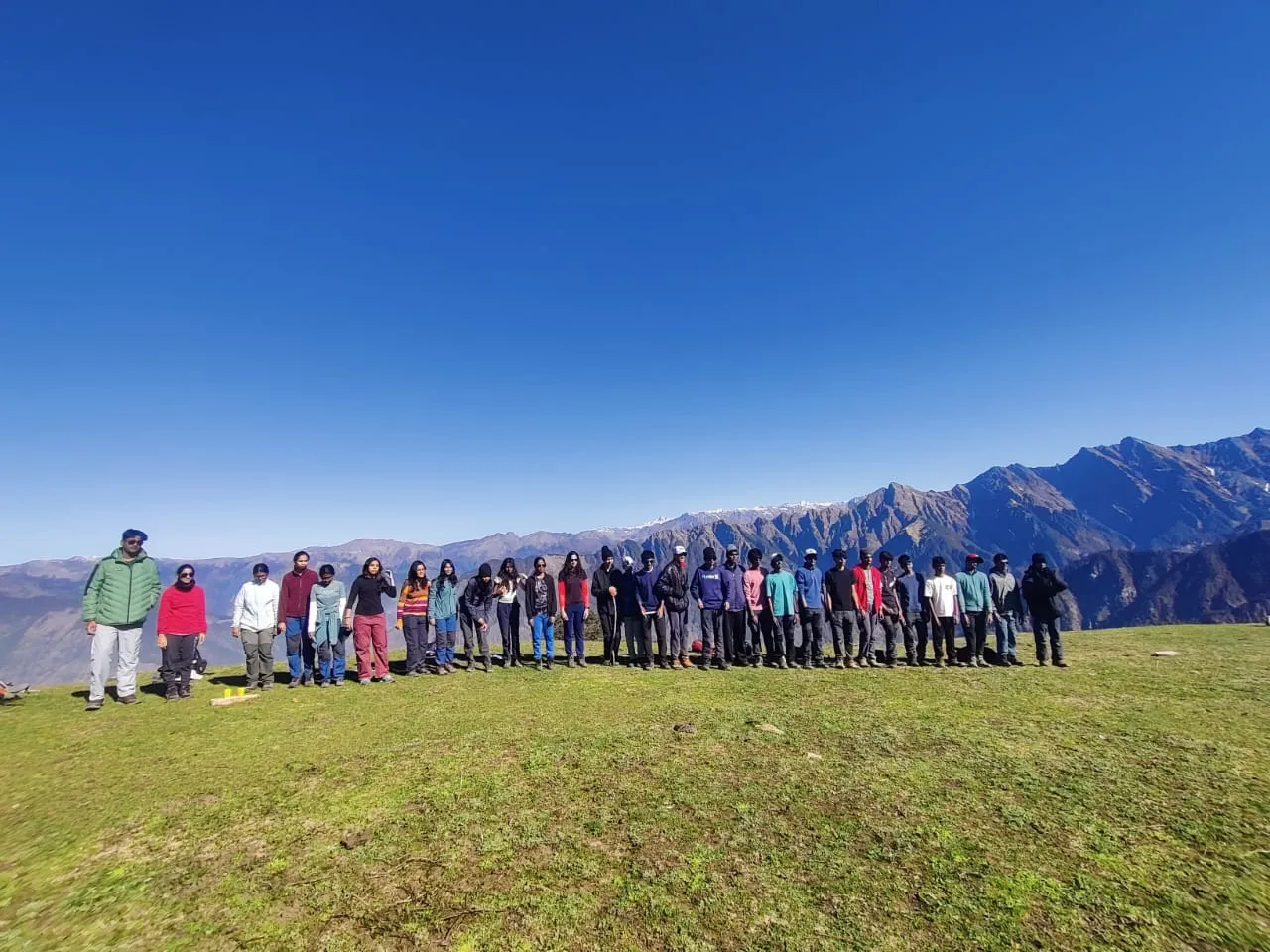


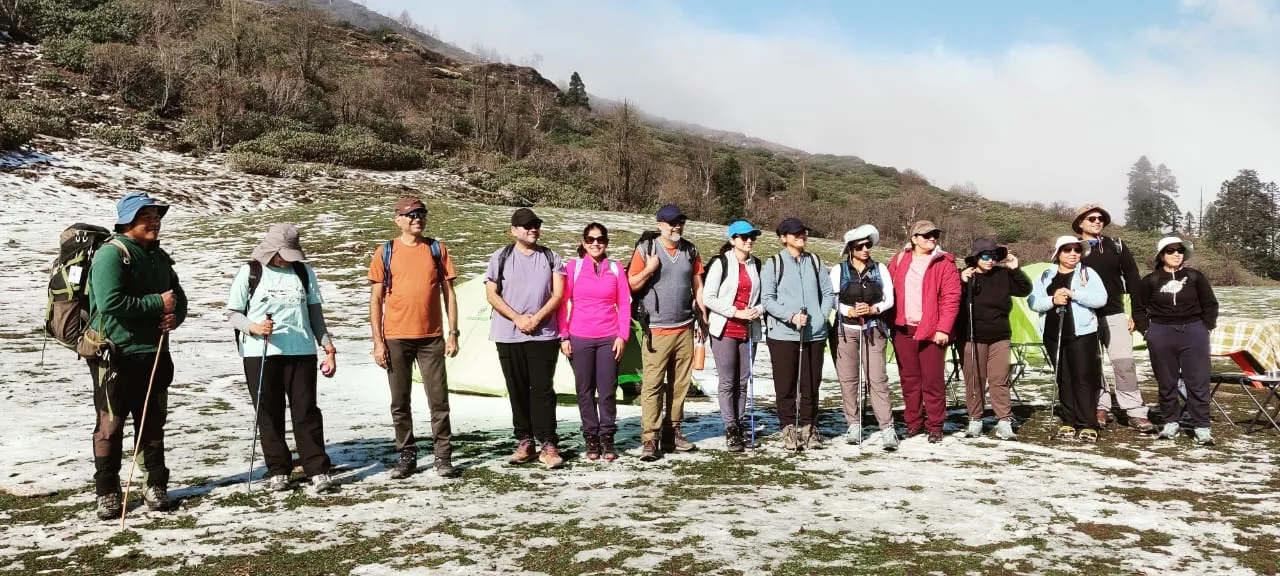
While Kedarkantha is legendary for its dramatic winter snow, perfectly shaped summit, and cultural charm, Phulara Ridge offers an ethereal, edge-of-the-seat walking experience across a narrow, high-altitude spine surrounded by 360-degree mountain panoramas.
By merging these two trails, you don't just double the duration; you exponentially magnify the contrast, the solitude, and the visual reward. Here is a comprehensive look at what a trekker can expect from this ultimate combination, from the undulating bugyals (meadows) to the local folklore and the unforgettable moments that await.
The Trekker’s Experience: A Study in Contrasts
Choosing to do Kedarkantha and Phulara Ridge together completely redefines the standard trekking experience. Usually, a trekker summits a peak and descends along the same or a parallel valley. But this combined itinerary transforms a standard "up-and-down" trek into a grand Himalayan traverse.
The Flow of the Journey
Typically starting from the iconic base camp of Sankri (or Mori) in the Govind Wildlife Sanctuary, the journey begins within dense, moss-draped forests of pine, oak, and morinda spruce.
Phase 1 (The Vertical Ascent): The first half of the trek focuses on the steady climb toward the Kedarkantha summit 12,500ft This phase is energetic, lively, and structured around clearing the treeline to achieve a classic peak summit.
Phase 2 (The Ridge Traverse): Instead of heading straight back to Sankri, you veer toward the Bhoj Gadi and Pushtara meadows to connect with the Phulara Ridge 12,127 ft.This phase shifts from a vertical climb to a sweeping horizontal traverse. For hours, you walk on a narrow ridge where the ground falls away on both sides, making you feel as though you are walking in the sky.
Physical and Mental Dynamics
Acclimatization Advantage: Because you spend multiple days hovering between 10,000 ft and 12,500 ft rather than rushing down, your body acclimatizes beautifully. The steep climbs of Kedarkantha prepare your legs and lungs perfectly for the long, balanced ridge-walk of Phulara.
Crowd Dynamics: Kedarkantha is arguably India’s most popular winter trek, which means its main trails can get crowded. However, the moment your itinerary branches off toward Phulara Ridge, the crowds vanish. You instantly transition from a bustling Himalayan highway into pristine, untouched, silent wilderness.
The Mystical Bugyals (Alpine Meadows)
In the local Garhwali dialect, alpine pastures located above the treeline but below the snowline are called Bugyals. They are nature’s velvet carpets, and this combined trek introduces you to some of the finest bugyals in Asia.
Juda Ka Talab & Juda Meadows
Before you reach the vast expanses, you encounter the clearing of Juda Ka Talab. While famous for its high-altitude lake, the surrounding clearing serves as a gentle introduction to the alpine ecosystem. It is a clearing cradled by giant pine trees, where the grass stays emerald green in spring and turns a golden brown in autumn before being buried under deep winter snow.
Kedarkantha Base Meadows
As you clear the treeline below the summit, the world opens up into vast, rolling snowfields or grassy slopes (depending on the season). These meadows face the towering peaks of the Har Ki Dun valley. Standing here, the scale of the Himalayas hits you—the meadows serve as a massive viewing deck for the giants beyond.
Bhoj Gadi: The Hidden Sanctuary
As you transition toward Phulara Ridge, you camp at Bhoj Gadi. This meadow is named after the abundant Bhojpatra (Paper Birch) trees that skirt its edges. Bhoj Gadi is a terraced, bowl-shaped meadow. It feels hidden from the rest of the world. It is incredibly serene, offering a stark contrast to the more frequented camps on the standard Kedarkantha route.
Pushtara Bugyal: The Endless Green Canvas
After crossing the Phulara Ridge, you descend into Pushtara Bugyal. If Phulara is the thrill of the sky, Pushtara is the comfort of the earth.
The Visual Splendor: Pushtara is an immense, rolling meadow that seems to stretch into infinity. It breaks into a riot of yellow, purple, and white wildflowers during the monsoon and post-monsoon months. The slopes are gentle, isolated, and frequented only by local shepherds (Gaddis and Bakarwals) and their flocks.
Folklore, Legends, and Local Culture
The mountains of Uttarakhand are not just geological structures; they are living, breathing storehouses of myth, faith, and ancient history. The valleys surrounding Sankri, Juda, and Osla are deeply tied to the Mahabharata epic.
The Legend of Kedarkantha: The Broken Ritual
The name Kedarkantha literally translates to "The Throat of Lord Shiva." According to local folklore, after the catastrophic Kurukshetra war, the Pandavas sought the blessings of Lord Shiva to atone for the sins of fratricide. Shiva, wishing to avoid them, took the form of a bull (Nandi) and hid in the Garhwal Himalayas.
Local historical tales state that Shiva originally chose the summit of Kedarkantha to sit in deep meditation. He began setting up a shrine there. However, while he was in the middle of his rituals, he heard the distant lowing of a cow and the noise of villagers from the valley below. Because absolute silence is paramount for his meditation, Shiva abandoned the site mid-way and shifted further up the mountains to what is now the main Kedarnath temple.
The Evidence in Stone: To this day, at the very peak of Kedarkantha, there sits a small, sacred arrangement of stones (Chorten) dedicated to Lord Shiva and Ganesha. The locals believe that the summit still retains a fraction of Shiva’s intense cosmic energy.
The Phulara Ridge: The Pathway of Flowers
The name Phulara is derived from the Hindi word Phool (Flower). Local villagers believe that this high ridge was the path used by mountain fairies and local deities to travel across valleys without stepping into the mortal villages below. In the late summer, when the ridge blooms with wild Himalayan flowers, locals consider it a direct sign that the deities are pleased and are walking the ridge, scattering blessings across the valleys of Mori and Sankri.
The Culture of the Border Villages
The people living at the base of these treks (in villages like Sankri, Taluka, Jakhol, and Saur) belong to a unique cultural pocket. For centuries, they practiced a distinct form of hill Hinduism.
Unlike the rest of India where the Pandavas are worshipped, some remote pockets of this valley historically paid homage to the Kauravas and Duryodhana (though many temples have transitioned to worshipping Lord Someshwar, an avatar of Shiva, in recent decades).
Their architecture is magnificent: multi-storied wooden houses made of deodar logs and stone, featuring intricate hand-carved motifs of snakes, flowers, and geometric patterns designed to withstand both severe winters and earthquakes.
Kedarkantha Phulara Ridge Trek Complete Guide
Our mission has always been to ensure that no trekker steps into the Himalayas without the right perspective. A trek is not just a checklist of summits; it is a serious commitment to the outdoors. Having the right information is what separates a reckless climb from a soulful journey.
This section serves as your definitive manual for the Kedarkantha Phulara Ridge Trek. We have distilled years of mountain experience and real-time feedback into this guide to give you a clear, honest picture of the trail.
We provide this depth of information because we want you to be more than just a visitor—we want you to be a prepared, responsible trekker who respects the mountains as much as we do.
Day 1: Dehradun to Sankri (Drive)
Distance/Time: 190 km (8–9 hours drive)
Altitude: 1,920 meters
Highlights: Pickup from Dehradun Railway Station; scenic drive to Sankri Market.
Accommodation: Overnight stay at Grand Shiva Homestay, Sankri.
Day 2: Sankri to Juda Ka Talab (Trek)
Distance/Time: 5 km (5–6 hours trek)
Altitude: 2,900 meters
Highlights: Trekking through dense pine forests to reach the beautiful high-altitude lake.
Accommodation: Overnight stay in tents (Campsite).
Day 3: Juda Ka Talab to Kedarkantha Base Camp (Trek)
Distance/Time: 4 km (3–4 hours trek)
Altitude: 3,400 meters
Highlights: Short but steep climb open to stunning views of snow-capped peaks.
Accommodation: Overnight stay in tents (Campsite).
Day 4: Kedarkantha Base Camp to Kedarkantha Summit – Descent to Dunda Thach
Distance/Time: 7–8 hours total trek
Altitude: 3,800 meters (Summit)
Highlights: Early morning summit push for a breathtaking 360-degree sunrise view, followed by a descent to the Dunda Thach campsite.
Accommodation: Overnight stay in tents (Campsite).
Day 5: Dunda Thach to Phulara Ridge Summit – Gujar Hat (Trek)
Distance/Time: 8 km (5–6 hours trek)
Altitude: 3,700 meters (Phulara Ridge)
Highlights: Trekking along the spectacular, narrow Phulara Ridge with panoramic mountain views, then descending to Gujar Hat.
Accommodation: Overnight stay in tents (Campsite).
Day 6: Gujar Hat to Taluka (Trek) – Drive to Sankri
Distance/Time: 8 km trek (4–5 hours) + short drive to Sankri
Highlights: Final stretch of trekking down to the Taluka Road head, followed by a drive back to Sankri.
Accommodation: Overnight stay at a hotel/homestay in Sankri.
Day 7: Sankri to Dehradun (Drive)
Distance/Time: 190 km (8–9 hours’ drive)
Highlights: Morning departure from Sankri; arrival and drop-off at Dehradun by approximately 6:00 PM.
Day 1
Day 2
Day 3
Day 4
Day 5
Day 6
Day 7
Day 1: Arrival in Dehradun & Drive to Sankri
Distance: 190 km (Drive) | Duration: 8–9 Hours
Altitude: 1,920 meters (6,299 feet)
Accommodation: Grand Shiva Homestay, Sankri
Your adventure begins early in the morning with a pickup from the Dehradun Railway Station. From here, you will embark on a scenic, long-distance mountain drive to Sankri. The journey takes you along the sparkling Yamuna and Tons rivers, passing through picturesque pine forests, step-cultivated fields, and charming hill towns like Mussoorie, Barkot, and Purola. As you enter the Govind Wildlife Sanctuary national park area, the air grows crisper and colder. By evening, you will reach Sankri, a bustling hub for Himalayan trekkers. Check into the Grand Shiva Homestay, enjoy a warm dinner, and brief with your guides for the journey ahead.
Day 2: Sankri to Juda Ka Talab
Distance: 5 km (Trek) | Duration: 5–6 Hours
Altitude: 1,920 m to 2,900 m (9,514 feet)
Accommodation: High-altitude wilderness campsite
After a hearty breakfast, your trekking journey officially begins. The trail leaves Sankri village and climbs steadily through dense, enchanting forests of pine, maple, and oak. Keep your ears open for the chirping of Himalayan birds and the gentle crunch of brown leaves under your boots. The gradient is moderate but continuous. By afternoon, you will emerge into a clearing to find Juda Ka Talab, a stunning high-altitude lake surrounded by towering pine trees. If you trek in winter, this lake is completely frozen into a sheet of ice. Camp tonight right next to this serene setting under a star-lit sky.
Day 3: Juda Ka Talab to Kedarkantha Base Camp
Distance: 4 km (Trek) | Duration: 3–4 Hours
Altitude: 2,900 m to 3,400 m (11,154 feet)
Accommodation: Kedarkantha Base Camp (Snow/Meadow campsite)
Today’s trek is relatively short but involves a steeper climb, allowing your body to acclimatize to the higher altitudes. The trail continues through the forest but slowly opens up to reveal vast, snow-dusted meadows (or lush green slopes depending on the season). As you approach the Kedarkantha Base Camp, the tree line begins to recede, exposing sweeping, panoramic views of the mighty snow-capped Himalayan peaks, including Bandarpoonch, Swargarohini, and Black Peak. You will reach the base camp by lunchtime. Spend the afternoon resting, exploring the campsite, and preparing your gear for tomorrow's big summit push.
Day 4: Kedarkantha Summit Push & Descent to Dunda Thach
Distance: 7–8 Hours (Total Trek)
Altitude: Base Camp to Kedarkantha Summit (3,800 m / 12,467 ft) then down to Dunda Thach
Accommodation: Wilderness campsite at Dunda Thach
Today is the most thrilling day of the expedition. You will wake up in the freezing pre-dawn hours (around 3:00 AM) to begin your summit push by flashlight. Navigating the steep, snowy slopes in the dark is an exhilarating experience. As you reach the Kedarkantha Summit (3,800 meters), you will be rewarded with one of the most famous 360-degree sunrise views in the Indian Himalayas. Watch the sun light up countless peaks like Gangotri, Yamunotri, and Har Ki Dun ranges in brilliant hues of gold and orange.
After spending unforgettable moments at the summit, begin your descent. Instead of heading back to the regular route, you will branch off towards a pristine, less-traveled trail heading down to Dunda Thach, a peaceful clearing nestled in the mountains where you will set up camp for the night.
Day 5: Dunda Thach to Phulara Ridge Summit – Descent to Gujar Hat
Distance: 8 km (Trek) | Duration: 5–6 Hours
Altitude: 3,700 m (Phulara Ridge Summit)
Accommodation: Campsite at Gujar Hat
Get ready for an entirely different topographical marvel today as you tackle the famous Phulara Ridge. Unlike regular valleys, ridge walking means you will be walking right on the narrow crest of the mountain with deep, sweeping valleys dropping away on both sides of you. The walk offers a continuous, unblocked view of majestic snow walls stretching out into the horizon. Monal pheasants and mountain goats are frequently spotted here. After crossing the highest point of the ridge at 3,700 meters, you will begin a pleasant downhill trek through vibrant alpine meadows to Gujar Hat, a beautiful meadow campsite traditionally used by local nomadic shepherds (Gujars).
Day 6: Gujar Hat to Taluka Road Head – Drive back to Sankri
Distance: 8 km (Trek) + short drive | Duration: 4–5 Hours Trek
Accommodation: Hotel / Homestay in Sankri
On your final day of trekking, you will follow a beautifully descending trail that winds through deep forests and runs parallel to roaring mountain streams. The path passes through lush vegetation and isolated local fields until you reach the village road head at Taluka. Say goodbye to your trekking crew, horses, and porters here. A local taxi will pick you up from Taluka and take you on a bumpy, scenic 1-hour drive back to civilization at Sankri. Check back into your accommodation, enjoy a hot running shower, and celebrate the completion of two magnificent mountain passes with a grand farewell dinner.
Day 7: Departure: Sankri to Dehradun
Distance: 190 km (Drive) | Duration: 8–9 Hours
It is time to say goodbye to the mountains. After breakfast, board your vehicle for the return drive back to Dehradun. Enjoy a final look at the beautiful valleys of Uttarakhand as you trace your way back along the Tons River. You will be dropped off at the Dehradun Railway Station or nearby city center around 6:00 PM, carrying a treasure trove of memories from the Kedarkantha and Phulara Ridge trails.
No difficulty level available.
Spring & Summer (May to June) — Best for Wildflowers & Greenery
The Experience: The snow melts away, transforming the meadows of Dunda Thach and Gujar Hat into vibrant, neon-green carpets covered in alpine wildflowers.
Phulara Ridge: This is the prime time for the ridge walk, as the clear, snow-free trail allows you to walk safely on the crest with perfect grip.
Weather: Pleasant daytime trekking temperatures (15 C to 20 C; cool nights.
Autumn (September to November) — Best for Clear Views
The Experience: Post-monsoon, the air is incredibly crisp and washed clean, offering the sharpest, most flawless 360-degree views of distant Himalayan peaks like Swargarohini and Bandarpoonch.
Weather: Transitioning from cool to very cold at night (dropping closeby November).
Winter (December to April) — Best for Snow Lovers
The Experience: The entire trail, including the pine forests of Juda Ka Talab and the Kedarkantha summit, turns into a winter wonderland buried under thick blankets of snow.
The Phulara Ridge Catch: While Kedarkantha is a world-class winter trek, walking the narrow Phulara Ridge in peak winter (January/February) requires microspikes, gaiters, and caution. Heavy snowfall can sometimes cause guides to alter the ridge route for safety.
Weather: Freezing. Daytime temperatures hover around 5 C to 10 C while nights plummet to5 C or lower.
Months to Avoid: July and August (Monsoon). The region faces heavy rainfall, making the roads to Sankri prone to landslides and the steep ridge trails slippery and dangerous.
To reach Dehradun for this trek, you have three main options depending on your starting location and budget: Air, Rail, or Road.
Most trekkers from places like Delhi, Mumbai, Bangalore, or Kolkata first travel to Delhi and then make their way to Dehradun. Here is a detailed breakdown of how to get there:
1. By Air (Fastest Option)
Airport: Jolly Grant Airport, Dehradun (DED).
How it works: Dehradun has a well-connected domestic airport located about 25–30 km outside the main city center. There are daily direct flights from major cities like Delhi, Mumbai, and Bangalore.
Getting to the meeting point: From the airport, you can easily take a prepaid taxi or an airport bus to the Dehradun Railway Station (the standard pickup point for the trek). It takes about 45 minutes to 1 hour.
2. By Train (Most Popular & Economical)
Since your trek pickup is early in the morning at the Dehradun Railway Station (DDN), taking an overnight train from Delhi is often the most convenient option. You can wake up, step off the train, and directly meet your trekking group.
Top Train Picks from Delhi (NDLS / NZM):
Nanda Devi Express (12401): Departs Delhi around 11:45 PM and arrives in Dehradun at 5:40 AM (Perfect timing for the trek pickup).
Dehradun Shatabdi Express (12017): Departs Delhi around 6:45 AM and arrives by 12:50 PM (Good if you plan to arrive a day early).
Vande Bharat Express (22457): Departs Delhi around 5:50 PM and arrives by 10:35 PM.
By Road (Buses & Taxis)
Dehradun is exceptionally well-connected to Delhi and other major North Indian cities via the Delhi-Dehradun Expressway.
By Volvo / AC Bus: Both government (ISBT Anand Vihar, Delhi) and private operators run overnight luxury Volvo and sleeper buses from Delhi to Dehradun. The journey takes about 5 to 6 hours. Book a bus that drops you at the Dehradun ISBT (Inter-State Bus Terminus) by 5:00 AM or 6:00 AM. From the ISBT, you can take a local auto-rickshaw or taxi to the Railway Station (about 15-20 minutes away).
By Car / Taxi: You can book a private outstation cab (like Ola, Uber, or MakeMyTrip outstation) directly from Delhi to Dehradun.
Pro-Tip for Trekkers
Arrive a day early if possible! The drive from Dehradun to Sankri on Day 1 starts very early (usually between 6:00 AM and 7:00 AM) and takes nearly 9 hours. Arriving in Dehradun the evening before allows you to get a good night's sleep in a local hotel, ensuring you are fresh and well-rested for the long winding mountain drive to the base camp.

Necessary Items for trekkers
Mandatory Documents
Original and photocopy of government photo identity card- (Aadhar Card, Driving License, Voters ID, etc,)
Passport and Visa important to foreigners
Medical Certificate (First part should be filled by the Doctor and Second part by the Trekker)
Declaration Certificates
Note: – Many trekkers commit the same mistake of carrying unnecessary items on a trek which only makes the backpack heavy. It is important to know the right items to carry. It differs from season to season if you are trekking in summers then carry less layers of warm clothing and if you are trekking in winters carry enough layers to protect yourself against chilly cold.
Basic Trekking Gears
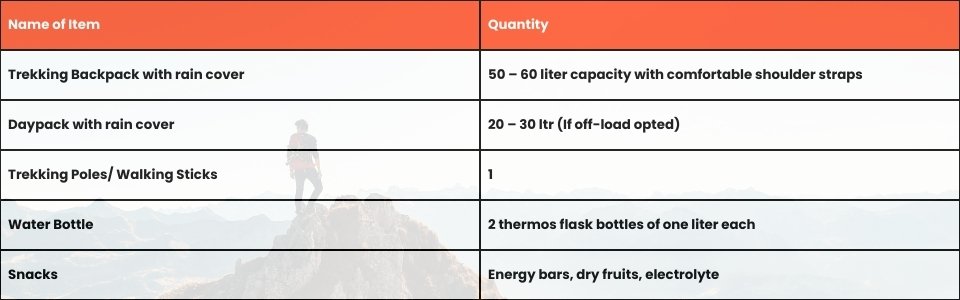
The Clothes You Should Bring On Satopanth Expedition

Head Gears

Foot Gears

Personal Care Essentials

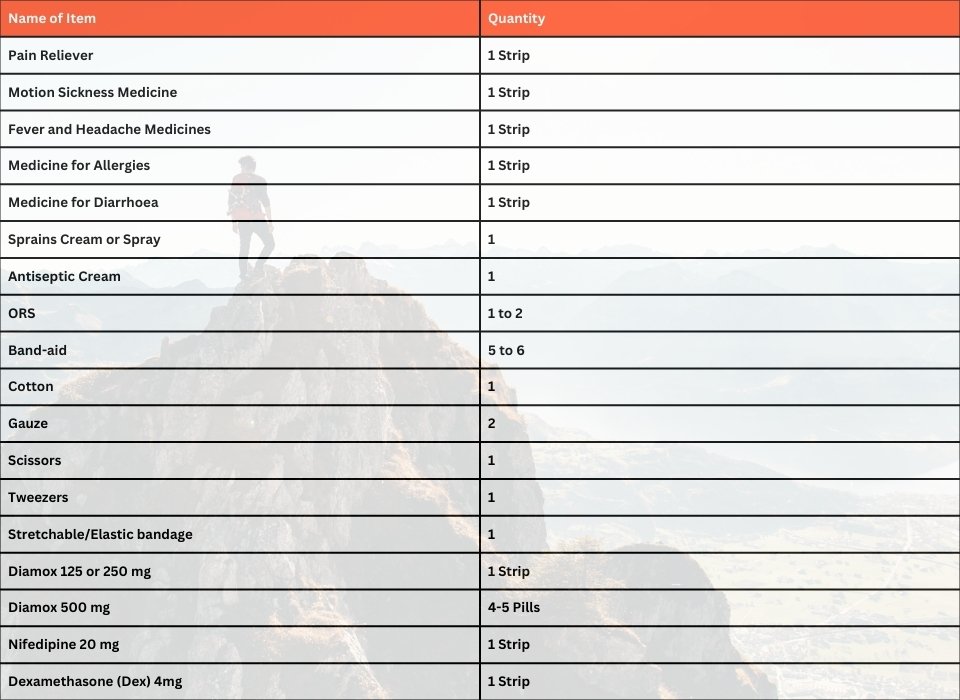
Carry a Personal Medical Kit
Are you Looking for Trekking Equipment on Rent?
If any trekker requires trekking equipment on rent, Himalayan Hikers offers the best-quality gear available for rental. Many individuals are in need of such equipment, and renting provides a cost-effective solution, allowing them to access high-quality gear at an affordable price without the need for a significant investment for short-term use.

Trek Equipment You can book directly on first day at the Base Camp.
Note:-
Please take all medicines only when prescribed by the doctor. In case you face any problem during your trek,
discuss and take advice from the Professional guide.
The Trek is one of the most popular treks in Uttarakhand, Himachal,Kashmir,Laddakh,Sikkim,Nepal, requiring both physical preparation and mental readiness. Although it is categorized as a moderate trek, reaches an elevation of over 12,720 feet and traverses remote Himalayan terrain, which can be physically and mentally challenging. Here's how you can prepare yourself for a safe and successful accomplishment of the Trek:
Physical Fitness
Building a good fitness base is essential for every trekker. The Trek itinerary involves 5 to 6 hours of walking every day. Though the trails are well-marked, they are often bumpy and include steep uphill sections, which may affect your stamina. You can overcome your physical limitation with a 6-week training program that you can begin about 2 months before your Trek. Your 6-week fitness routine should include

Pro Tip: If you have time, you can skip the Sunday training and go for a long-distance walk or mini day-hike (7–10 km) with a loaded backpack to simulate real trekking conditions. A short 1-day hike around your city/town can help a lot.
Mental Preparation
Physical strength is only half the journey, the other half is mental resilience. The trail takes you through remote clearings, steep climbs, cold starry nights, and no mobile connectivity. Be prepared to:
(I) - Detach from the digital world.
(II) - Embrace basic mountain living (camping, toilet tents, limited electricity).
(III) - Push through moments of fatigue, weather discomfort, or altitude effects.
A positive mindset, patience, and the ability to adapt will carry you farther than muscle ever could.Himalayan Hikers is a reputable trekking company that places a high priority on safety. Here are some of the safety measures they take to ensure the safety of their clients during the Trek:
Experienced Guides: Himalayan Hikers hires experienced and certified guides who are well-versed in the terrain, weather conditions, and local culture. These guides have first-hand knowledge of the routes and are equipped to handle any emergency situations that may arise.
Proper Gear: The company provides all the necessary gear and equipment to their clients to ensure comfort and safety during the trek.
Hygiene and Sanitation: Himalayan Hikers places great emphasis on hygiene and sanitation during the Trek. They provide clean drinking water, hand sanitizers, and toilet tents to ensure that their clients are healthy and comfortable.
Emergency Services: The company has a well-defined protocol for handling emergency situations. They have a team of trained medical professionals who are available 24/7 and can be quickly mobilized in case of an emergency.
Acclimatization: Himalayan Hikers follows a gradual acclimatization process during treks to ensure that their clients adjust to the high altitude gradually. They also monitor the health of their clients regularly and provide necessary medical attention if required.
Overall, Himalayan Hikers places a great emphasis on safety and takes all necessary measures to ensure the safety and well-being of their clients during treks.
No inclusions found.
No exclusions found.
Important Note
No important note.
Map not available for this trek.
The combined trail is moderately challenging with long walking days.
You will reach 3,800 meters at Kedarkantha peak.
The pickup point is at Dehradun Railway Station.
The entire itinerary spans over 7 days and 6 nights.
It combines a 360-degree summit view with stunning ridge walking.
Signals disappear completely after you leave Sankri village.
Expect one night in a homestay and five in tents.
Nutritious, freshly cooked vegetarian meals are provided daily.
Yes, provided you have good physical fitness and stamina.
Winter offers beautiful snow, but ridge walking gets tougher.
Campsites feature private, dry eco-friendly toilet tents.
Yes, local mules can carry your main luggage.
You must be able to jog 5 km comfortably.
Fresh, natural Himalayan spring water is collected at camps.
Carry five warm layers to survive freezing nighttime temperatures.


.webp)


