
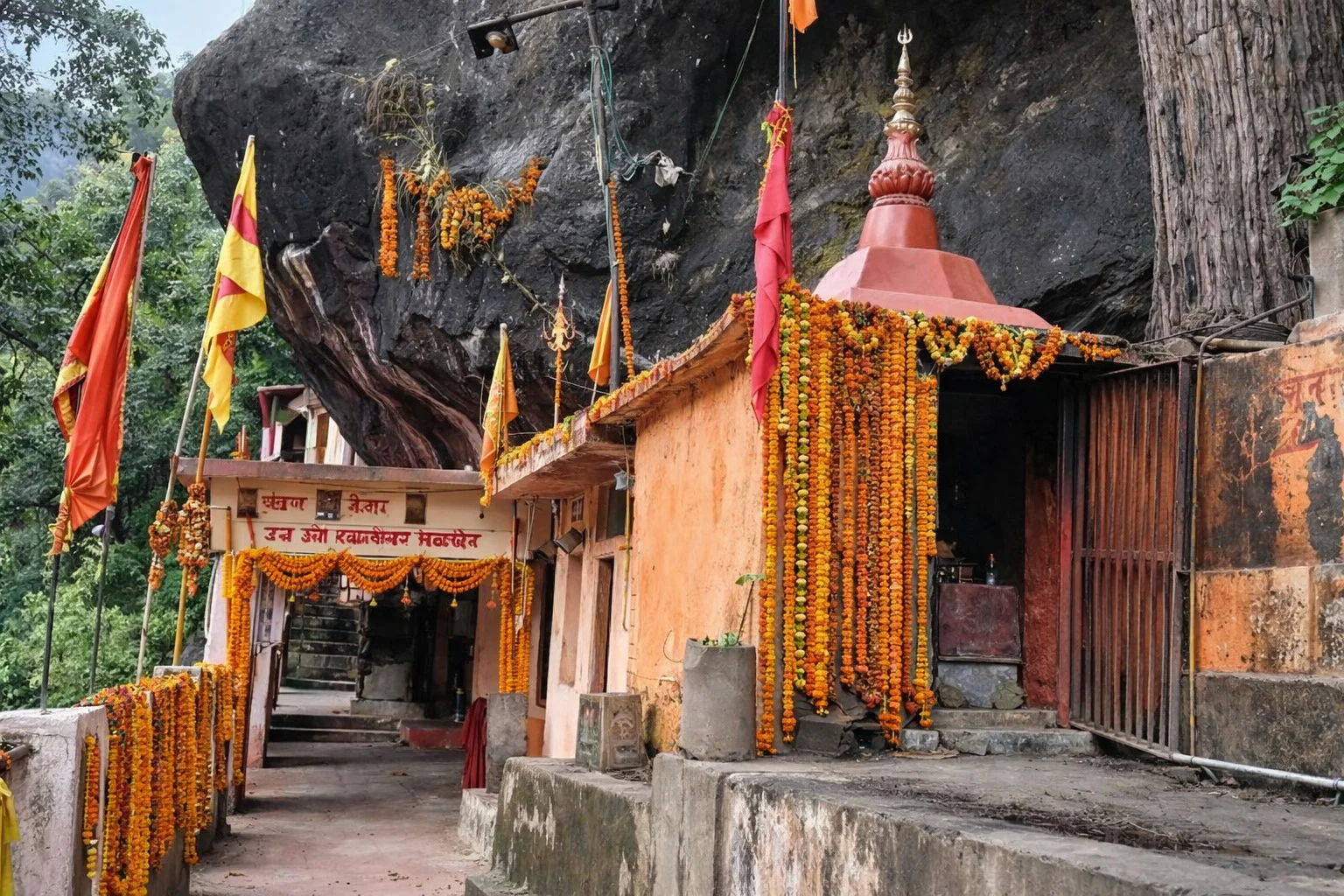


Dense forests, quaint villages, the Urgam valley, and vast meadows covered with wildflowers can all be found along the trail. There is a fresh vista around every corner at times it's a serene village, while at other times it's a broad expanse of Himalayan giants like Nanda Devi, Trishul, and Nanda Ghunti.
What makes this journey even more meaningful is the story it carries. According to the Mahabharata, the Pandavas came to these mountains seeking forgiveness from Lord Shiva. But Shiva, not ready to forgive them, took the form of a bull and hid. When they finally found him, he disappeared into the earth and later reappeared in five places—now known as the Panch Kedar.
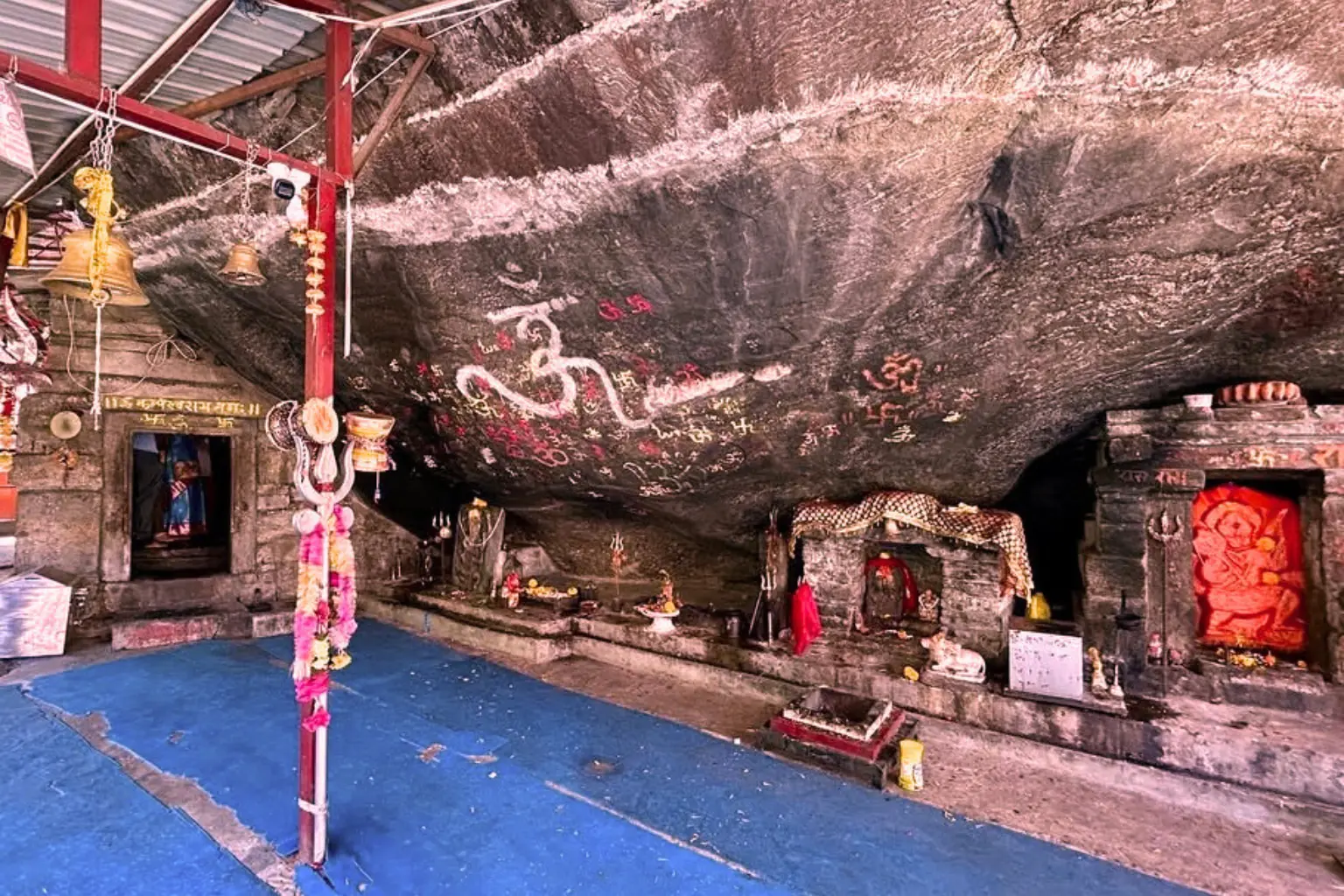
At Kalpeshwar, Shiva is worshipped in the form of his matted hair, inside a quiet cave temple set in the peaceful Urgam Valley. Nearby stands the sacred Kalpavriksha, believed to grant wishes—a place where people often sit a little longer than planned.
This walk is about more than just reaching your destination; it's about exploring the natural world, making connections with folklore, and finding quiet times to think.
5 reasons to motivate you for the Kalpeshwar Mahadev trek.
1. One of the Panch Kedar – Deep Spiritual Significance
Kalpeshwar is part of the sacred Panch Kedar, dedicated to Lord Shiva. It’s believed that Shiva’s jata (hair) appeared here, making it a rare and spiritually powerful site. This isn’t just a trek—it’s a pilgrimage with deep meaning.
2. The Only Panch Kedar Temple Open Year-Round
Unlike the others, Kalpeshwar remains accessible in all seasons. Even in winter, when places like Kedarnath Temple shut down, you can still experience devotion here making it a unique and flexible adventure.
3. Beginner-Friendly Yet Rewarding Trek
The trek (around 2–3 km from Urgam village) is relatively easy compared to other Himalayan treks. It’s perfect if you want the thrill of trekking without extreme difficulty—ideal for beginners or a peaceful solo escape.
4. Hidden Valley Beauty (Urgam Valley)
The journey takes you through the stunning Urgam Valley—a less-crowded paradise with terraced fields, waterfalls, and traditional villages. It feels untouched and authentic, far from tourist chaos.
5. Peace, Solitude & Inner Reset
Unlike crowded destinations, Kalpeshwar offers silence and stillness. The cave temple setting, flowing river nearby, and mountain air create the perfect environment to disconnect, reflect, and recharge mentally.
Complete Information About The Kalpeshwar Mahadev Trek
Our mission has always been simple: to ensure that no trekker steps into the Himalayas unprepared. A trek is far more than a checklist of summits; it is a profound journey, a test of resilience, and a dialogue with nature itself. The difference between a reckless climb and a truly soulful experience lies in one thing: perspective.
This section is your complete guide to the Kalpeshwar Mahadev trek. Years of hands-on experience, combined with real-time insights from fellow trekkers, have been carefully distilled to give you a clear and honest picture of what awaits on the trail. We share this knowledge with a purpose. We don’t just want you to visit the mountains—we want you to understand them. To walk with awareness, to prepare with intention, and to tread with respect. Because the Himalayas are not just a destination—they are an experience that demands responsibility, humility, and presence.
Kalpeshwar Mahadev Trek Complete Guide
Our mission has always been to ensure that no trekker steps into the Himalayas without the right perspective. A trek is not just a checklist of summits; it is a serious commitment to the outdoors. Having the right information is what separates a reckless climb from a soulful journey.
This section serves as your definitive manual for the Kalpeshwar Mahadev Trek. We have distilled years of mountain experience and real-time feedback into this guide to give you a clear, honest picture of the trail.
We provide this depth of information because we want you to be more than just a visitor—we want you to be a prepared, responsible trekker who respects the mountains as much as we do.
Note: Pickup from Rishikesh. Drive to Joshimath by tempo travellers and Boleros.
Day 1: Arrival in Rishikesh & Drive to Joshimath / Pepalkoti
Drive: 240-250 km (Approx: 8-10 hours) | Altitude: 2,100 to 2,300 m
Day 2: Trek From Pepalkoti/Joshimath to Kalpeshwar Mahadev
Drive: 35-36 km (Approx: 1.30 hrs) | Trek: 1.3 km (Approx: 20-30 minutes) | Altitude: 2,400 to 2,500M
Day 3: Departure for Rishikesh.
Drive: 240-250 km (Approx: 8-10 hrs)
Day 1
Day 2
Day 3
Day 1: Arrival in Rishikesh & Drive to Joshimath / Pepalkoti
Drive: 240-250 km (Approx: 8-10 hours) | Altitude: 2,100 to 2,300 m
Drive from Rishikesh via Devprayag and Rudraprayag. Overnight in a homestay or guest house in Joshimath / Pepalkoti
Rishikesh, often called the “Gateway to the Garhwal Himalayas,” sets the tone for the journey. As you leave behind the ghats and the steady flow of the Ganga, the road begins to climb into the mountains. The hum of city life fades, replaced by winding roads and the rhythm of the river flowing beside you.
The first major pause comes at Devprayag, where the emerald Alaknanda meets the darker Bhagirathi to officially form the Ganga. It’s more than a geographical point—it’s a moment that reminds you of the spiritual depth of this region.
As you continue through Srinagar, Rudraprayag, and Karnaprayag, the river stays close, sometimes calm, sometimes roaring. Each bend in the road reveals terraced fields, small villages, and distant snow peaks.
Day 2: Trek From Pepalkoti/Joshimath to Kalpeshwar Mahadev
Drive: 35-36 km (Approx: 1.30 hrs) | Trek: 1.3 km (Approx: 20-30 minutes) | Altitude: 2,400 to 2,500M
A short, easy hike from Devgram / urgam valley to Kalpeshwar Temple to offer prayers. Visit the nearby waterfall. Return to Joshimath / pepalkoti.
Near pepalkoti /Joshimath lies Helang, a small roadside stop that most travelers overlook. But this is where your journey takes a turn—literally and metaphorically.
A narrow road branches off into the serene Urgam Valley. The difference is immediate. The busy highway disappears, replaced by silence, greenery, and a slower pace of life.
The road here is tighter and less polished, but the views are worth every turn. Pine forests, stepped farms, and traditional wooden houses dot the landscape. It feels like stepping into a different time.
Day 3: Departure for Rishikesh.
Drive: 240-250 km (Approx: 8-10 hrs)
Enjoy your final breakfast at pepalkoti / joshimath marking the end of your trek. After photos and certificate distribution, depart around 10:00 am for Rishikesh, arriving by evening.
Difficulty level of the Kalpeshwar Mahadev Trek
Trek Length: The actual trek is very short, only 1-2 km.
Terrain: The trail is well-defined, generally paved, and passes through scenic villages, terraced fields, and forests.
Slope: There is very little, if any, steep ascent, providing a comfortable walk for most pilgrims.
Altitude: Located at roughly 2,200 meters (approx. 7,200 feet), minimising the risk of acute mountain sickness (AMS) compared to other high-altitude treks.
Accessibility: Open throughout the year.
Important Notes:
Alternative Path: A new motorable route to a point closer to the temple has reduced the trekking distance further.
Connection: While some sources confuse it with the strenuous Rudranath trek, the trek to Kalpeshwar itself is easy.
Preparation: While easy, it is still a hilly path; comfortable walking shoes are recommended.
The ideal time to visit Kalpeshwar Mahadev is between May and June and again from September to November, when the weather is pleasant, skies are clear, and trekking conditions in the Urgam Valley are safe and enjoyable. Although the temple remains open throughout the year, the winter months, December to April, can be quite cold, making the journey more challenging.
April to June
Summer season: -
Ideal Weather: Spring and early summer offer mild temperatures and clear skies, making it perfect for the 1.5-2km trek from Urgam to the temple.
Accessible Routes: After the winter snow melts, paths in the Garhwal Himalayas become accessible, whereas November to April sees heavy snow.
Scenic Beauty: The surrounding Urgam Valley is vibrant, with green fields, blooming flowers, and visible Himalayan peaks.
Convenient Timing: It is the best time to combine the visit with other nearby locations before the arrival of the monsoon rains, which bring landslide risks in July and August.
July-August
Monsoon season: -
Landslides & Roadblocks: The route to the Urgam Valley (where the trek begins) frequently suffers from landslides, blocking roads and disrupting travel.
Dangerous Trails: The trek is considered slippery, unstable, and risky due to the steep, muddy terrain and heavy rainfall.
September to October
Post monsoon season: -
Clear Views & Hiking: September and October provide crystal-clear views of the Himalayas and the scenic Urgam Valley.
Accessibility: While Kalpeshwar is the only Panch Kedar temple open year-round, these months ensure the access roads are safe, and the trekking path is easy to navigate.
November to March
Winter season: -
Heavy Snowfall: High risk of heavy snowfall in the Urgam Valley during December and January, but its impact also in to march also, which can hinder travel and walking trails.
Extreme Temperatures: Temperatures fall below freezing, creating harsh, dangerously cold conditions.
Road Closures: While the temple is technically open, roads leading to the nearest motorable point (Helang) can be affected by snow, and paths from Dumak can be dangerous.
Limited Services: Trekkers will find fewer amenities, as villages in the area face harsh conditions
Inaccessibility: While the temple remains technically open year-round, heavy rain and potential flash floods make access difficult and unsafe.
Infrastructure Issues: Increased danger to travel and unreliable, poor, or dangerous driving conditions on mountainous roads, say local reports.
How to plan your travel for the Kalpeshwar Mahadev Trek
We suggest reaching Rishikesh a day before your trek officially begins. For example, if your trek starts on 22nd May, plan your arrival for 21st May. This extra time acts as a safety cushion for delays and helps you acclimatise and rest.
Your journey begins by reaching Uttarakhand, typically via Delhi or Uttar Pradesh, which are the main transit hubs.
By Train
If you prefer trains, travel to:
From Hazrat Nizamuddin and New Delhi Railway Station, you can easily visit Rishikesh.
By Air
The nearest airport is Jolly Grant Airport, Dehradun.
Flights connect from Delhi. Once you land at Jolly Grant, it’s just a 20-30-minute drive to Rishikesh.
- Hire a taxi (20-30 minutes)
- Rishikesh is a Yoga Nagri where you see the traditional culture of Ganga Aarti.
By Road (Most Popular Option)
For most travellers, road travel is the easiest and most scenic:
First, reach the ISBT Kashmiri Gate, and then you have lots of options of buses.
- Overnight buses run from Delhi to rishikesh
- Travel time: 5–6 hours.
- Both government (UTC) and private Volvo buses are available
- From Rishikesh, your mountain journey truly begins.
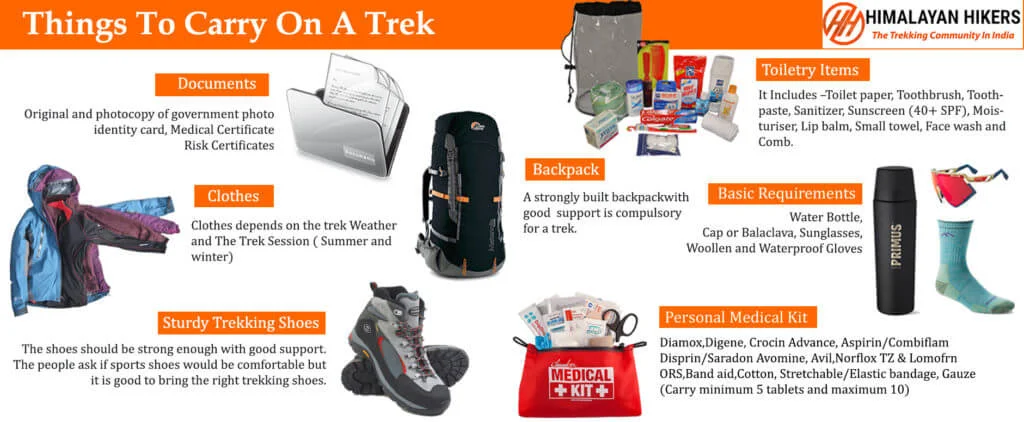
Necessary Items for trekkers
Mandatory Documents
Original and photocopy of government photo identity card- (Aadhar Card, Driving License, Voters ID, etc,)
Passport and Visa important to foreigners
Medical Certificate (First part should be filled by the Doctor and Second part by the Trekker)
Declaration Certificates
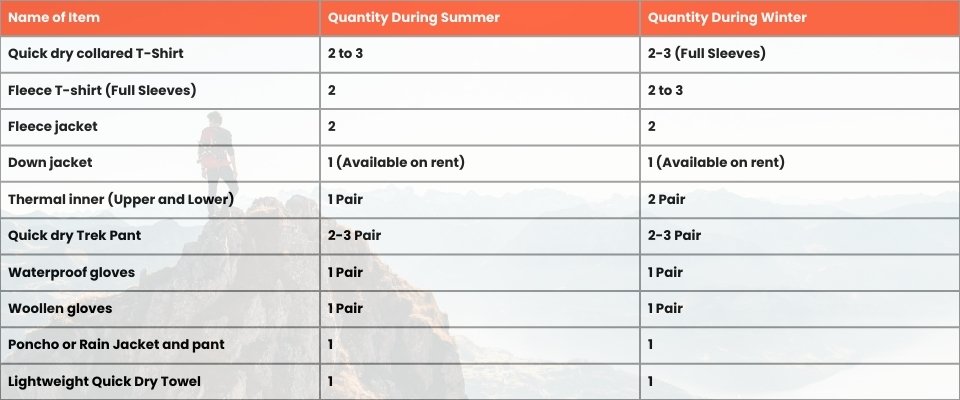
Note: – Many trekkers commit the same mistake of carrying unnecessary items on a trek which only makes the backpack heavy. It is important to know the right items to carry. It differs from season to season if you are trekking in summers then carry less layers of warm clothing and if you are trekking in winters carry enough layers to protect yourself against chilly cold.
Basic Trekking Gears
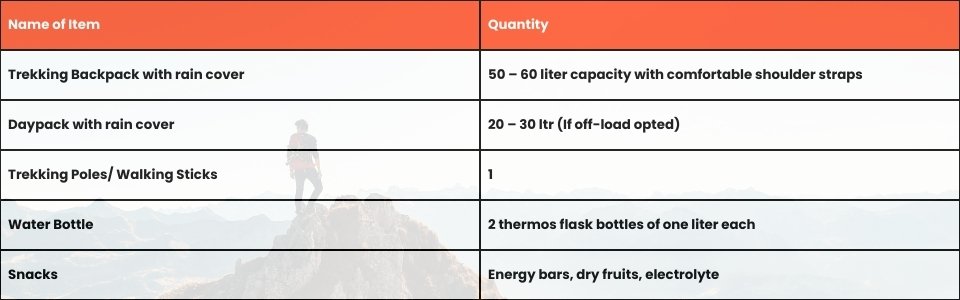
The Clothes You Should Bring On Satopanth Expedition
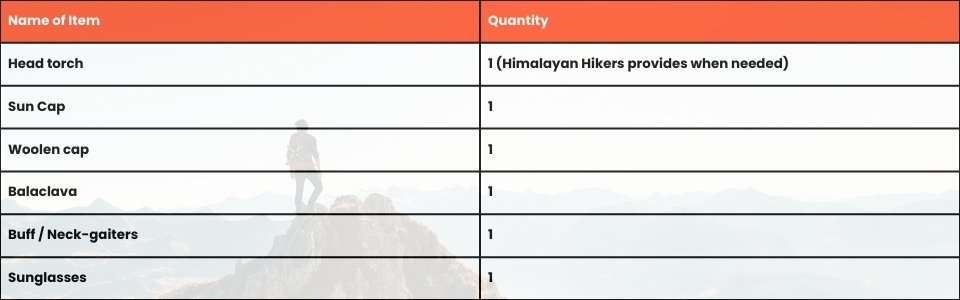
Head Gears
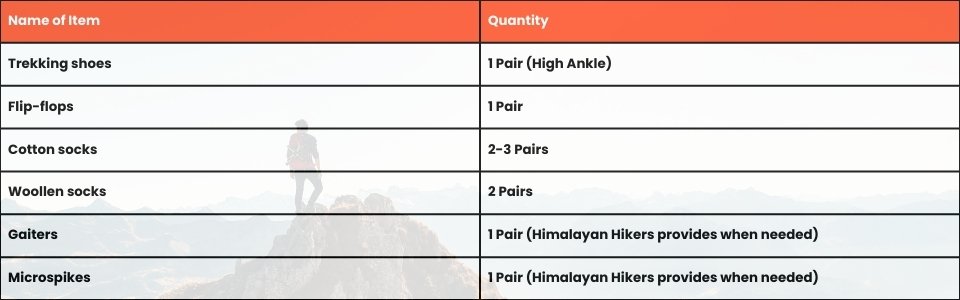
Foot Gears
Personal Care Essentials

Carry a Personal Medical Kit
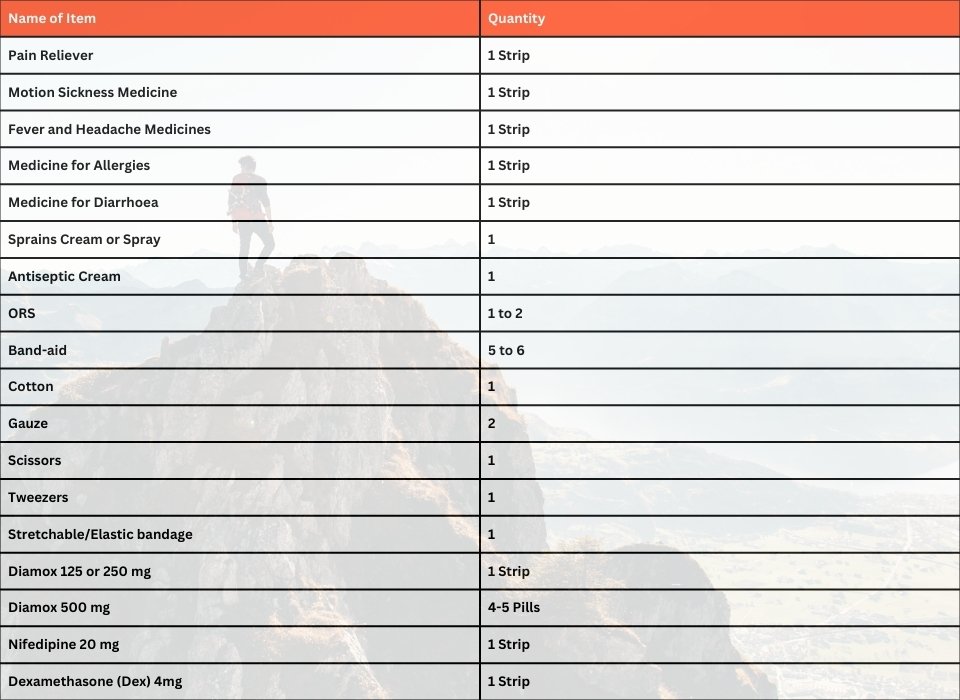
Are you Looking for Trekking Equipment on Rent?
If any trekker requires trekking equipment on rent, Himalayan Hikers offers the best-quality gear available for rental. Many individuals are in need of such equipment, and renting provides a cost-effective solution, allowing them to access high-quality gear at an affordable price without the need for a significant investment for short-term use.
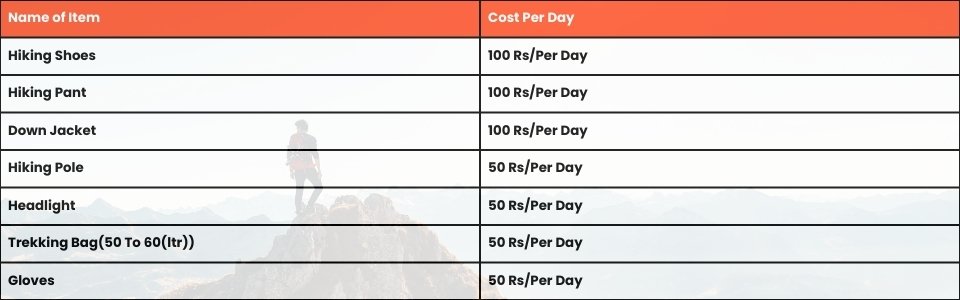
Trek Equipment You can book directly on first day at the Base Camp.
Note:-
Please take all medicines only when prescribed by the doctor. In case you face any problem during your trek,
discuss and take advice from the Professional guide.
Himalayan Hikers Fitness Criteria
Himalayan Hikers emphasize that a trekker should be able to cover a certain distance comfortably to ensure they don't get exhausted before the summit.
1. Cardio (Stamina is key)
You’ll be walking uphill, so endurance matters more than strength.
Do 4–5 days/week:
- Brisk walking: 30–45 minutes
- OR light jogging: 20–30 minutes
- OR cycling
Goal: Walk 4–5 km comfortably without getting exhausted
2. Leg Strength (for uphill climb)
Strong legs = less fatigue on the trek
Do 3–4 days/week:
- Squats – 3 sets × 12 reps
- Lunges – 3 sets × 10 each leg
- Step-ups (stairs or bench) – 3 sets × 10
- Wall sit – hold 30–60 sec
If possible, practice climbing stairs daily (very effective!)
3. Breathing & Endurance
Helps you handle altitude and continuous walking
- Deep breathing exercises – 5–10 minutes daily
- Try pranayama (especially Anulom Vilom)
- Practice walking while controlling your breathing rhythm
4. Practice with Load
You’ll carry a small backpack during the trek
- Walk with a 3–5 kg backpack for 20–30 minutes
- Helps your body adjust before the actual trek
5. Flexibility & Recovery
Avoid stiffness and muscle pain
- Stretch after workouts
- Focus on hamstrings, calves, and lower back
- Light yoga can help
6. Realistic Practice (if possible)
If you have access to:
- Small hills
- Uneven trails
- Long staircases
- Practice there — it closely mimics the trek conditions in Uttarakhand
How fit do you need to be?
You’re ready if you can:
- Walk 5 km without stopping
- Climb 10–15 floors of stairs comfortably
- Carry a light backpack without strain
Common mistakes to avoid
- Starting too fast on trek day
- Ignoring hydration
- Wearing new/uncomfortable shoes
- Skipping warm-up
Note: You don’t need to be super fit, just moderately active. Even beginners can do this trek with a little preparation.
Himalayan Hikers is a reputable trekking company that places a high priority on safety. Here are some of the safety measures they take to ensure the safety of their clients during the Trek:
Experienced Guides: Himalayan Hikers hires experienced and certified guides who are well-versed in the terrain, weather conditions, and local culture. These guides have first-hand knowledge of the routes and are equipped to handle any emergency situations that may arise.
Proper Gear: The company provides all the necessary gear and equipment to their clients to ensure comfort and safety during the trek.
Hygiene and Sanitation: Himalayan Hikers places great emphasis on hygiene and sanitation during the Trek. They provide clean drinking water, hand sanitizers, and toilet tents to ensure that their clients are healthy and comfortable.
Emergency Services: The company has a well-defined protocol for handling emergency situations. They have a team of trained medical professionals who are available 24/7 and can be quickly mobilized in case of an emergency.
Acclimatization: Himalayan Hikers follows a gradual acclimatization process during treks to ensure that their clients adjust to the high altitude gradually. They also monitor the health of their clients regularly and provide necessary medical attention if required.
Overall, Himalayan Hikers places a great emphasis on safety and takes all necessary measures to ensure the safety and well-being of their clients during treks.
| Category | Details |
|---|---|
| Transport | Transport from Rishikesh To Rishikesh Traveler & Taxi |
| Permits & Entry | Forest Permit and Entrance Fees |
| Accommodation | Hotel Accommodation on Double / Triple sharing |
| Meals | Breakfast, Lunch, Tea, Coffee, Snacks, Soup, Dinner (All meals included) |
| Support Staff | Trek Helpers |
| Communication Tools | Radio Walkie-Talkie |
| Trek Guides | Experienced Trek Leader & Technical Guide |
| Safety Equipment | Medical Kit, Oxygen Cylinders, Pulse Oximeter |
| Category | Details |
|---|---|
| Meals (Not Included) | – Day 1: En route Breakfast & Lunch to base camp– Day 3: En route Lunch & Dinner (not included) |
| Insurance & Documents | – Personal Insurance– Medical Certificate (Mandatory for age 50 and above) |
| Personal Essentials | – Personal Toiletry Items– Personal Medical Kit |
| Porter Service | – Porter fee: ₹400 per day (to be paid directly at Pepalkoti)– Minimum bag weight for porter: 8 kg |
| Foreign Nationals | – ₹800 extra for trekking permit– Passport and valid Visa required |
Important Note
Himalayan Hikers offers both online and offline booking options for their treks. Here’s a breakdown of both options:
1. Online Booking:
- Website: Himalayan Hikers has an official website where trekkers can browse through different treks, check details (itineraries, costs, difficulty level, etc.), and make bookings. Payment gateways are integrated for secure online transactions.
- Third-Party Platforms: They might also be listed on various trekking or adventure booking platforms, where you can compare prices, read reviews, and make bookings.
- Email Communication: Trekkers can inquire about treks via email and complete the booking process online, following email communication and payment.
2. Offline Booking:
- Direct Office Visit: Himalayan Hikers has physical offices (especially in Uttarakhand), where trekkers can visit in person, discuss treks, and complete bookings directly.
- Phone Booking: You can also call their office to make a booking. Details about payment methods, trek dates, and other logistics can be confirmed over the phone.
Yes, Himalayan Hikers requires a 25% advance payment for booking treks, Via- Google pay or UPI, Directly Himalayan Hikers Account with the remaining amount to be paid in cash at their branch office Pepalkoti before the trek starts. This payment structure is typical for ensuring that bookings are confirmed while allowing trekkers flexibility in completing the payment when they arrive.
Map not available for this trek.
In this trek we cross the most popular markets and villages, like Shrinagar (Uttarakhand) and Devprayag, and Pepalkoti is the nearest place where you can find ATMs.
Our trek guides always check your blood pressure from time to time during the start to end time period. They also carry first-aid boxes with all types of tools and medicine which are needed in this type of situation.
Yes. On the Kalpeshwar Mahadev trek, all types of network providers such as Jio, Airtel, and Vi, work throughout the trek.
Difficulty: This trek is one of the easiest treks, so you don’t have any difficulty.
Fitness level: you don’t need any type of fitness level on this trek because most of the time on this trek you spend in a bus or taxi.
Yes, Himalayan Hikers and most reputable agencies ensure a safe environment. You will usually be paired with other female trekkers in tents or a room (3-person sharing).
While it's beginner-friendly, you should be able to jog 4-5 km in 40 minutes. Basic leg strength and cardio will make the experience much more enjoyable and less painful for your knees.
This trek is open for 12 months of the year, but please avoid the monsoon (August-September) because in these two months, you can face heavy rainfall and landslide issues during the travel time.
No, you generally won’t face a serious electricity issue, but don’t expect reliable power either.
Pack light but smart. The weather can change quickly in the mountains, and electricity/charging options are limited.
If you’re healthy and prepared, you’ll be perfectly fine doing this trek, but we also need the permission of your parents.


.webp)


