


The spectacular views of the many peaks in the central Himalayas such as Dunagiri, Devistna, Hanuman, Nanda Ghunti, Bethartoli, Ronti, Chaukhamba, Barmal and Haathi Ghori are just the tip of the iceberg of what this trek offers. As far as hiking goes, this is a trip to the stars. Nanda Devi National Park home to Himalayan Black Bears, spotted Leopards and the mysterious Snow Leopard amassed in spectacular flora are some of the other major highlights of this trek.
- Experience the majestic views and local legends of these spectacular snow capped peaks.
- Get a chance to explore the wild and exotic vegetation of central Himalayas.
- Challenge yourself to explore the thrill of unknown.
Some of the Trek Highlights of Dharansi Pass Trek
The trek to Dharansi officially begins in Joshimath, a town well-known for its cultural significance. Joshimath, also known as Jyotirmath, is a popular starting point for many Himalayan treks and is close to the pilgrimage site of ‘Badrinath’. Jyotirmath is thought to be one of the four cardinal institutions founded by the great Hindu philosopher Shri Adi Shankaracharya. Trekkers enjoy the leisure of learning many different cultural aspects of this city due to its high cultural significance.
Trekkers continuing on from Joshimath will eventually reach Lata village before progressing on to Lata Kharak and then to Dharansi Pass. Lata Kharak will provide an incredible view of various Himalayan peaks such as Nanda Ghuni, Dronagiri, Ranthi Peak, and many more. The ridge location of Malthuni Bethertholi will be the final point separating the inner and outer parts of Nanda Devi Sanctuary, after which trekkers will dispatch for a descent on their way back.
Things to Look out for
- The trek is certain to provide unrivalled feelings of accomplishment.
- Various villages with numerous holy sites are almost certain to keep trekkers wanting to learn more.
- Explore the enthralling forest of rhododendrons, birch, and raga.
- The morning mountains, snow-covered, with golden rays of dawn adorning their peaks, are worth every step of this journey.
The altitude covered in Dharansi Pass trek
- Dehradun/Rishikesh to Joshimath -640m-187m.
- Lata village- 2370m
- Bhelta- 2850m
- Lata Karak- 3800m
- Dharansi Pass Camp- 4300m.
- Debrugheta- 3600m
- Hitoli to Surai Thotha
Dharansi Pass Trek Complete Guide
Our mission has always been to ensure that no trekker steps into the Himalayas without the right perspective. A trek is not just a checklist of summits; it is a serious commitment to the outdoors. Having the right information is what separates a reckless climb from a soulful journey.
This section serves as your definitive manual for the Dharansi Pass Trek. We have distilled years of mountain experience and real-time feedback into this guide to give you a clear, honest picture of the trail.
We provide this depth of information because we want you to be more than just a visitor—we want you to be a prepared, responsible trekker who respects the mountains as much as we do.
Day 1: Drive from Dehradun/Rishikesh to Joshimath
Day 2: Joshimath to Lata Village
Day 3: Lata Village to Lata Kharak
Day 4: Lata Kharak to Dharansi Pass Camp
Day 5: Dharansi Pass Camp to Debrugheta and back to Dharansi Pass Camp
Day 6: Dharansi Pass Camp to Hitoli
Day 7: Hitoli to Surai Thotha and then back to Joshimath
Day 8: Joshimath to Rishikesh and then back to Dehradun/Rishikesh
Day 1
Day 2
Day 3
Day 4
Day 5
Day 6
Day 7
Day 8
Day 1: Drive from Dehradun/Rishikesh to Joshimath
Our vehicle will pick you up in Dehradun/Rishikesh and take you further up to Joshimath. The travel will be hours long hence we strongly recommend trekkers to rest for the night after settling themselves at a hotel.
Day 2 : Joshimath to Lata Village
Today the trek commences from Joshimath to Lata village through a moderately difficult trail. Upon reaching trekkers can find small accommodation houses and interact with the locals before retiring for the night. Don’t forget to pay a visit to the Famous Nanda Devi Temple.
Day 3 : Lata Village to Lata Kharak
After breakfast, the trek departs to Lata Kharak through Bhelta crossing across the pine and cedar trees. This uphill route will end at the Camping site of Lata Kharak. Relish the astounding view of peaks like Nanda Ghunti, Ronti and Hathi Parvat.
Day 4 : Lata Kharak to Dharansi Pass camp
Today’s climb will be an uphill trek to Jhandidhar. Bid farewell to Lata Kharak campsite and begin your journey towards the Dharansi Pass camp. As the distance to Jhandi Dhar closes, trekkers will be able to enjoy the scenic panorama of clearly visible towering peaks. Peaks like Chaukhamba, Dronagiri and Hathi will be in their best view possible.
Trekkers will now take the route to Tolma village from where the final campsite of Dharansi Pass will stretch.
Day 5 : Dharansi Pass Camp to Debrugheta and back to Dharansi Pass camp
Starting early on the day teams will be exploring the Deburgheta route. Deburgheta marks the finishing standpoint of this trek after which lies the border to inner prohibited land of Nanda Devi Sanctuary.
Spend some time at the visit; capture the beauty of majestic Nanda Devi Peak, after which teams will trail back to Dharansi Pass campsite.
Day 6 : Dharansi Pass camp to Hitoli
Trek down to Jhandi Dhar, from where the teams will take the Hitoli campsite route. During the journey, you will come across some stunning Himalayan vegetation. This trek will stop at Hitoli campsite for the night before continuing on to Joshimath.
Day 7 : Hitoli to surai Thotha and then back to Joshimath
Trek down to Tolma village then further to Surai Thotha. Spend some time interacting with the locals while you wait for your vehicle accommodation. Drive from the village to Joshimath where trekkers can further extend their exploration. Check in at a nearby hotel, and stroll the evening exploring the culturally significant site of Joshimath.
Day 8: Joshimath to Rishikesh and then back to Dehradun/Rishikesh
Trekkers will dispatch for their nearest respective airports, Railway stations or Bus stands.
Dharansi Pass Trek Difficulty
The Dharansi Pass Trek is considered moderate to difficult due to a combination of high altitude, remote location, and challenging terrain. Trekkers need good physical fitness and prior experience to complete it safely.
Because the top is relatively high in elevation, we recommend a reasonable level of physical fitness. We strongly advise trekkers to be physically and mentally prepared for the upcoming rocky terrain that this trek provides. Throughout the course, all groups will be guided by our experts for trekking equipment and any impending terrain.
- High Altitude: The trek reaches around 4200–4500 meters, which increases the risk of altitude sickness.
- Remote Area: The trail is inside a restricted forest region with very limited facilities and support.
- Long Duration: Daily trekking hours are long, often 6–8 hours, causing fatigue.
- Rugged Terrain: The route includes steep climbs, rocky paths, and dense forests.
- Unpredictable Weather: Sudden weather changes, cold winds, and low temperatures make trekking harder.
Best Time to Visit Dharansi Pass Trek
The best time to visit Dharansi Pass Trek is during late spring, summer, and post-monsoon when the weather is relatively stable and the trails are accessible.
Both the ascent and the descent of Dharansi Pass are moderately challenging. The best time to hike these paths is from May to October. Temperatures typically range from 12 to 20 degrees Celsius, with sub-zero temperatures in the winter. Summers have generally mild weather with little to no precipitation, whereas monsoons have moderate to heavy rainfall.
- May to June: Pleasant weather, clear skies, and comfortable trekking conditions.
- September to October: Fresh environment after monsoon with excellent mountain views.
- Avoid Monsoon (July–August): Heavy rainfall, slippery trails, and risk of landslides.
- Avoid Winter (November–April): Extreme cold and heavy snowfall make the trek inaccessible.
If you are travelling from any metropolitan city in India or from outside India, getting to the capital city of Delhi may be the first and most important step. All major modes of transportation, such as air, road, and rail, can take you to Delhi.
Dehradun/Rishikesh is connected to all major cities in India via all major modes of transportation. Trekkers could perhaps conduct extensive research for their direct mode of transportation to ensure a much smoother arrival.
How to reach Dehradun/Rishikesh from Delhi
By air– Jolly Grant Airport Dehradun is the nearest airport to Joshimath situated at a distance of 272 kms. It is well connected to Delhi and many chief cities with daily flights.
By road- Delhi has no direct road routes to Joshimath. To reach Joshimath via road all the way from Delhi would include frequent stops. Trekkers will have to book either a bus or private cabs. Prior booking for cabs and buses are easily available at various sites.
Delhi> Dehradun/Rishikesh>Joshimath (via Rishikesh)
Delhi>Rishikesh>Joshimath
Delhi> Dehradun/Rishikesh>Auli>Joshimath (via Auli-Joshimath ropeway)
By railway– Nearest Railway station to Joshimath will be Rishikesh Railway station. Since Rishikesh is connected to all major railway routes, trekkers can opt for a direct route or via Delhi.
Some important points to note-
We highly recommend trekkers to reach out to our teams for any queries. You can drop an email or call us for an initial guided session.
Our teams will be collecting trekkers at fixed points of airports, railway stations and bus stands. It is recommended that unless any delay arrives, trekkers are advised to reach the destinations at least 2 hours prior.
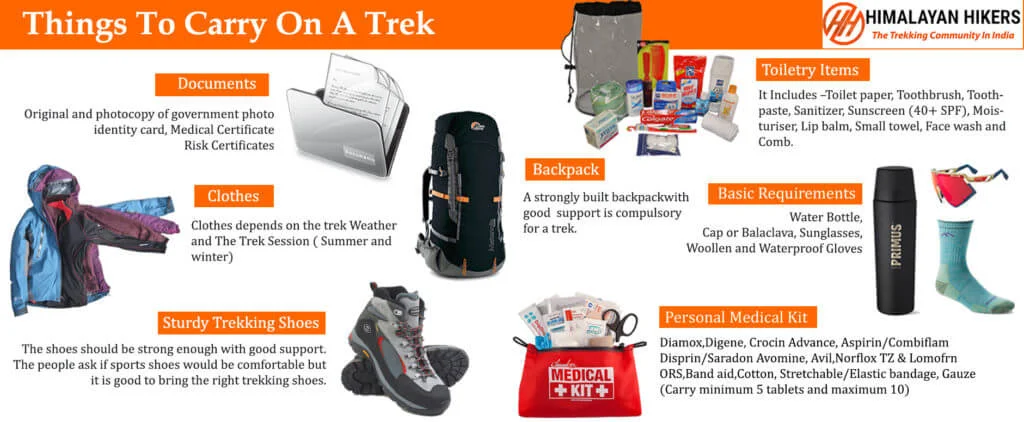
Packing and Gear List (Category Wise with Quantity)
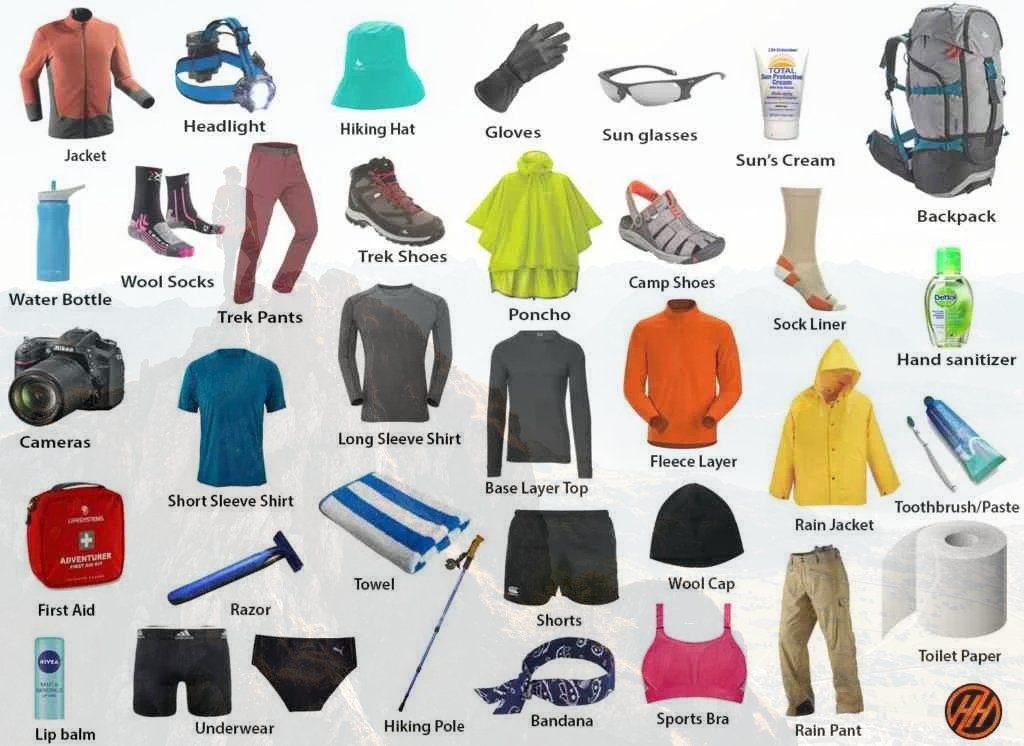
For the Dharansi Pass Trek, packing should be done smartly by dividing items into categories. This helps in better organization and ensures you carry all essential gear without overloading your backpack.
Clothing
- T-shirts (quick dry): 3–4 (comfortable for trekking)
- Trekking Pants: 2–3 (lightweight and stretchable)
- Thermal Innerwear: 2 sets (for cold nights)
- Warm Jacket (fleece/down): 1 (for high altitude cold)
- Waterproof Jacket/Poncho: 1 (for rain and wind protection)
- Socks: 4–5 pairs (keep feet dry and warm)
- Gloves: 1 pair (prefer waterproof + warm)
- Woolen Cap/Beanie: 1 (for warmth)
- Sun Cap: 1 (for sun protection)
Footwear
- Trekking Shoes: 1 pair (good grip and ankle support)
- Extra Slippers/Sandals: 1 pair (for campsite use)
Backpack & Gear
- Backpack (50–60L): 1 (to carry all essentials)
- Daypack (20–30L): 1 (for short hikes or summit push)
- Trekking Pole: 1 pair (helps in balance and reduces strain)
- Headlamp/Torch: 1 (for night use)
- Power Bank: 1 (for charging devices)
Essentials
- Water Bottles (1L): 2 (stay hydrated)
- Sunglasses (UV protection): 1 (protect eyes from strong sunlight)
- Personal Toiletries: 1 kit (toothbrush, soap, etc.)
- First Aid Kit: 1 (basic medicines and bandages)
- Energy Snacks: As required (dry fruits, energy bars)
How to Prepare for Dharansi Pass Trek (Weekly Plan)
Preparing for the Dharansi Pass Trek requires a structured weekly plan focusing on stamina, strength, and endurance. Below is a simple 4-week preparation schedule for beginners to intermediate trekkers.
Week 1: Basic Fitness
- Walking/Jogging: 20–30 minutes daily
- Stairs Climbing: 10–15 minutes
- Stretching: Full body daily
- Focus: Build basic stamina
Week 2: Endurance Building
- Jogging/Brisk Walk: 30–40 minutes
- Stairs Climbing: 15–20 minutes
- Light Strength Training: Squats, lunges (2–3 sets)
- Focus: Improve endurance and leg strength
Week 3: Strength & Load Training
- Jogging: 40–45 minutes
- Stairs with Backpack: 20 minutes (5–7 kg weight)
- Strength Exercises: Squats, planks, lunges
- Focus: Train body for carrying load
Week 4: Trek Simulation
- Long Walk: 6–8 km once or twice a week
- Stairs with Backpack: 25–30 minutes
- Continue Strength Training: 3–4 days/week
- Focus: Real trek-like preparation
Following this weekly plan will help improve your stamina, strength, and confidence, making it easier to handle the challenges of the Dharansi Pass Trek.
Himalayan Hikers is a reputable trekking company that places a high priority on safety. Here are some of the safety measures they take to ensure the safety of their clients during the Trek:
Experienced Guides: Himalayan Hikers hires experienced and certified guides who are well-versed in the terrain, weather conditions, and local culture. These guides have first-hand knowledge of the routes and are equipped to handle any emergency situations that may arise.
Proper Gear: The company provides all the necessary gear and equipment to their clients to ensure comfort and safety during the trek.
Hygiene and Sanitation: Himalayan Hikers places great emphasis on hygiene and sanitation during the Trek. They provide clean drinking water, hand sanitizers, and toilet tents to ensure that their clients are healthy and comfortable.
Emergency Services: The company has a well-defined protocol for handling emergency situations. They have a team of trained medical professionals who are available 24/7 and can be quickly mobilized in case of an emergency.
Acclimatization: Himalayan Hikers follows a gradual acclimatization process during treks to ensure that their clients adjust to the high altitude gradually. They also monitor the health of their clients regularly and provide necessary medical attention if required.
Overall, Himalayan Hikers places a great emphasis on safety and takes all necessary measures to ensure the safety and well-being of their clients during treks.
What is Included in This Trek?
The Dharansi Pass Trek package is designed to provide a safe, comfortable, and well-organized Himalayan adventure experience. Below are the inclusions covered in this trek package:
- Transport facility from Rishikesh to Rishikesh
- Forest permit and entrance fee
- Accommodation in hotel on twin share basis
- All meals: breakfast, packed lunch, tea, coffee, snacks, soup, and dinner
- Radio walkie-talkie for communication
- Experienced local trek leader and technical guide
- Medical kit
- Oxygen cylinders
- Porters
Additional Support & Safety
Our team ensures proper safety measures, professional guidance, and logistical support throughout the trek, making your Dharansi Pass adventure secure and memorable.
What is Not Included in This Trek?
The following items and services are not included in the Dharansi Pass Trek package. Participants are requested to arrange these on their own before the trek begins:
- Personal insurance
- Medical fitness certificate
- Personal toiletry items
- Personal medicine kit
Important Note
Himalayan Hikers offers both online and offline booking options for their treks.
1. Online Booking:
- Website: Himalayan Hikers has an official website where trekkers can browse through different treks, check details (itineraries, costs, difficulty level, etc.), and make bookings. Payment gateways are integrated for secure online transactions.
- Third-Party Platforms: They might also be listed on various trekking or adventure booking platforms, where you can compare prices, read reviews, and make bookings.
- Email Communication: Trekkers can inquire about treks via email and complete the booking process online, following email communication and payment.
2. Offline Booking:
- Direct Office Visit: Himalayan Hikers has physical offices (especially in Uttarakhand), where trekkers can visit in person, discuss treks, and complete bookings directly.
- Phone Booking: You can also call their office to make a booking. Details about payment methods, trek dates, and other logistics can be confirmed over the phone.
Yes, Himalayan Hikers requires a 25% advance payment for booking treks, Via- Google pay or UPI, Directly Himalayan Hikers Account with the remaining amount to be paid in cash at their branch office in Sankri before the trek starts. This payment structure is typical for ensuring that bookings are confirmed while allowing trekkers flexibility in completing the payment when they arrive.
Map not available for this trek.
It’s known for its raw wilderness experience inside Rajaji National Park. Unlike popular Himalayan treks, this one offers dense forests, wildlife sightings, and peaceful landscapes rather than snow-capped peaks.
The pass lies within the Rajaji Tiger Reserve region, near the foothills of the Himalayas in Uttarakhand, not far from Dehradun.
It’s generally considered easy to moderate:
- Suitable for beginners with basic fitness
- Trails include forest paths, gradual ascents, and some uneven terrain
- November to March → best for wildlife sightings and pleasant weather
- Avoid monsoon (July–September) → due to slippery trails and park restrictions
Since it’s inside a national park:
- You may encounter animals like elephants, deer, and even tigers (rarely seen)
- Guides are mandatory, and forest permissions are required
- Safety is generally good when rules are followed
Yes. You need:
- Entry permit from forest authorities
- Registered guide (compulsory)
- Most trekkers arrange this via local operators or through the park office
- Nearest city: Dehradun
- From there, drive to the park entry gate (often via Chilla or Motichur range depending on route)
- Forest rest houses (limited availability)
- Basic camping setups arranged by guides or tour operators
- Light trekking shoes
- Warm clothes (especially in winter)
- Water bottles and snacks
- Binoculars (great for birding & wildlife)
- ID proof for permits
Very limited to none once inside the forest—expect a digital detox.
Yes, especially for those looking for:
- Short, non-technical treks
- Nature and wildlife experiences rather than high-altitude challenges


.webp)


