
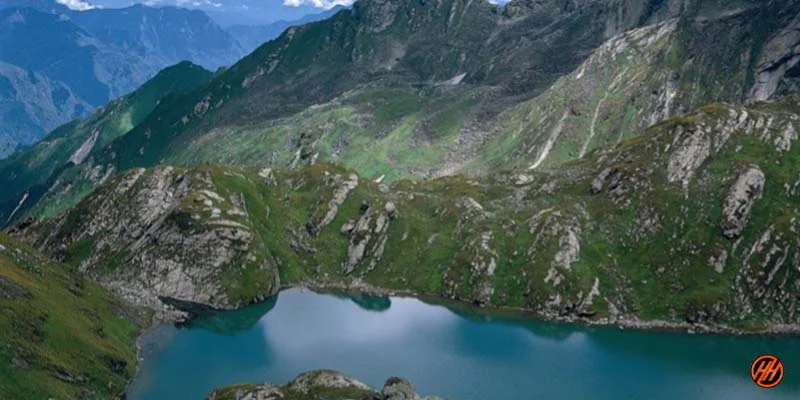


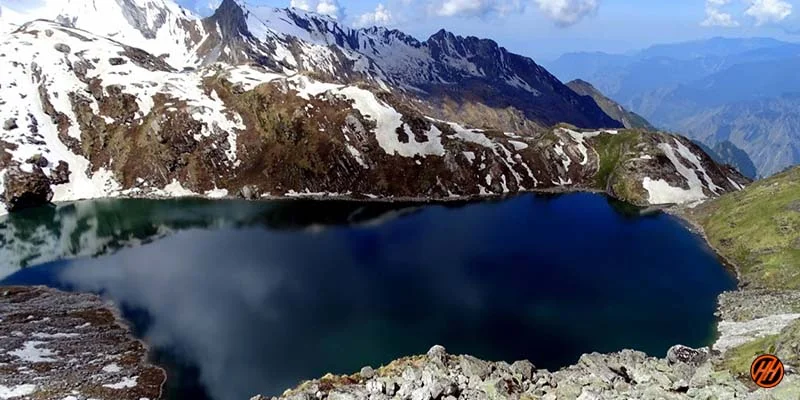
Several tall Himalayan Peaks are visible from this region. On the way, the famous peaks which can be clearly seen are Chaukhamba, Hathi peak, Neelkanth and Nar Narayan peaks. Meaning of “Kag” in Sanskrit is crow. According to a legend this lake is named “Kagbhusandi” because crows come here to die and feathers of crows can be seen around this lake.
Another tale related to it is, a sage once cursed a Brahmin and he turned into a crow here. Tow rocks present here resembles crow and an eagle which are visible on the way, many other stories are related to these rocks.
Geographic Setting and Significance
Kagbhusandi Lake is situated in the upper reaches of the Chamoli district, not far from the famous Valley of Flowers National Park and the sacred Hemkund Sahib. Resting at an altitude of approximately 5,230 meters (17,160 feet), the lake lies in a rugged, glacial basin surrounded by towering Himalayan peaks.
Despite its proximity to well-known destinations, Kagbhusandi remains largely unexplored due to its challenging terrain and lack of established infrastructure. This isolation is precisely what gives the trek its distinctive character—offering pristine natural beauty and a sense of discovery that is increasingly rare in the Himalayas.
Mythological and Cultural Importance
The lake holds deep roots in Hindu mythology. It is associated with Kagbhusandi, a revered sage believed to have taken the form of a crow. According to legend, Kagbhusandi narrated the story of Lord Rama to Garuda at this very location.
This spiritual legacy imbues the lake with a mystical aura. Many trekkers report a profound sense of calm and introspection upon reaching the site, as if the landscape itself carries echoes of ancient wisdom. Unlike more formal pilgrimage routes, the journey here feels deeply personal and meditative.
The Panorama Views are a delight in Kagbhusandi Lake
The panoramic views along the Kagbhusandi Lake Trek are truly captivating. Trekkers are rewarded with sweeping vistas of some of the most prominent Himalayan peaks, including Chaukhamba, Hathi Parvat, Neelkanth, and the Nar Narayan peaks. These majestic snow-clad mountains create a stunning backdrop throughout the journey, making the trek visually unforgettable.
One of the most striking sights is the majestic Chaukhamba massif, a group of four peaks that stand tall like pillars guarding the region. Its massive, glaciated face catches the sunlight beautifully, especially during early morning and sunset, creating dramatic golden hues against the snow.
Along the route, trekkers also encounter the distinct silhouette of Hathi Parvat, named for its resemblance to an elephant. Its broad, rounded structure contrasts with the sharper ridgelines of surrounding peaks, adding variety to the mountain scenery.
Another iconic peak visible from the trail is Neelkanth, often referred to as the “Garhwal Queen.” Rising dramatically above the landscape, Neelkanth’s steep slopes and symmetrical form make it one of the most photogenic mountains in the region. Its presence also adds a spiritual dimension, as it is closely associated with nearby sacred sites.
Completing this grand panorama are the Nar Narayan peaks, twin summits that hold religious significance and are often seen standing side by side in quiet symmetry. These peaks contribute to the sense of vastness and serenity that defines the trek.
What makes these views particularly special is their ever-changing nature. As you gain altitude, the perspective shifts constantly—peaks appear closer, valleys deepen, and clouds drift across the summits, creating a dynamic and immersive visual experience. On clear days, the sky forms a deep blue backdrop, making the white snowfields stand out in sharp contrast.
Overall, the panoramic views on this trek are not just scenic—they are deeply immersive, offering a rare chance to witness some of the most iconic Himalayan peaks in a relatively untouched and tranquil setting.
Trekking Experience and Terrain
The Kagbhusandi Lake Trek is typically completed over 6 to 7 days, depending on pace and acclimatization needs. It is categorized as moderate to difficult, primarily due to steep ascents, high altitude, and the absence of well-defined trails in the upper sections.
Trail Progression
The trek usually begins at Govindghat, a common base for several Himalayan routes. The initial stretch overlaps with the well-trodden path to Ghangaria, passing through scenic forests and alongside the roaring Pushpawati River. This section provides a gradual warm-up before the terrain becomes more demanding.
Beyond Ghangaria, the trail diverges into a far less-traveled route. Trekkers enter dense alpine forests, cross streams, and navigate narrow ridgelines. As altitude increases, the vegetation thins out, giving way to rocky slopes, glacial moraines, and expansive high-altitude meadows.
The final approach to the lake is particularly challenging, involving steep climbs over loose rocks and uneven terrain. However, the reward is extraordinary—a serene, emerald-blue glacial lake set against a dramatic Himalayan backdrop.
Kagbhusandi Lake Complete Guide
Our mission has always been to ensure that no trekker steps into the Himalayas without the right perspective. A trek is not just a checklist of summits; it is a serious commitment to the outdoors. Having the right information is what separates a reckless climb from a soulful journey.
This section serves as your definitive manual for the Kagbhusandi Lake. We have distilled years of mountain experience and real-time feedback into this guide to give you a clear, honest picture of the trail.
We provide this depth of information because we want you to be more than just a visitor—we want you to be a prepared, responsible trekker who respects the mountains as much as we do.
Day 1 – Dehradun to Govindghat via Joshimath (315 km) (8/9 hours)
Day 2 – Govindghat to Bhyundar village and Roop Dhungi (12 km) (6/7 hours)
Day 3 – Roop Dhungi to Samartoli and Raj Kharak (14 km) (8 hours)
Day 4 – Raj Kharak to Kagbhusandi Lake via Kankul Pass (8 km) (5/6 hours)
Day 5 – Kagbhusandi Lake to Gouncha Udiyar (8 km) (4/5 hours)
Day 6 – Gouncha Udiyar to Panika (10 km) and drive to Govindghat (7 km)
Day 7 – Govindghat to Dehradun (315 km) (8/9 hours)
Day 1
Day 2
Day 3
Day 4
Day 5
Day 6
Day 7
Day 1 :Dehradun to Govindghat via Joshimath (315 km) (8/9 hours)
Vehicle will be arranged from Dehradun, the drive is along Ganga, Alaknanda and Mandakini rivers. Get beautiful sight of hills through your window, witness the confluence of Alaknanda and Bhagirathi en route.
Govindghat lies in Chamoli and it is basecamp of many famous treks i.e. Valley of flowers, Pangarchulla and Kuari Pass. Arrangements will be made in a hotel at Govindghat.
Day 2 : Govindghat to Bhyundar village and Roop Dhungi (12 km) (6/7 hours)
Post breakfast leave early for Bhyundar village, the initial trek is a steep ascent but afterwards it becomes gradual. The water sounds of gushing Alaknanda can be heard as you move forward.
Pass through the dense forests with blooming Rhododendrons, spot Himalayan wildlife in this region. The campsite for today is Roopdhungi, pitch your tents there and settle for the day.
Day 3:Roop Dhungi to Samartoli and Raj Kharak (14 km) (8 hours)
Have healthy breakfast, head towards Simartoli and continue trekking to Raj Kharak. Today the trail is picturesque and the great Himalayan peaks are clearly visible looming in the backdrop.
The campsite is Raj Kharak, to reach there hike through Bankbara and Dangkharak. Setup your camps, have delicious food and sleep comfortably in tents.
Day 4 :Raj Kharak to Kagbhusandi Lake via Kankul Pass (4960 m) (8 km) (5/6 hours)
Today trek towards Kagbhusandi Lake which lies at an altitude of 5230 meters. It is 5 km away from Raj Kharak and the distance can be covered in 4 to 5 hours.
The terrain is a changing one with amusing sight of blooming meadows, green valleys and further it changes to narrow trails and big boulders.
Cross Kankul Pass and get views of Hathi peak, Chaukhamba peaks, Nar Narayan and Neelkanth peaks will amaze you. Watch thousands of flowers blooming like Brahma Kamal, Phen Kamal and Myriad with many species of flowers.
Reach this sacred lake and its emerald water will make you stare at it and the mountain views looks stunning. Kagbhusandi Lake is related to mythology, explore the surroundings then setup your camps nearby and retire for the night.
Day 5 : Kagbhusandi Lake to Gouncha Udiyar (8 km) (4/5 hours)
Today the campsite is Gouncha Udiyar which lies 8 km away from Kagbhusandi Lake. The panorama views of snow clad mountains, small rivulets, dense forests and undulating meadows makes the trail interesting with its inherent beauty.
Reach Goucha Udiyar there lies some villages, talk to the villagers and explore their culture and traditions. Enjoy the overnight stay in Gouncha Udiyar.
Day 6: Gouncha Udiyar to Panika (10 km) and drive to Govindghat (7 km)
Head towards Panika and start the descent early. Panika is a small village with few wooden houses reach there and the journey continues till Govindghat. Arrangements will be made in a hotel there.
Day 7: Govindghat to Dehradun via Joshimath (315 km) (8/9 hours)
Have your breakfast early and leave for Dehradun to reach there on time.
The Kagbhusandi Lake Trek is generally classified as moderate to difficult.
This rating comes from a combination of factors rather than just distance:
- High Altitude: The trek reaches above 5,000 meters, where oxygen levels are low, making breathing and physical effort more challenging. Proper acclimatization is essential.
- Steep Ascents and Descents: After the initial stretch, the trail becomes significantly steeper with continuous elevation gain.
- Rugged and Unmarked Terrain: Unlike popular treks, parts of this route are less defined, requiring careful navigation over rocky paths and glacial sections.
- Long Trekking Hours: Some days involve extended walking hours, testing endurance and stamina.
- Limited Infrastructure: Minimal facilities mean trekkers must be self-sufficient and well-prepared.
Who is it Suitable For?
- Best for experienced trekkers or fit beginners with prior high-altitude trekking exposure
- Requires good cardiovascular fitness, stamina, and mental resilience
In short, this trek is not extremely technical but becomes challenging due to altitude, terrain, and remoteness. Proper preparation makes a significant difference in how enjoyable the experience is.
Best Time to Visit Kagbhusandi Lake Trek
The best time to visit the Kagbhusandi Lake Trek is from June to September, when the trail is accessible and the region is at its most scenic.
June to Early July – Snowmelt Season
During this period, snow begins to melt, opening up the trekking routes. The weather is still slightly cold, but you get fresh mountain views and some remaining snow patches, adding to the beauty of the trek.
Mid July to August – Peak Greenery
This is the most vibrant time of the trek. The landscape turns lush green, and alpine flowers bloom across the meadows, similar to the nearby Valley of Flowers National Park. While there may be rainfall and slippery trails, the scenery is at its best.
September – Clear Views
September offers the clearest skies and the best visibility of Himalayan peaks. The weather becomes more stable after the monsoon, making it ideal for photography and enjoying uninterrupted mountain views.
When to Avoid
From October to May, the trek should be avoided due to heavy snowfall, extreme cold, and blocked routes.
How to Reach Kagbhusandi Lake Trek
To reach the Kagbhusandi Lake Trek, you first need to arrive at Govindghat, which is the starting point of the trek.
By Air
The nearest airport is Jolly Grant Airport. From here, you can hire a taxi or take a bus to Govindghat (around 280–300 km).
From the airport, you can:
- Hire a private taxi (most convenient)
- Take a cab/shared vehicle to Rishikesh, then continue by bus or taxi
By Train
The nearest railway station is Rishikesh Railway Station (or Haridwar). From there, buses and taxis are available to reach Govindghat.
From these stations:
- Regular buses and shared jeeps run to Govindghat
- You can also hire a private taxi for a more comfortable journey
Govindghat is well connected by road from cities like Rishikesh, Haridwar, and Dehradun. You can take state buses or private taxis.
From these stations:
- Uttarakhand state buses (economical)
- Shared jeeps (faster)
- Private taxis (most comfortable)
Trek Route
From Govindghat, the trek begins towards Ghangaria (via the same route as Valley of Flowers National Park), and then diverges onto a more remote trail leading to Kagbhusandi Lake.
Quick Tip
Start early from Rishikesh/Haridwar to reach Govindghat on time, as it’s a long mountain drive.
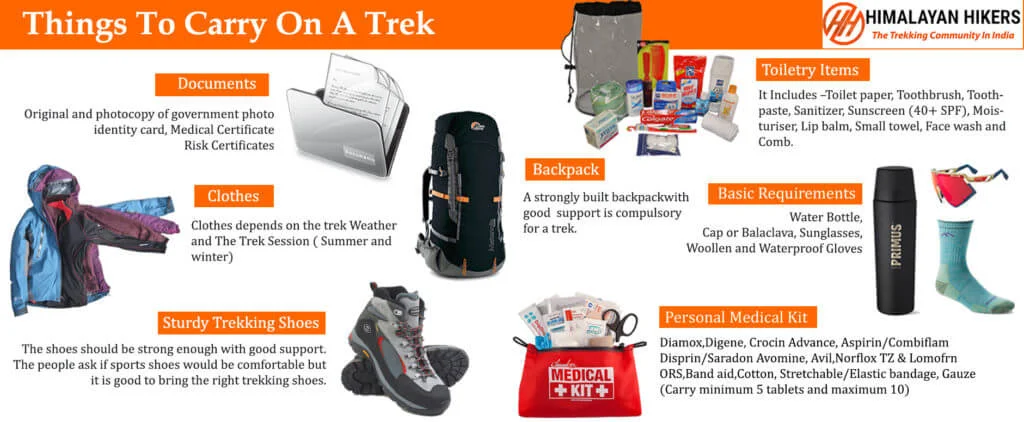
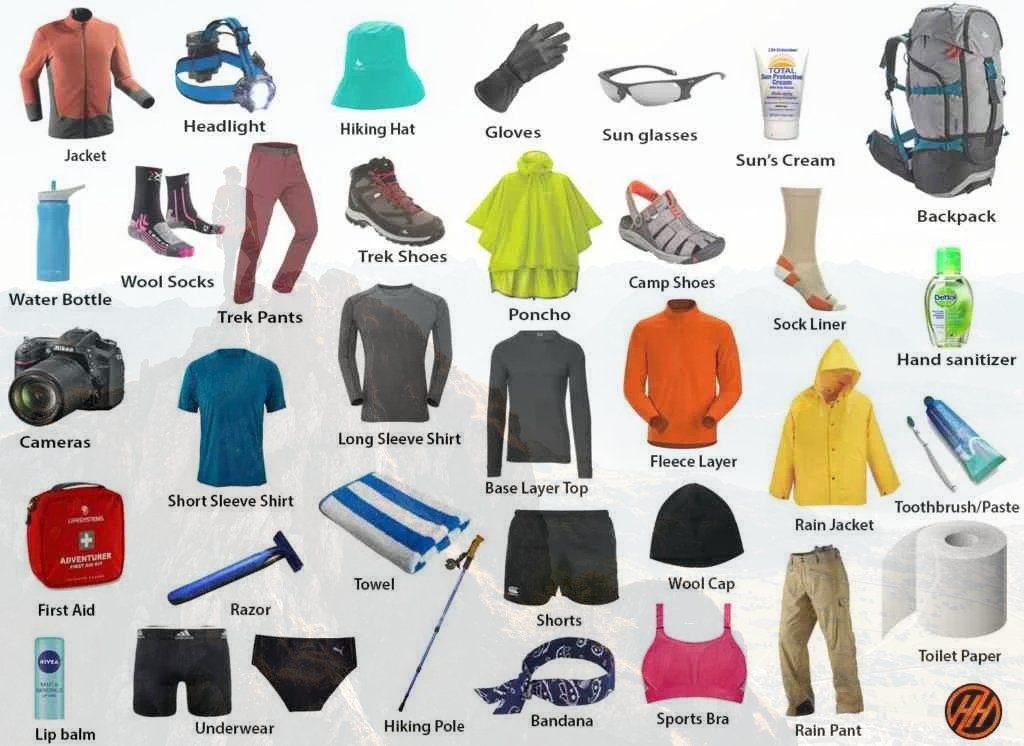
What to Pack for Kagbhusandi Lake Trek
Packing properly for the Kagbhusandi Lake Trek is important due to high altitude and changing weather conditions.
Clothing
- Thermal wear for warmth
- Fleece and down jacket
- Waterproof jacket and pants
- Trekking pants and quick-dry t-shirts
- Woolen cap, gloves, and extra socks
Footwear
- Sturdy trekking shoes with good grip
- Slippers or flip-flops for campsite use
Trekking Gear
- Backpack (50–60L) with rain cover
- Daypack (20–30L)
- Trekking poles
- Headlamp or torch
- Water bottles
Personal Items
- Sunscreen, sunglasses, and lip balm
- Toiletries and quick-dry towel
Medical & Safety
- First-aid kit
- Personal medicines
- Altitude sickness medicine
Food & Essentials
- Energy snacks like dry fruits and chocolates
- Power bank
- ID proof
Tip: Pack light but make sure you are prepared for cold, rain, and sudden weather changes.
How to Prepare for the Kagbhusandi Lake Trek
Preparing for the Kagbhusandi Lake Trek requires a mix of physical fitness, proper planning, and the right mindset, as this trek involves high altitude and challenging terrain.
Physical Preparation
You should start preparing your body at least a few weeks before the trek. Focus on improving your stamina through activities like walking, jogging, or cycling. Strength training is equally important, especially for your legs and core, as the trek includes steep climbs and long walking hours. Practicing short hikes with a loaded backpack can help your body adjust to trekking conditions.
Acclimatization
Since the trek reaches high altitude, your body needs time to adjust to lower oxygen levels. It is important to gain altitude gradually, stay hydrated, and avoid rushing. Pay attention to any signs of altitude sickness and take proper rest whenever needed.
Gear Preparation
Carrying the right gear is essential for a safe trek. Make sure you have proper trekking shoes that are comfortable and already used before the trek. Pack warm clothes in layers, along with rain protection. Your backpack should be light but include all necessary items for changing weather conditions.
Mental Preparation
This trek can be physically demanding and mentally challenging at times. Be prepared for long trekking days, limited facilities, and unpredictable weather. Staying calm, patient, and positive will help you enjoy the journey even during tough sections.
Planning and Safety
Proper planning is key to a successful trek. Check weather conditions before starting, plan your itinerary carefully, and keep buffer days if possible. If you are not experienced, hiring a local guide is recommended, as some parts of the trail are less defined.
Tip: A well-prepared trekker not only enjoys the journey more but also stays safe in the mountains.
Trekking with Himalayan Hikers ensures a safe and well-managed experience, especially on challenging treks like Kagbhusandi Lake.
Experienced Team
The team includes trained guides and trek leaders who are familiar with the terrain, weather conditions, and routes. Their experience helps in handling difficult situations and guiding trekkers safely.
Safety Measures
- First-aid support: Basic medical kits are carried during the trek
- Oxygen support: Available for high-altitude emergencies
- Health monitoring: Regular checks for altitude sickness symptoms
Proper Planning
The itinerary is designed with proper acclimatization and balanced trekking distances, reducing health risks and exhaustion.
Emergency Support
In case of any emergency, the team is trained to respond quickly and take necessary actions, including evacuation if needed.
Guidance Throughout
Trekkers receive continuous support, instructions, and guidance throughout the journey, making the trek safer and more comfortable.
Tip: Always follow your guide’s instructions and report any discomfort immediately.
What is Included In This Trek?
| Category | Included Services |
|---|---|
| Permits | Forest Permit and entrance fee |
| Accommodation | Accommodation in tents on twin share basis |
| Meals | All meals: breakfast, packed lunch, tea, coffee, snacks, soup and dinner |
| Camping Gears |
(All camping gears) High quality tents Sleeping bags Mattress Liner Pillow Separate Toilet tents – Ladies and Gents Dining Tent Dining Table |
| Support Staff |
Porters Helper Mules Kitchen team |
| Communication | Radio Walkie Talkie for Communication |
| Guides & Safety |
Good Experience Trek Leader guide and Technical guide Medical Kit Oxygen Cylinders Crampons and Gaiters |
What is Not Include In This Trek?
| Category | Not Included |
|---|---|
| Transport | Transport Facility |
| Insurance & Documents |
Personal Insurance Medical Certificate |
| Personal Items | Personal toiletry Items and Personal Medicine kit |
| Meals Not Included |
On first day En Route to base camp the Breakfast and Lunch are Not Included Last Day En Route Lunch and Dinner are Not Included |
Important Note
No important note.
Map not available for this trek.
The Kagbhusandi Lake Trek is considered moderate to difficult due to high altitude, steep climbs, and long trekking hours.
The best time to visit is June to September, when the weather is suitable and the trail is accessible.
It usually takes around 6 to 8 days to complete the trek, depending on your pace and itinerary.
Prior trekking experience is helpful but not mandatory. However, good fitness is required for beginners.
The trek reaches an altitude of around 5,200 meters (17,000+ ft), making acclimatization very important.
Yes, due to high altitude, there is a risk of altitude sickness. Proper acclimatization and hydration are essential.
It is recommended to hire a guide, as parts of the trail are remote and less defined.
Accommodation is basic, including guesthouses at lower camps and tents during the trek.
Mobile network is limited and mostly unavailable after Govindghat, especially at higher altitudes.
You may need forest or local permits, depending on the route. It’s best to check in advance or go with an organized trekking group.


.webp)


