
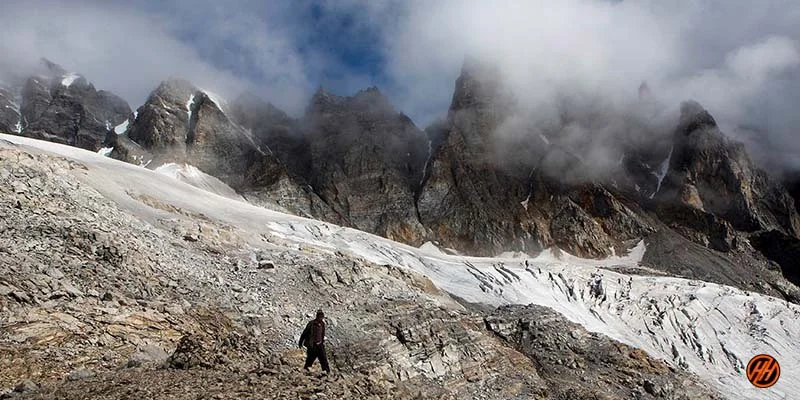


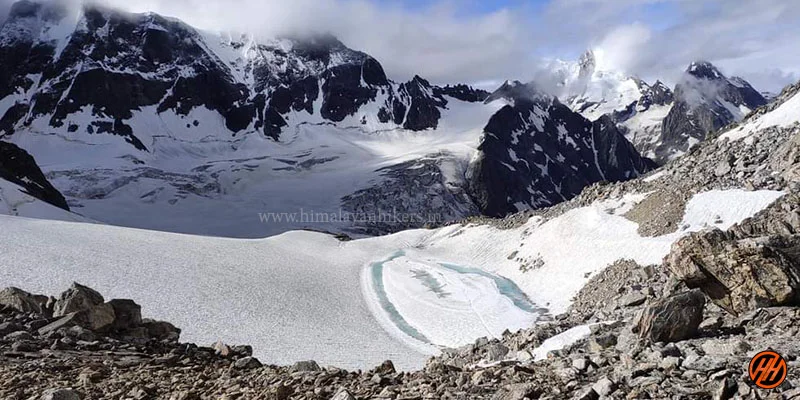
Gupt Khal Trek, which is in the Chamoli district of Uttrakhand reaches high-altitude passes above 19,052 ft provides breathtaking close-range views of high-altitude Himalayan peaks, including Nilkantha, Hathi Parbat, Nilgiri, Rataban, and the Kamet massif. The pass also offers panoramic vistas of the Bankkund glacier, Bhyundar valley, and Rata Pahar. It’s a rare Himalayan adventure that takes you deep into the untouched wilderness of the Himalayas. For those seeking solitude, raw beauty, and a true connection with nature, this trek, also known as a demanding trekking route, links to the Badrinath region, often accessed via interior mountain villages like Ghamshali and Mana that showcase authentic local culture.
The term “Gupt” translates to “hidden,” and true to its name, this trek remains relatively unexplored, making it ideal for those seeking peace and adventure away from busy trekking circuits. Typically involving snowfields and glaciers that require technical mountaineering gear to cross safely. Nilkantha, Hathi Parbat, Nilgiri, Rataban, and the Kamet massif.
5 Things Gupt Khal Trek Attract You
1. Hidden & Less Crowded Trail
The Gupt Khal trek is still relatively unknown compared to many popular Himalayan routes, which means it sees far fewer tourists. This lack of crowds allows you to experience nature in a peaceful and untouched setting, making it an ideal choice for those who prefer solitude and want to enjoy the mountains without the usual hustle of busy trekking trails.
2. Dense Forests & Rich Biodiversity
The trek takes you through dense forests rich with oak, rhododendron, and pine trees, creating a lush and vibrant natural environment. Along the way, you may encounter a variety of unique birds, colourful butterflies, and even glimpses of Himalayan wildlife. This makes the journey especially appealing for nature lovers and photography enthusiasts who enjoy capturing the beauty of the wilderness.
3. Stunning Himalayan Views
From the higher points of the trek, you are rewarded with breathtaking views of snow-capped Himalayan peaks stretching across the horizon. The experience becomes even more magical during sunrise and sunset, when the mountains change colours beautifully, creating a stunning and unforgettable experience.
4. Adventure & Moderate Difficulty
The trek offers a diverse experience with a mix of steep climbs, narrow trails, and scenic ridges that keep the journey exciting throughout. It is well-suited for beginners who are looking to challenge themselves, while also appealing to experienced trekkers who want a short yet adventurous escape.
5. Spiritual & Serene Atmosphere
The region has a calm and almost mystical atmosphere, often associated with local legends and a sense of spirituality. This peaceful environment makes it an ideal place to disconnect from the chaos of city life and experience true mental relaxation and inner peace.
Our Trek Leader Experience
I would also like to tell you that so far, my elder brother Mr. Vinod Panwar has done Gupt Khal trek 05 times, and Pradeep from Uttarkashi, and Porters and Cook, etc. Gupt Khal trek is a very difficult to trek in Uttarakhand, only good and knowledgeable trekkers can do this trek, which has knowledge of high treks, Gupta Khal.
The Gupt Khal trek can be done from two places on a special note which are as follows:
- These routes from Via Valley of Flowers, which originate in Mana Village, are a bit difficult but you can also go this route.
- Joshimath via Ghamsali Village The route discovered by Mr. Vinod Panwar, these routes are good and worth thinking about.
Why Gupt Khal Trek makes it difficult for people without experience?
It is said that this is mentioned by Mr. Frank Smyth in his book ‘Valley of Flowers’.
From the Valley of Flowers, you trek crosses the twin passes of Bhuindar Khal Trek and Gupt Khal Trek. From here you will also see the mountain range of Himalayas and you have to cross all the glaciers in this trek like Gauri Glacier, Ratan Glacier, Tipra Glacier, Bankund Glacier, Nilgiri Glacier, and Nakhtani Glacier.
This trek is difficult as well as secret, and for this trek and expedition you must have the experience, basic knowledge of your previous mountaineering becomes necessary for this trek. In some Gupt Khal trek, at some places, deep cracks will be broken glaciers and technical equipment will be needed to cross this trek. From this trek, you will see the high altitudes like Shri Neelkanth Peak, Elephant Peak, Nilgiri Peak, Ratan Peak and, Kamet The peaks will be closely visible and offer spectacular views.
Note: Whenever you do this trek, Do it with the local people here or with experienced people like us who are local here. Whoever can help you from the local here, no one else can give you, and it will be useful for you all the time. This is why we have to say that sometimes there are seasonal changes in nature, for which we all have to be ready, this is the law of adventure.
Gupt Khal Trek Complete Guide
Our mission has always been to ensure that no trekker steps into the Himalayas without the right perspective. A trek is not just a checklist of summits; it is a serious commitment to the outdoors. Having the right information is what separates a reckless climb from a soulful journey.
This section serves as your definitive manual for the Gupt Khal Trek. We have distilled years of mountain experience and real-time feedback into this guide to give you a clear, honest picture of the trail.
We provide this depth of information because we want you to be more than just a visitor—we want you to be a prepared, responsible trekker who respects the mountains as much as we do.
Note: Pickup from the Bus station of Haridwar, drive to Joshimath by tempo travelers and Boleros.
Day 1: Pick up from Haridwar & drive to Joshimath via Rishikesh
Pickup: 6:00-6:30 am Drive: 296 kms (Approx: 10-11hrs) | Altitude: 6,150 ft
Day 2: Drive from Joshimath to Ghamsali Village
Drive: 84km (Approx: 3-4hrs) | Altitude: 10,895 ft
Day 3: Trek from Ghamsali village to Eri Udiyar
Trek: 12km (Approx: 5-6 hrs) | Altitude: 12730 ft
Day 4: Trek from Eri Udiyar to Ratanban
Drive: 7-8km (Approx: 4-5 hrs) | Altitude: 13,780 ft
Day 5: Trek from Rataban Glacier to Bankund lake
Trek: 5km (Approx: 4-5 hrs) | Altitude: 14,698 ft
Day 6: Trek from Bankund Lake base to Bankund bend
Trek: 5km (Approx: 3-4 hrs) | Altitude: 15,682 ft
Day 7: Trek from BankKund bend to Garh camping ground
Trek: 6km (Approx: 4-5 hrs) | Altitude: 17,880 ft
Day 8: Trek from Garh camp to Gupt Khal base camp
Trek: 7km (Approx: 5-6 hrs) | Altitude: 18,700-19,000 ft
Day 9: Rest Day for Acclimatisation
Day 10: Trek from Gupt Khal base to Gupt Khal Summit cross and then descend to Nakthani hanging glaciers campsite
Trek Distance: Gupt Khal Base to Gupt Khal Summit: 4-5km (Approx: 2-3 hrs) | Gupt Khal Summit to Nakthani: 5km (Approx: 5-6 hrs)
Altitude: Gupt Khal Summit: 19,052 ft | Nakthani hanging glaciers camp: 17,716 ft
Day 11: Trek from Nakthani hanging glacier campsite to Shepherd campsite near Musa Pani
Trek: 8km (Approx: 5-6 hrs) | Altitude: 13,000ft
Day 12: Trek from Shepherd camp / musa pani to mana village and to evening join the Shree Badrinath Aarti darshan
Trek and Drive Distance: Shepherd Campsite to Mana village: 14km (Approx: 6-7 hrs) | Mana Village to Badrinath Temple: 5km (Approx: 10-15 minutes)
Altitude: Mana village: 10,500ft | Badrinath: 10,170ft
Day 13. Drive from Badrinath to Haridwar via Rishikesh
Drive: 315km (Approx: 11-12 hrs) | Altitude: 819ft
Day 1
Day 2
Day 3
Day 4
Day 5
Day 6
Day 7
Day 8
Day 9
Day 10
Day 11
Day 12
Day 13
Day 1: Pick up from Haridwar & drive to Joshimath via Rishikesh
Pickup: 6:00-6:30 am Drive: 296 kms (Approx: 10-11hrs) | Altitude: 6,150 ft
Your journey begins with a warm pickup from Haridwar, as you set out on a scenic drive via Rishikesh, leaving the plains behind and slowly entering the embrace of the Himalayas. As the road winds upward, you pass through the sacred confluences of Devprayag, Rudraprayag, and Karnaprayag, where rivers meet in timeless harmony. The Alaknanda River flows beside you, guiding your path through lush valleys and towering mountains. With every turn, the air grows cooler and the views more mesmerizing, until by evening, you arrive in the peaceful town of Joshimath. Surrounded by quiet hills and mountain charm, you settle into your hotel for a restful overnight stay, ready for the adventures ahead.
Day 2: Drive from Joshimath to Ghamsali Village
Drive: 84km (Approx: 3-4hrs) | Altitude: 10,895 ft
After a peaceful night in Joshimath, the morning begins with a hearty breakfast before you set off on a drive toward Ghamsali Village, passing through the last inhabited stretch of Niti Village. As the journey unfolds, the landscape transforms into a raw, untouched world. This is the remote border region, where the mountains feel closer, quieter, and more powerful.
The road winds through dramatic valleys, with towering peaks, sparse settlements, and an overwhelming sense of solitude that makes every moment feel special. By the time you reach Ghamsali, the stillness of the place welcomes you like an old friend. As evening sets in, you settle into a cosy camp or homestay, surrounded by the vast Himalayan wilderness, under a sky full of stars.
Day 3: Trek from Ghamsali village to Eri Udiyar
Trek: 12km (Approx: 5-6 hrs) | Altitude: 12730 ft
Your day begins in the quiet charm of Ghamsali Village, where the crisp mountain air and distant peaks set the tone for the adventure ahead. With backpacks ready, you start the trek toward Eri Udiyar, slowly leaving the last traces of village life behind.
The trail steadily climbs, guiding you through vast alpine landscapes where green meadows fade into rugged high-altitude terrain. Each step brings you deeper into the heart of the mountains, where silence is broken only by the wind and the rhythm of your footsteps.
As the altitude gradually increases, the surroundings become more raw and majestic, offering sweeping views of towering peaks and untouched wilderness. By late afternoon, you arrive at the campsite at Eri Udiyar, a peaceful haven tucked within the mountains. Here, you settle into your camp for an overnight stay, surrounded by the stillness and beauty of the high Himalayas.
Day 4: Trek from Eri Udiyar to Ratanban
Drive: 7-8km (Approx: 4-5 hrs) | Altitude: 13,780 ft
From Eri Udiyar, the journey slowly begins to change its character. What starts as a peaceful trail soon transforms into a more rugged and adventurous route as you move deeper into the mountains. The sound of flowing streams and rustling forests gradually fades, replaced by the raw silence of high-altitude terrain.
With every step, the landscape becomes more dramatic—rocky paths, uneven ground, and glacial moraines begin to dominate the trail. The air turns sharper, cooler, and more refreshing as you approach the higher reaches near Ratanban Glacier.
Along the way, the Himalayas reveal themselves in full glory. Towering snow-clad peaks stand close on the horizon, offering breathtaking views that make every effort worthwhile. It feels as if the mountains are slowly opening, guiding you deeper into their heart.
By evening, you reach your campsite near the glacier zone. Tents are set up under a vast sky, surrounded by silence and distant icy winds. As night falls, the mountains glow faintly under starlight, and you settle in for an overnight stay in the wild, right at the edge of the Himalayan glacier world.
Day 5: Trek from Rataban Glacier to Bankund lake
Trek: 5km (Approx: 4-5 hrs) | Altitude: 14,698 ft
The morning at Ratanban Glacier begins crisp and silent, with the first rays of sunlight slowly touching the icy landscape. After a warm drink and a bit of preparation, you set out on the trail toward Bankund Lake, leaving behind the rugged glacier terrain.
The path unfolds gently at first, then winds through rocky stretches and open high-altitude expanses. With each step, the scenery feels more untouched and serene. The towering mountains seem closer now, standing like silent guardians guiding your way.
As you continue the day hike, the air grows calmer, and suddenly, Bankund Lake reveals itself—quiet, still, and beautifully nestled among high peaks. Its clear waters reflect the surrounding mountains, creating a peaceful, almost surreal atmosphere. There’s a sense of stillness here that makes you pause, take a breath, and simply absorb the moment.
After spending time by the lake, soaking in the views and silence, you begin your return to the campsite. By evening, you’re back at camp, surrounded once again by the vast Himalayan wilderness.
As night falls, the sky fills with stars, and the calmness of Bankund stays with you. You settle into your tent for an overnight stay, carrying the quiet beauty of the lake into your dreams.
Day 6: Trek from Bankund Lake base to Bankund bend
Trek: 5km (Approx: 3-4 hrs) | Altitude: 15,682 ft
The day begins at the calm base near Bankund Lake, where the stillness of the water lingers in your mind as you prepare to move higher into the mountains. As you leave the campsite behind, the trail immediately starts to climb, reminding you that the journey ahead will demand more effort and patience.
Step by step, the altitude begins to make its presence felt. The air grows thinner, your pace naturally slows, and every breath becomes more deliberate. The terrain turns rougher rocky patches, uneven paths, and gradual ascents that test both your stamina and focus.
Despite the challenge, the surroundings remain captivating. The vast Himalayan landscape stretches endlessly, with towering peaks and deep valleys unfolding around you. There’s a quiet rhythm to the climb walk, pause, breathe, and move again.
As you gain height, acclimatisation becomes essential. Frequent breaks are not just welcome but necessary, allowing your body to adjust to the increasing altitude. It’s a reminder that in the mountains, patience is as important as strength.
By the time you reach Bankund Bend, there’s a sense of quiet achievement. The campsite is set amidst raw, high-altitude wilderness, where the winds are cooler and the silence deeper.
As evening settles in, you rest under the open sky, surrounded by towering peaks and the stillness of the mountains. The night at camp feels both humbling and peaceful, a pause before the journey continues further into the heights.
Day 7: Trek from BankKund bend to Garh camping ground
Trek: 6km (Approx: 4-5 hrs) | Altitude: 17,880 ft
The journey continues from Bankund Bend with a quiet sense of determination as you move deeper into the high-altitude wilderness. The trail ahead feels more remote, more untouched—each step taking you further away from the familiar and closer to the raw heart of the Himalayas.
As you trek onward toward Garh camping ground, the landscape opens up dramatically. Snow-clad peaks begin to dominate the skyline, standing tall and majestic against the clear mountain sky. Glimpses of distant glaciers appear along the way, icy surfaces shining under the sunlight, adding a sense of awe to the journey.
The terrain remains challenging, with gradual climbs and stretches of rocky paths that demand focus and steady pacing. The altitude is higher now, and the air carries a crisp chill even during the day. Yet, the beauty around you keeps pushing you forward.
After hours of trekking, you finally arrive at the Garh camping ground—a vast, high-altitude expanse surrounded by towering snow peaks and glacial views. The place feels almost otherworldly, quiet and powerful at the same time.
As tents are pitched and the evening settles in, the temperature drops quickly. The mountains glow in shades of gold and pink before fading into the deep blue of night. Wrapped in layers, you sit under a sky full of stars, feeling both small and deeply connected to the vastness around you.
The night at Garh is cold, silent, and unforgettable—an experience of true Himalayan wilderness, where every breath reminds you of the altitude and every moment feels extraordinary.
Day 8: Trek from Garh camp to Gupt Khal base camp
Trek: 7km (Approx: 5-6 hrs) | Altitude: 18,700-19,000 ft
The morning at Garh camp begins with a sharp chill in the air, a reminder that you are now deep in high-altitude territory. As the first light touches the surrounding snow peaks, you prepare for one of the most demanding stretches of the journey, the trek toward Gupt Khal base camp.
The trail quickly leaves behind the relative comfort of open camping grounds and leads into harsher terrain. Soon, you find yourself navigating across glacier sections, where every step must be placed carefully. The crunch of ice beneath your boots and the cold wind brushing past add to the intensity of the experience.
As the route progresses, the terrain becomes more technical. Rocky ridges, icy patches, and uneven glacial surfaces demand focus and teamwork. It’s no longer just a walk it feels like a true mountaineering approach, where patience, balance, and awareness are essential.
Despite the challenges, the surroundings are nothing short of breathtaking. Towering peaks rise dramatically on all sides, and the vast glacier fields stretch out like frozen rivers. There’s a raw, untouched beauty here that makes every difficult step worthwhile.
After a long and demanding day, you finally reach Gupt Khal base camp. Nestled in a stark, high-altitude landscape, the campsite feels like the threshold to something greater the gateway to the summit.
As tents are set up and the light begins to fade, there’s a quiet sense of anticipation in the air. This is where preparation becomes key—checking gear, conserving energy, and mentally readying yourself for the summit push ahead.
The night is cold and still, the sky brilliantly clear. As you settle into your tent, surrounded by silence and towering peaks, you know the real challenge is yet to come but for now, you rest at base camp, on the edge of the final ascent.
Day 9: Rest Day for Acclimatisation
The morning at Gupt Khal base camp arrives quietly, wrapped in a deep stillness that only high mountains can offer. After days of continuous trekking, this is a day to pause, a day to let your body catch up with the altitude and your mind absorb the journey so far.
There’s no rush today. The sun rises slowly over the towering peaks, casting a soft golden light across the glacier fields. You step out of your tent into crisp, cold air, feeling both the fatigue of the past days and the calm of finally being still.
Short acclimatisation hikes begin around the camp, gentle climbs over nearby ridges and rocky patches. These walks are not about distance, but about adjusting, breathing, and letting your body adapt to the thin air. With every slow step, you become more in tune with the rhythm of the mountains.
Back at camp, the rest of the day is spent preparing for what lies ahead. Gear is checked and rechecked, layers are sorted, and small details suddenly feel important. Conversations are quieter, more focused—there’s a shared understanding that the summit attempt is close.
In between, there are moments of stillness. Sitting on a rock, watching clouds drift past jagged peaks, or simply listening to the silence—it all feels grounding. The mountains don’t rush, and today, neither do you.
As evening falls, the temperature drops once again, and the sky turns brilliantly clear. Stars scatter across the darkness, brighter than ever at this altitude. There’s a mix of anticipation and calm in the air.
Tonight is about rest, reflection, and readiness. Wrapped in your sleeping bag, you close your eyes, knowing that tomorrow brings the biggest challenge of the journey, but for now, the mountains allow you a moment to breathe.
Day 10: Trek from Gupt Khal base to Gupt Khal Summit cross and then descend to Nakthani hanging glaciers campsite
Trek Distance: Gupt Khal Base to Gupt Khal Summit: 4-5km (Approx: 2-3 hrs) | Gupt Khal Summit to Nakthani: 5km (Approx: 5-6 hrs)
Altitude: Gupt Khal Summit: 19,052 ft | Nakthani hanging glaciers camp: 17,716 ft
The summit day begins long before sunrise, in the quiet, frozen darkness of Gupt Khal base camp. Headlamps flicker to life one by one, cutting through the cold air as you prepare for the most important climb of the journey. There’s a mix of excitement and focus, every movement deliberate, every step planned.
As you begin the ascent, the world is still asleep. The trail is steep and demanding, winding through icy sections and rugged slopes. The crunch of snow beneath your boots and the rhythm of your breath become your only companions. The higher you go, the thinner the air feels, and each step requires effort, patience, and determination.
Slowly, the first light of dawn begins to break over the horizon. The sky shifts from deep blue to soft shades of orange and gold, revealing the vast Himalayan expanse around you. Peaks stretch endlessly in every direction, glowing in the early morning light.
Reaching the Gupt Khal Summit at 5,804 meters feels surreal. Standing at the top, surrounded by towering giants of the Himalayas, there’s a deep sense of accomplishment—quiet, powerful, and unforgettable. For a moment, everything stands still. But the journey is only half complete.
After spending some time at the summit, you begin the descent. The return demands just as much focus, especially across steep and icy sections. Careful footing and steady movement guide you down as the sun climbs higher in the sky.
Gradually, the terrain shifts again as you move toward Nakthani hanging glaciers camp. Massive ice formations hang dramatically along the slopes, creating a striking and almost otherworldly landscape. The path, though still challenging, begins to ease as you lose altitude.
By the time you reach the campsite, exhaustion and satisfaction arrive together. Tents are set up near the hanging glaciers, surrounded by silence and raw natural beauty.
As night falls, the sky fills with stars once again. Wrapped in warmth after a long, demanding day, you rest with a deep sense of achievement, having stood on the summit and returned safely, carrying with you a story that will stay for a lifetime.
Day 11: Trek from Nakthani hanging glacier campsite to Shepherd campsite near Musa Pani
Trek: 8km (Approx: 5-6 hrs) | Altitude: 13,000ft
Morning breaks gently over the Nakthani hanging glacier campsite, with soft light reflecting off the icy formations around you. After the intensity of the summit day, there’s a quiet sense of relief in the air. Today, the journey begins to descend, leading you away from the stark glacier world toward softer landscapes below.
As you leave camp, the trail winds through lingering glacier sections, where the ice slowly gives way to rocky terrain. Each step downward feels a little easier on the lungs, though the path still demands attention. The towering peaks remain in view, but their presence feels less imposing now—almost like silent companions watching you return.
Gradually, the harsh whites and greys of the glacier begin to fade, replaced by patches of green. The terrain opens into high-altitude meadows, where the land feels alive again. Soft grass underfoot, scattered wildflowers, and the distant sound of flowing water bring a refreshing change after days in rugged alpine zones.
The descent continues at a steady pace, with long stretches that allow you to take in the shifting landscape. The air grows slightly warmer, richer with every step, and breathing becomes easier. There’s a rhythm to the walk now—relaxed, reflective, almost meditative.
By late afternoon, you arrive at the shepherd campsite near Musa Pani. Nestled in a peaceful meadow, the campsite feels welcoming and calm. Nearby streams flow gently, and the surrounding hills create a sense of quiet shelter. As tents are set up and the evening settles in, the mountains glow softly in the fading light. It’s a different kind of beauty here—less dramatic, more soothing.
The night is calm and restful. After the challenges of higher altitudes, this campsite offers comfort, space, and a moment to unwind—an easy pause as the journey slowly leads you back from the heights of the Himalayas.
Day 12: Trek from Shepherd camp / musa pani to mana village and to evening join the Shree Badrinath Aarti darshan
Trek and Drive Distance: Shepherd Campsite to Mana village: 14km (Approx: 6-7 hrs) | Mana Village to Badrinath Temple: 5km (Approx: 10-15 minutes)
Altitude: Mana village: 10,500ft | Badrinath: 10,170ft
The final morning of the journey begins at the peaceful shepherd campsite near Musa Pani. The air feels softer now, the altitude kinder, and there’s a quiet sense of completion in every step you take. As you pack up your gear for the last time, the mountains stand silently behind you, witnesses to the journey you’ve just lived.
The trail descends steadily, weaving through green meadows, scattered rocks, and gentle mountain paths. With every step, the rugged high-altitude terrain fades into more familiar landscapes. The sound of distant streams and the occasional sight of grazing animals bring a comforting sense of life back into the surroundings.
As you continue downward, the path gradually leads you toward civilisation. Soon, the first signs of Mana village appear—stone houses, prayer flags fluttering in the breeze, and the quiet rhythm of village life. Reaching Mana Village, known as the last village near the Indo-Tibetan border, feels both grounding and emotional. It marks the end of your trekking journey and the return from the wild.
After a brief rest, you make your way toward Badrinath Temple as evening approaches. The atmosphere shifts from the solitude of the mountains to a deeply spiritual energy. As the Shree Badrinath Aarti begins, the temple glows with light, chants fill the air, and the entire experience feels serene and powerful—a perfect closing to your Himalayan adventure. Later, you return to your hotel, carrying with you memories of glaciers, summits, silent valleys, and endless skies. That night, as you rest in comfort, the journey gently settles within you—not just as a trek completed, but as a story lived, step by step, in the heart of the Himalayas.
Day 13. Drive from Badrinath to Haridwar via Rishikesh
Drive: 315km (Approx: 11-12 hrs) | Altitude: 819ft
The journey begins early in the morning from Badrinath, just as the first light touches the temple town and the surrounding peaks. The air is crisp, and there’s a quiet calm as you prepare to leave the mountains behind. After days spent trekking through remote landscapes, the return now shifts from footpaths to winding mountain roads.
As the drive begins, the road gently descends along the Alaknanda River, its waters flowing steadily beside you—almost as if guiding your back. The towering Himalayan peaks slowly fade into the distance, replaced by deep valleys, pine forests, and small hillside settlements.
Passing through Rishikesh, the atmosphere changes once again. The quiet wilderness gives way to a spiritual and vibrant town along the Ganges. You catch glimpses of ashrams, suspension bridges, and the sacred river flowing wide and calm—a reminder that the mountains may be behind you, but their essence still lingers.
The journey continues onward to Haridwar, where the plains fully unfold. By the time you arrive, the rhythm of the Himalayas has transformed into the gentle flow of everyday life.
As you step out at Haridwar, marking the official end of the journey, there’s a quiet sense of completion. The trek may have ended, but the memories—of high passes, silent glaciers, star-filled nights, and sacred places—stay with you, long after the road comes to an end.
Difficulty level of the Gupt Khal Trek
- Terrain: The Gupt Khal Trek is a challenging high-altitude Himalayan expedition that passes through dense alpine forests, vast meadows, rocky ridges, glacier fields, and snow-covered sections. As the trek progresses, the terrain becomes increasingly rugged, especially near Ratanban Glacier, Gupt Khal base, and summit approach zones.
- Slope: The trek involves moderate to steep ascents, particularly beyond Bankund and Garh camping ground. The summit push includes steep gradients, glacier crossings, and technical sections that require careful footing and endurance. Descents can also be demanding due to loose rocks and icy patches.
- Altitude: This is a high-altitude trek, starting from around 10,895 and going up to approximately 19,052 ft at Gupt Khal Summit. Due to the significant altitude gain, there is a high risk of Acute Mountain Sickness (AMS), making proper acclimatisation essential.
- Accessibility: The trek usually begins from a road-accessible point near Ghamsali Village in Uttarakhand, after which the route is completely on foot. The region is remote, with no permanent infrastructure beyond initial villages, and requires guided trekking support for safety and navigation.
Important Notes:
- Alternative Path: The Gupt Khal Trek is a full trekking expedition, not road supported. The journey includes multiple high-altitude camps such as Ratanban Glacier, Bankund Lake, Garh campsite, and Gupt Khal base camp, with gradual progression for acclimatization.
- Connection: The trek offers a mix of glacier travel, alpine meadows, and summit climbing experience, making it ideal for those seeking a raw and less-explored Himalayan route. It connects several remote high-altitude zones, offering close views of glaciers and surrounding peaks.
- Preparation: This is a physically demanding and semi-technical trek. Trekkers should be well-prepared with good fitness levels, prior high-altitude trekking experience, and proper gear, including layered clothing, trekking poles, micro spikes/crampons (if required), and essential medicines. Knowledge of altitude management, hydration, and guided support is strongly recommended due to limited rescue and medical facilities.
The ideal time to undertake the Gupt Khal Trek is May to June and September to October, when the weather is stable, trails are accessible, and the Himalayan views are at their best. Since Gupt Khal is a High-Altitude and relatively remote trek, conditions can change quickly depending on the season.
April to June (Summer Season)
- Favourable Weather: Clear skies and moderate temperatures make trekking conditions comfortable, especially during May and June.
- Accessible Trails: Snow begins to melt, opening High-Altitude passes and forest trails leading to Gupt Khal.
- Scenic Landscapes: Lush green valleys, blooming alpine flora, and snow-clad peaks create a beautiful contrast.
- Ideal Trekking Window: This is one of the best times for both beginners and experienced trekkers due to predictable weather and safer trail conditions.
July–August (Monsoon Season)
- Heavy Rainfall: The region experiences frequent rains, making trails muddy and slippery.
- Risk of Landslides: Mountain paths and approach roads may be prone to landslides and blockages.
- Poor Visibility: Cloud cover often blocks mountain views, reducing the overall trekking experience.
- Not Recommended: Due to safety risks and unstable conditions, trekking during the monsoon is generally avoided.
September to October (Post-Monsoon Season)
- Clear Mountain Views: Post-monsoon skies are crisp and clear, offering stunning views of surrounding peaks.
- Stable Trail Conditions: Trails become safer and more defined after the rains subside.
- Pleasant Climate: Cool temperatures and fresh air make trekking enjoyable.
- Best Photography Season: Ideal for capturing landscapes, alpine meadows, and panoramic mountain vistas.
November to March (Winter Season)
- Heavy Snowfall: The Gupt Khal region receives significant snowfall, covering trails and passes.
- Extreme Cold: Temperatures can drop well below freezing, making trekking challenging.
- Limited Accessibility: Routes may be blocked, and navigation becomes difficult without proper gear and experience.
- For Experts Only: Winter trekking is possible only for experienced trekkers with technical skills and proper equipment.
How to Plan Your Travel for the Gupt Khal Trek
We strongly suggest reaching Haridwar a day before your official trekking journey begins. For example, if your trek starts on 10th June, plan your arrival for 9th June.
This extra day helps you:
- Recover from long travel
- Prepare mentally and physically for high-altitude trekking
- Attend briefing and check gear (if organised by your trekking team)
Your journey begins from Haridwar, leading toward the gateway of the Garhwal Himalayas in Uttarakhand. From here, the route gradually moves deeper into remote mountain regions near Ghamshali Village, which serves as the base access point for the Gupt Khal expedition.
The trek then enters a fully high-altitude wilderness zone, passing through alpine meadows, glacier regions, and technical mountain terrain leading up to Gupt Khal (19,052).
By Train
If you prefer trains, travel to:
- Haridwar Railway Station (main railhead for this trek)
- Trains are available from Delhi, Dehradun, and other major cities
From Haridwar:
- Continue by road toward Joshimath and Ghamshali Village base routes
By Air
Nearest airport options:
- Jolly Grant Airport (Dehradun) (closest airport to Haridwar)
From the airport:
- Hire a taxi or take a bus to Haridwar
- From Haridwar, continue the road journey toward Joshimath
By Road (Most Popular Option)
Road travel is the most common and scenic way to begin this expedition:
First, reach Haridwar Bus Stand (ISBT / local transport points), where multiple options are available.
- Overnight buses and taxis run from Delhi Kashmiri Gate ISBT to Haridwar
- Travel time: Approx 5–7 hours from Delhi
- Government (UTC) and private buses are easily available
- From Haridwar, the route continues via Rishikesh, Devprayag, Rudraprayag, and Joshimath to Ghamshali Village (trek base)
From Ghamsali Village, your trekking journey officially begins into the high Himalayas.
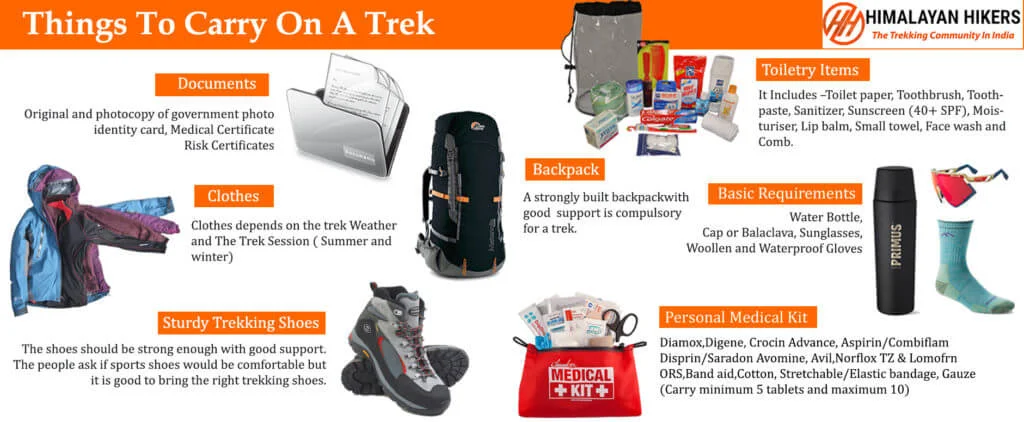
Necessary Items for trekkers
Mandatory Documents
Original and photocopy of government photo identity card- (Aadhar Card, Driving License, Voters ID, etc,)
Passport and Visa important to foreigners
Medical Certificate (First part should be filled by the Doctor and Second part by the Trekker)
Declaration Certificates
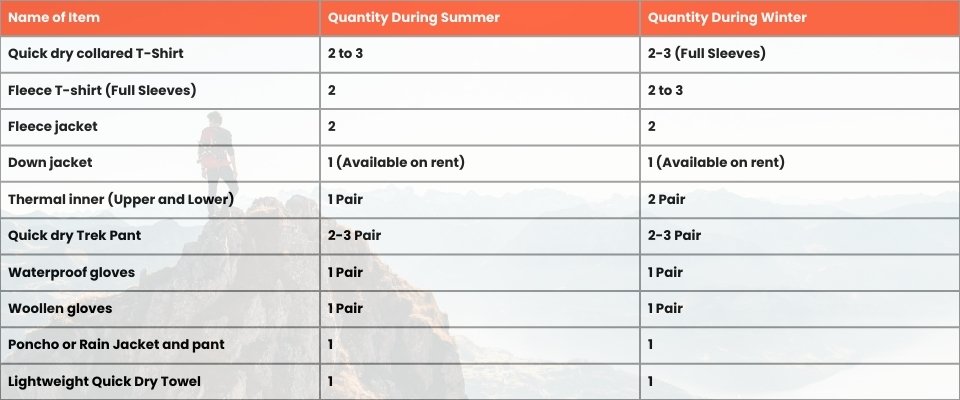
Note: – Many trekkers commit the same mistake of carrying unnecessary items on a trek which only makes the backpack heavy. It is important to know the right items to carry. It differs from season to season if you are trekking in summers then carry less layers of warm clothing and if you are trekking in winters carry enough layers to protect yourself against chilly cold.
Basic Trekking Gears
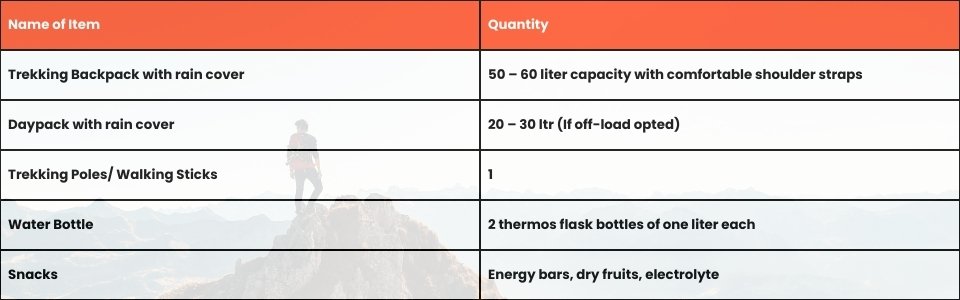
The Clothes You Should Bring On Satopanth Expedition
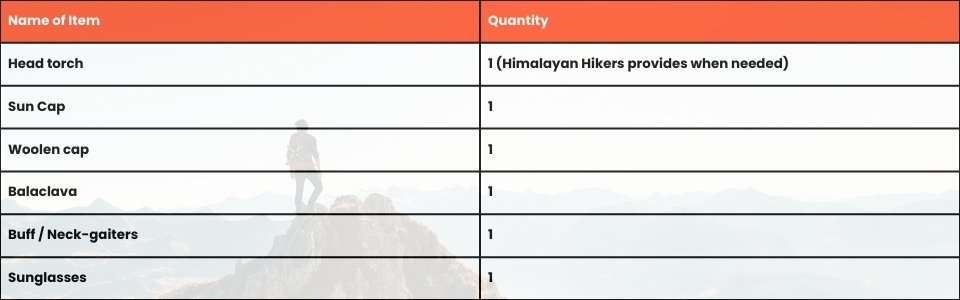
Head Gears
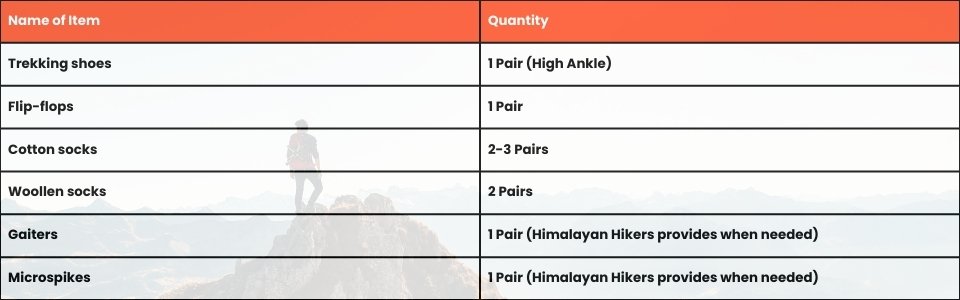
Foot Gears
Personal Care Essentials

Carry a Personal Medical Kit
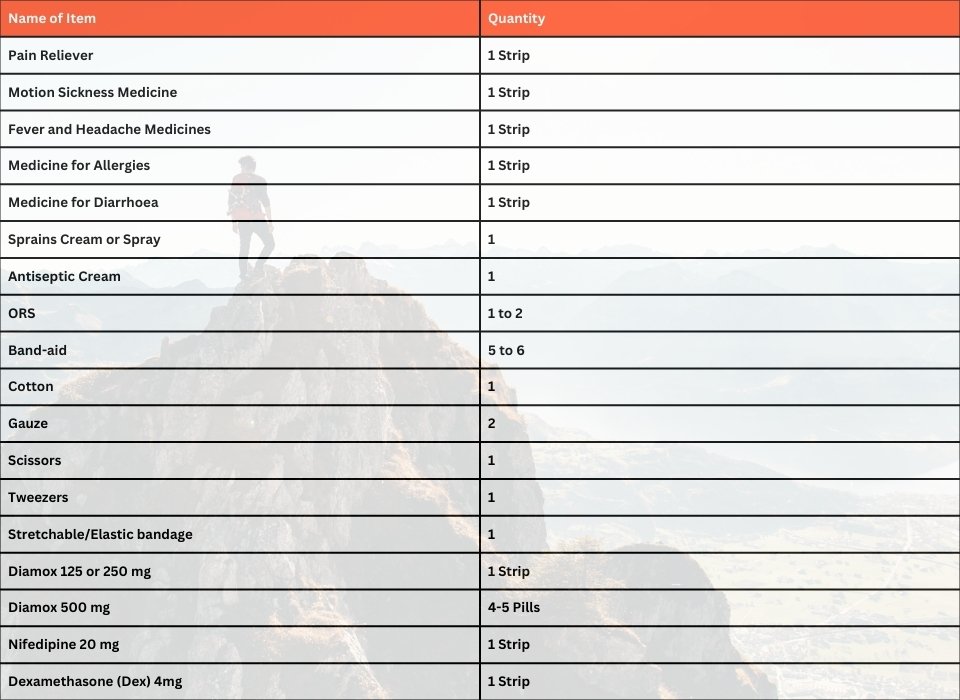
Are you Looking for Trekking Equipment on Rent?
If any trekker requires trekking equipment on rent, Himalayan Hikers offers the best-quality gear available for rental. Many individuals are in need of such equipment, and renting provides a cost-effective solution, allowing them to access high-quality gear at an affordable price without the need for a significant investment for short-term use.
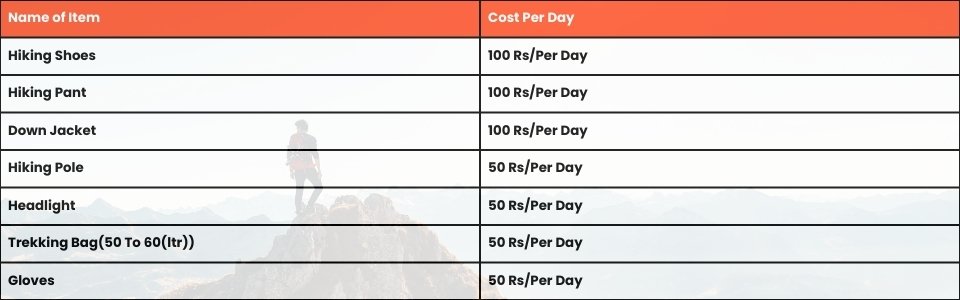
Trek Equipment You can book directly on first day at the Base Camp.
Note:-
Please take all medicines only when prescribed by the doctor. In case you face any problem during your trek,
discuss and take advice from the Professional guide.
Preparation & Fitness Tips for Gupt Khal Trek
The Gupt Khal Trek is a high-altitude, physically demanding expedition (up to 5,804 m), so proper preparation is essential for safety, stamina, and summit success.
1. Cardio (Stamina is Critical)
You will trek long hours across altitude, glaciers, and steep climbs, so endurance is the foundation.
Do 4–5 days/week:
- Brisk walking: 45–60 minutes
- Light jogging: 30–40 minutes
- Cycling/incline treadmill (optional but useful)
Goal: Be able to comfortably walk 8–10 km on uneven terrain
2. Leg Strength (Essential for Steep Ascents & Descents)
Strong legs reduce fatigue during continuous climbs and technical sections.
Do 3–4 days/week:
- Squats – 3 sets × 15 reps
- Lunges – 3 sets × 12 each leg
- Step-ups (on bench/stairs) – 3 sets × 12
- Wall sit – 45–90 seconds
Stair climbing training is highly recommended (with a backpack if possible)
3. Breathing & High-Altitude Adaptation
Critical for handling thin air above 4,000–5,000 meters.
- Deep breathing exercises: 10 minutes daily
- Pranayama (Anulom Vilom, Bhramari)
- Slow walking practice with controlled breathing rhythm
Focus on calm, steady breathing under exertion
4. Backpack Training (Load Practice)
You will carry essentials during trekking days.
- Walk with a 5–8 kg backpack
- Practice 30–60 minutes, 3–4 times a week
- Include uphill walking if possible
5. Flexibility & Recovery
Helps prevent injuries in cold and rocky terrain.
- Stretch after every workout
- Focus on calves, hamstrings, quads, and lower back
- Light yoga sessions are highly beneficial
6. Real Terrain Practice (Highly Recommended)
If possible, train on similar terrain conditions:
- Long uphill trails
- Rocky Mountain paths
- Forest hikes
- Steep staircases
This closely matches the Uttarakhand Himalayan trekking conditions
How Fit Do You Need to Be?
You are ready for the Gupt Khal Trek if you can:
- Walk 8–10 km with elevation gain
- Climb 15–20 floors comfortably
- Carry a 5–8 kg backpack without strain
- Recover well after long walking days
Common Mistakes to Avoid
- Starting too fast on trekking days
- Ignoring acclimatisation at high camps
- Wearing new/unbroken trekking shoes
- Skipping hydration in cold weather
- Neglecting rest days during training
Himalayan Hikers is a reputable trekking company that places a high priority on safety. Here are some of the safety measures they take to ensure the safety of their clients during the Trek:
Experienced Guides: Himalayan Hikers hires experienced and certified guides who are well-versed in the terrain, weather conditions, and local culture. These guides have first-hand knowledge of the routes and are equipped to handle any emergency situations that may arise.
Proper Gear: The company provides all the necessary gear and equipment to their clients to ensure comfort and safety during the trek.
Hygiene and Sanitation: Himalayan Hikers places great emphasis on hygiene and sanitation during the Trek. They provide clean drinking water, hand sanitizers, and toilet tents to ensure that their clients are healthy and comfortable.
Emergency Services: The company has a well-defined protocol for handling emergency situations. They have a team of trained medical professionals who are available 24/7 and can be quickly mobilized in case of an emergency.
Acclimatization: Himalayan Hikers follows a gradual acclimatization process during treks to ensure that their clients adjust to the high altitude gradually. They also monitor the health of their clients regularly and provide necessary medical attention if required.
Overall, Himalayan Hikers places a great emphasis on safety and takes all necessary measures to ensure the safety and well-being of their clients during treks.
What is Included In This Trek?
| Category | Included Services |
|---|---|
| Transport | Transport Facility Haridwar To Haridwar |
| Permits | Forest Permit and entrance fee |
| Accommodation | Accommodation in tents on twin share basis |
| Meals | All meals: breakfast, packed lunch, tea, coffee, snacks, soup and dinner |
| Camping Gears |
(All camping gears) High quality tents Sleeping bags Mattress Liner Pillow Separate Toilet tents – Ladies and Gents Dining Tent Dining Table |
| Support Staff |
Porters Helper Mules Kitchen team |
| Communication | Radio Walkie Talkie for Communication |
| Guidance & Safety |
Good Experience Trek Leader guide and Technical guide Medical Kit Oxygen Cylinders Crampons and Gaiters |
What is Not Include In This Trek?
| Category | Not Included |
|---|---|
| Insurance & Documents |
Personal Insurance Medical Certificate |
| Personal Items | Personal toiletry Items and Personal Medicine kit |
| Meals Not Included |
On first day En Route to base camp the Breakfast and Lunch are Not Included Last Day En Route Lunch and Dinner are Not Included |
Important Note
Himalayan Hikers offers both online and offline booking options for their treks. Here’s a breakdown of both options:
1. Online Booking:
- Website: Himalayan Hikers has an official website where trekkers can browse through different treks, check details (itineraries, costs, difficulty level, etc.), and make bookings. Payment gateways are integrated for secure online transactions.
- Third-Party Platforms: They might also be listed on various trekking or adventure booking platforms, where you can compare prices, read reviews, and make bookings.
- Email Communication: Trekkers can inquire about treks via email and complete the booking process online, following email communication and payment.
2. Offline Booking:
- Direct Office Visit: Himalayan Hikers has physical offices (especially in Uttarakhand), where trekkers can visit in person, discuss treks, and complete bookings directly.
- Phone Booking: You can also call their office to make a booking. Details about payment methods, trek dates, and other logistics can be confirmed over the phone.
Yes, Himalayan Hikers requires a 25% advance payment for booking treks, Via- Google pay or UPI, Directly Himalayan Hikers Account with the remaining amount to be paid in cash at their branch office in basecamp before the trek starts. This payment structure is typical for ensuring that bookings are confirmed while allowing trekkers flexibility in completing the payment when they arrive.
Map not available for this trek.
The most challenging and remote High-Altitude trekking expedition.
The trek reaches high-altitude passes above 19,052 ft.
Yes, participants are generally recommended to have prior trekking experience, especially at high altitudes.
The best time is from May to June and September to October.
No, the route to the Gupt Khal Expedition is inaccessible in winter.
You’ll need roughly 12–15 days to finish the Gupt Khal Trek.
Accommodation includes basic guesthouses and camping during the trek.
Solo trekking is not advised due to the remote and challenging terrain.


.webp)


