
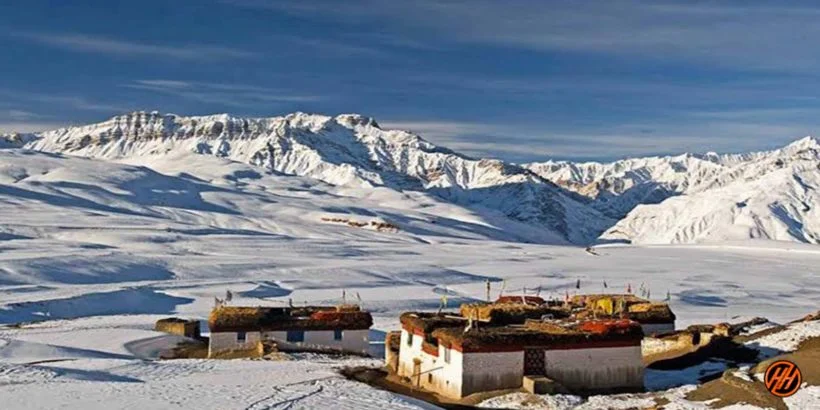


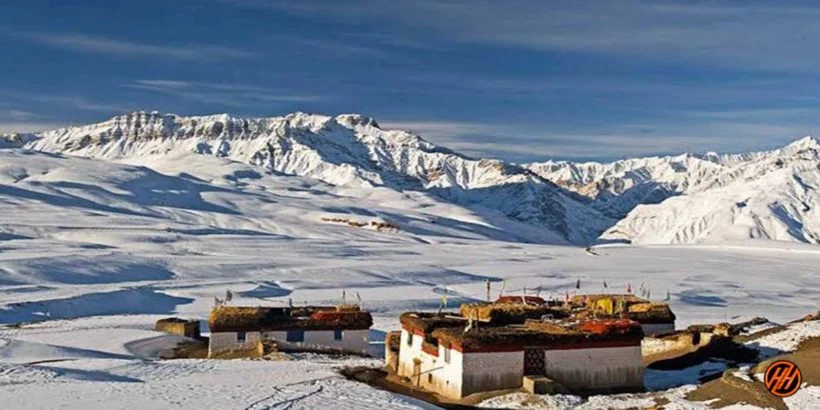
The trail is a true Trans Himalayan trek, beginning in the Zanskar range and ending in the Great Himalayan range. The path ascends to a maximum elevation of around 5600 metres at Parang La and then follows the Pare Chu River as it flows into Tibet and then back into India.
This difficult trail contains all of the flavours of Ladakh and Spiti, such as high mountains, arid landscapes, rocky cliffs, and wide valleys dotted with patches of green, everything a trekking enthusiast would expect. It also allows you to spend the night on TsoMoriri Lake while hiking the lake’s entire length during the day. This trek is a difficult level trek with challenging terrain that requires acclimatisation at certain points; therefore, trekkers with a variety of experience will have an advantage throughout this journey.
- High altitude pass is situated at a towering height of 5600m
- Get a panoramic view of many snow covered peaks visible form the Parang la pass Trek.
- Test your endurance limits both physically and mentally.
- View the lush green Landscapes of Thaltak meadows.
- Remote trekking in the Secluded areas of PirPanjal ranges and Zanskar range
Some of the trek highlights
Jam packed with variable terrains, challenging descents and meadows; Parang La Pass trek is nothing less than a dream to mountaineers.Trekkes will be able to experience two completely different worlds of southern Ladakh and spiti valley in Himachal. Not only geographically distinct but also divided with living cultures and language, this trek provides a great insight to local cultures and living values.
The trek officially commences form the Karzok village beside TsoMoriri Lake and ends at Kaza. Trekkers will get a chance to walk along the TsoMoriri Lake at Kiangdom withswampy stretch of the lake towards the end, before beginning to follow the Pare Chu River. Hikers will be setting up camps at various locations along the trail. The site of Pare Chu River for camping is among some of the best experience during the Parang la Pass trek. The challenging snow covered descent of Parang la reaches the arid Spiti valley glorifying the essence of two completely different worlds. Trekkers will then be walking through the trails of spiti valley before opening to the majestic lushs of Thalkata meadows. Kibber will be last the destination for this trek.
Things to Look out for-
- The trek is certain to provide unrivalled feelings of accomplishment.
- Souvenirs form Lehare great for memories.
- There are countless photogenic peaks, so we recommend that you prepare yourself for any aesthetic shoots. The best pictures are those taken under a blue sky with snow-covered peaks in the background.
- Trail among the old yet dynamic mountain features which houses some of the unique and rare fossils.
- Along the journey trekkers will get a chance to interact with the locals of both Ladakh region and Himachal region. Even through the religious influence of Buddhism holds strong in both areas, yet the distinct cultures will surely fascinate the explorers.
View during the journey
- Changing colors of TsoMoriri Lake as trekkers walk alongside is one of the main highlight of this trek. Trekkers will be able to experience the varied shades of blue with unclimbed peaks in the backdrop creating a picture perfect canvas.
- Rare and unique fossils with mountains giving a strong aura of being submerged under the sea is a fascination to explore.
- Pare chu river and camping on its banks.
- Thalkata’s lush green meadows with grazing horses.
Nearby places to visit
- While on their trek to Parang la Pass trekkers can take time to explore the villages they will be crossing. The monasteries at Kharzok village with its old and influencial history might peque an excitement among the trekkers.
- Trekkers are most likely recommended to extend their stay at Kaza or leh depending upon their travel route. If trekkers are travelling from Kibber to Karzokvikkage then an extended stay at leh will be extremely fulfilling. In the same way if trekkers are travelling from Kharzok village to Kaza a prolonged stay at Kaza might also help trekkers to explore the beauty of Spiti valley.
- Also trekkers on reaching Kaza can opt to explore the popular tourist destination of Manali. Owning to its name as popular tourist destination Manali provides a variety of attractions to explore. Sites like Hidimba Devi temple and VashistKund can surely make trekkers to extend their stay.
The altitude covered in Parang la Pass Trek
Leh-3500m
Korzok village-4595m
Kiangdom-4725
NurboSumdo- 4600m
DatangYangma camp-4725m
Parang la-5020m
Thaltak meadows-4960m
Dumla village-4260m
Kaza-3650m
Parang La Trek Complete Guide
Our mission has always been to ensure that no trekker steps into the Himalayas without the right perspective. A trek is not just a checklist of summits; it is a serious commitment to the outdoors. Having the right information is what separates a reckless climb from a soulful journey.
This section serves as your definitive manual for the Parang La Trek. We have distilled years of mountain experience and real-time feedback into this guide to give you a clear, honest picture of the trail.
We provide this depth of information because we want you to be more than just a visitor—we want you to be a prepared, responsible trekker who respects the mountains as much as we do.
Day 2 Leh (Acclimatization day)
Day 3 Leh to Korzok village
Day 4 Trek to Kiangdom
Day 5 Kiangdom to NurboSumdo
Day 6 NurboSumdo to DatangYangma camp
Day 7 DatangYangma camp to KapaBoche camp
Day 8 KapaBoche camp to DakKarzong
Day 9 Parang la to Thaltak meadows
Day 10 Thaltak meadows to Dumla village
Day 11 Dumla Village to chicham to Kaza Same day to Manali
Day 1
Detailed itinerary
Upon reaching Leh, our teams will contact all people for verification introduction and accommodation
Day 1: Arrive at leh and check into your respective hotels before retiring.
Day 2: Rest and active acclimatisation in Leh. Feel free to explore nearby surroundings.
Day 3: Depart for Korzok village beside TsoMoririlake. Trekkers upon reaching can explore the area in the afternoon before checking into the Lodge/homestay.
Day 4: Trekking of 20 km flat stroll alongside the lake could take 6-7 hours. As night arrives, it’s time to pitch up camp next to the lake.
Day 5: Wake up early in the morning and after breakfast trek to NurboSumdo from Kiangdom Explore the mighty trail leading to nurbosumdo while seeking chances to click insta worthy pictures.
Day 6: Early in the morning after breakfast trek start to DatangYangma fromNurboSumdo.
Day 7:Early in the morning trek start toKapaBoche from DatangYangma.
Day 8: The next morning the trek to DakKarzong begins.
Day 9: After parang la early morning the trek begins to Thaltak meadows. While reaching there you can see lush greenlands.
Day 10:The next day trek to Dulma village starts after having the morning breakfast.
Day 11: Next morning Tek to Kaza starts which leads to the end of the whole trekking journey.
Difficulty level
Because the pass is relatively high in elevation, we strongly recommend a reasonable level of physical fitness.We advise trekkers to physically and mentally prepare themselves prior to this trek.
Any medical assistance that is required will be provided at any point of the journey; however, trekkers must consult their professional care before beginning any trek. We also strongly advise trekkers to learn about altitude sickness and to notify our teams as soon as any symptoms appear.
Is it safe?
Set amidst the high altitudes, concerns regarding Parang la Pass Trek safety are indeed very valid questions. To brush off all the concerns we would like to confirm that the teams of Himalayan Hikers have calculated all the possible probabilities if anything goes off the schedule.
All of our professionals strive to provide the best experience possible for trekkers, so a collaborative contribution of a relaxed mindset and morally communicative behavior with fellow trekkers will be greatly appreciated.
Weather conditions
Weather conditions depend on the time of the year trekkers are travelling. Months from pre and post monsoon experience moderate temperatures during the day with substantially colder nights.
Easier trails with less confusing journey makes this trek a perfect summer and early winter trek. The weather during summers are quite favorable for trekking elevation and safer trails.
Best Time to Visit Parang la Pass Trek
Both the ascent and the descent of Parang la Pass are difficult in level as the trekkers hike forward. The best time to hike these paths is during the months of June end to mid-Septemper. The unfavorable temperatures and precipitation make this trek a pre and post monsoon season trek. Temperatures typically range from 5 to 12 degrees Celsius during the day, with substantially colder nights.
Connectivity and Transactions
1) Because connectivity along the route is unpredictable, we urge people to do all of their work ahead of time.
2) Trekkers will be provided with walkie- talkies beforehand in case of emergency
3) Last ATM transactions available will be at some stops after Lehbut we recommend travellers to collect cash beforehand or while in Leh as ATM available at other places might not dispense cash at times.
How to Reach Parang la Pass Trek
If you are travelling from any metropolitan city in India or from outside India, getting to the capital city of Delhi may be the first and most important step. All major modes of transportation, such as air, road, and rail, can take you to Delhi.
Leh is connected to most major cities in India via all chief modes of transportation. Trekkers could perhaps conduct extensive research for their direct mode of transportation to ensure a much smoother arrival.
How to reach Leh from Delhi
By air– KushokBakulaRimpocheeAirport is the nearest airport to Leh. It is well connected to Delhi with many flights in a week. Cabs are easily available from the airport to Leh.
By road-Delhi have road routes to Leh via Manali or via Srinagar . Trekkers will have to book either a bus or private cabs. Prior booking for cabs and bus are easily available at various sites.
Delhi>Leh>Korzork village
By railway–
.Some important points to note-
- Please note that we don’t provide timings schedules for transportation before Leh. Subjected to various conditions the scheduled timings and availability of particular rides may differ. We recommend trekkers to reach out our teams for any queries. You can drop an email or call us for an initial guided session.
- Our teams will be collecting trekkers at fixed points of airports, railway stations and bus stands.
- It is recommended that unless any delay arrives, trekkers are advised to reach the destinations at least 2 hours prior.
Things Himalayan hikers recommend
As previously stated, a camera, as well as spare batteries and memory cards, are recommended. We can assure and guarantee that you will be stopping frequently along the trail to observe the grandeur of the trekking experience.
We strongly recommend trekkers to prepare beforehand for the journey ahead. Regular practicing physical fitnessand mental endurance will surely assist trekkers in great time.
After the trek, we strongly encourage trekkers to tag us on social media when they post any memories from the trip; this will not only prove invaluable to us with our work, but will also serve as a motivational example for all of our experts.
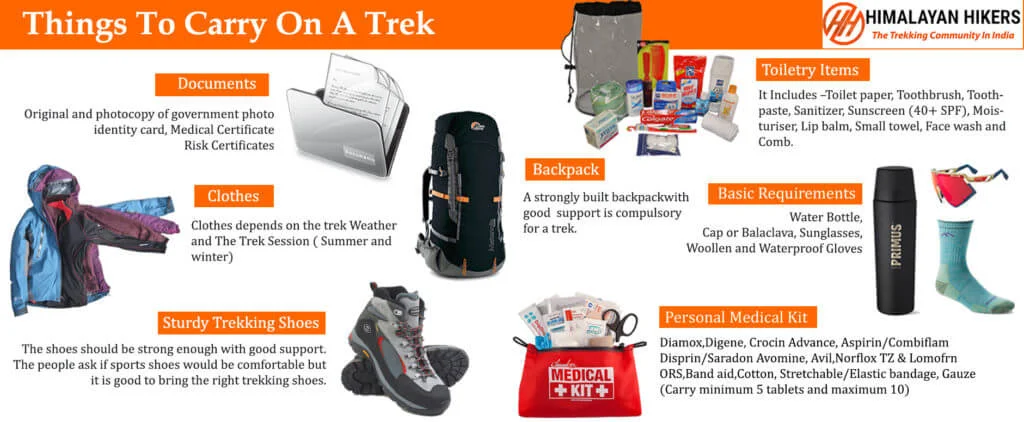
Necessary Items for trekkers
Mandatory Documents
Original and photocopy of government photo identity card- (Aadhar Card, Driving License, Voters ID, etc,)
Passport and Visa important to foreigners
Medical Certificate (First part should be filled by the Doctor and Second part by the Trekker)
Declaration Certificates
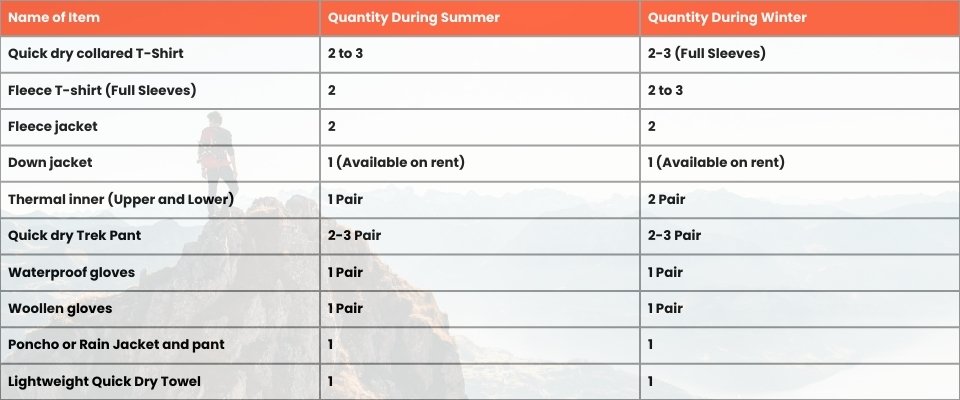
Note: – Many trekkers commit the same mistake of carrying unnecessary items on a trek which only makes the backpack heavy. It is important to know the right items to carry. It differs from season to season if you are trekking in summers then carry less layers of warm clothing and if you are trekking in winters carry enough layers to protect yourself against chilly cold.
Basic Trekking Gears
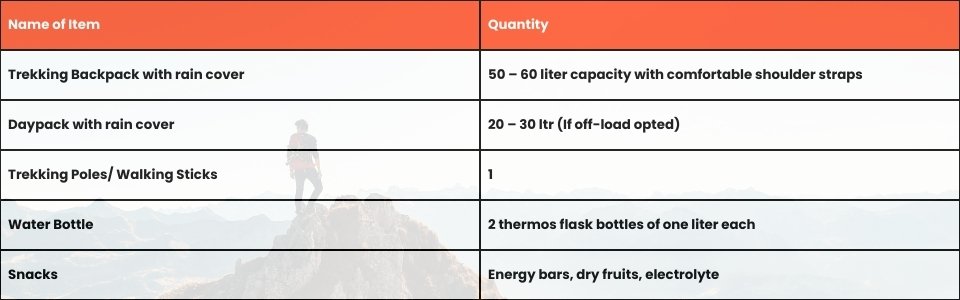
The Clothes You Should Bring On Satopanth Expedition
Head Gears

Foot Gears

Personal Care Essentials

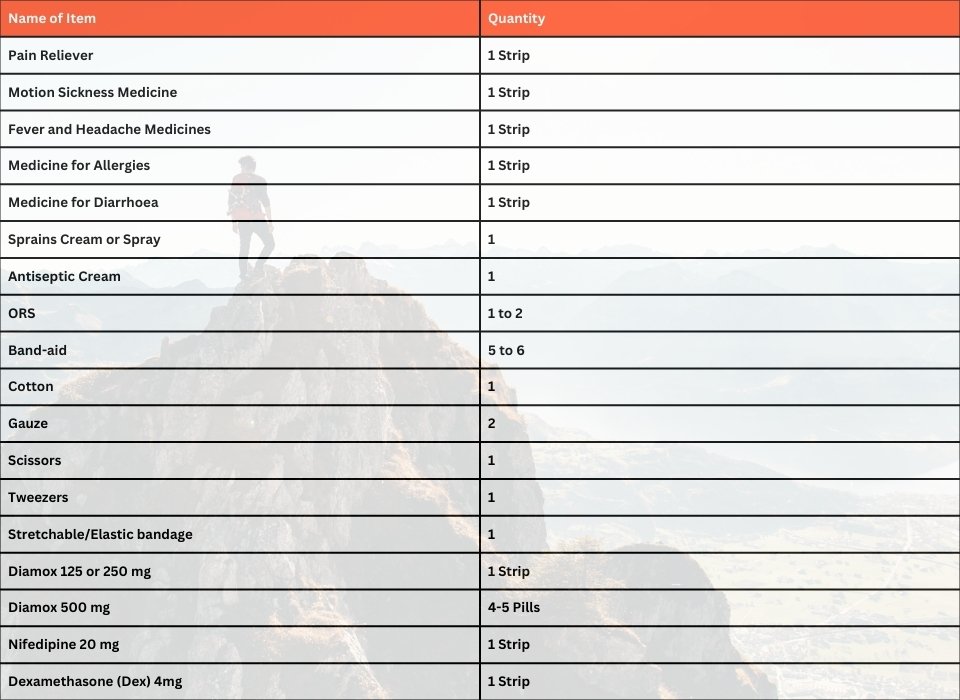
Carry a Personal Medical Kit
Are you Looking for Trekking Equipment on Rent?
If any trekker requires trekking equipment on rent, Himalayan Hikers offers the best-quality gear available for rental. Many individuals are in need of such equipment, and renting provides a cost-effective solution, allowing them to access high-quality gear at an affordable price without the need for a significant investment for short-term use.

Trek Equipment You can book directly on first day at the Base Camp.
Note:-
Please take all medicines only when prescribed by the doctor. In case you face any problem during your trek,
discuss and take advice from the Professional guide.
The Trek is one of the most popular treks in Uttarakhand, Himachal,Kashmir,Laddakh,Sikkim,Nepal, requiring both physical preparation and mental readiness. Although it is categorized as a moderate trek, reaches an elevation of over 12,720 feet and traverses remote Himalayan terrain, which can be physically and mentally challenging. Here's how you can prepare yourself for a safe and successful accomplishment of the Trek:
Physical Fitness
Building a good fitness base is essential for every trekker. The Trek itinerary involves 5 to 6 hours of walking every day. Though the trails are well-marked, they are often bumpy and include steep uphill sections, which may affect your stamina. You can overcome your physical limitation with a 6-week training program that you can begin about 2 months before your Trek. Your 6-week fitness routine should include

Pro Tip: If you have time, you can skip the Sunday training and go for a long-distance walk or mini day-hike (7–10 km) with a loaded backpack to simulate real trekking conditions. A short 1-day hike around your city/town can help a lot.
Mental Preparation
Physical strength is only half the journey, the other half is mental resilience. The trail takes you through remote clearings, steep climbs, cold starry nights, and no mobile connectivity. Be prepared to:
(I) - Detach from the digital world.
(II) - Embrace basic mountain living (camping, toilet tents, limited electricity).
(III) - Push through moments of fatigue, weather discomfort, or altitude effects.
A positive mindset, patience, and the ability to adapt will carry you farther than muscle ever could.Himalayan Hikers is a reputable trekking company that places a high priority on safety. Here are some of the safety measures they take to ensure the safety of their clients during the Trek:
Experienced Guides: Himalayan Hikers hires experienced and certified guides who are well-versed in the terrain, weather conditions, and local culture. These guides have first-hand knowledge of the routes and are equipped to handle any emergency situations that may arise.
Proper Gear: The company provides all the necessary gear and equipment to their clients to ensure comfort and safety during the trek.
Hygiene and Sanitation: Himalayan Hikers places great emphasis on hygiene and sanitation during the Trek. They provide clean drinking water, hand sanitizers, and toilet tents to ensure that their clients are healthy and comfortable.
Emergency Services: The company has a well-defined protocol for handling emergency situations. They have a team of trained medical professionals who are available 24/7 and can be quickly mobilized in case of an emergency.
Acclimatization: Himalayan Hikers follows a gradual acclimatization process during treks to ensure that their clients adjust to the high altitude gradually. They also monitor the health of their clients regularly and provide necessary medical attention if required.
Overall, Himalayan Hikers places a great emphasis on safety and takes all necessary measures to ensure the safety and well-being of their clients during treks.
No inclusions found.
No exclusions found.
Important Note
No important note.
Map not available for this trek.
No FAQs available for this trek.


