


Here is everything you need to know about this high-altitude adventure, crafted from scratch for true explorers.
The Core Snapshot
Region: Parvati Valley, Himachal Pradesh, India
Starting Base: Barshaini
Max Altitude: Around 3,350 to 3,600 meters
Duration: 3 Days and 2 Nights
Vibe: Deep forests, silent alpine meadows, shepherd trails, and zero commercial noise.
The Historical & Cultural Roots
Long before backpackers discovered these mountains, the Bun Buni heights belonged exclusively to nature and the Gaddi shepherds. If you trek here during the warmer months, you will frequently share the landscape with this semi-nomadic community. They lead massive flocks of sheep and goats up through the steep passes to graze on the rich, medicinal grasses of the high-altitude thatch (meadows).
Furthermore, because this path drops you right into Kheerganga, it carries the ancient aura of Lord Kartikeya, who is said to have meditated here for centuries. The blend of the shepherds' old migratory tracks and the spiritual aura of Kheerganga gives this entire trek a timeless, sacred feel.
When is the Best Time to Go?
May to June (Early Summer): The weather is crisp, the snow has melted from the main trails, and you will find brilliant red rhododendron flowers blooming across the forest floor.
September to November (Post-Monsoon Gold): This is the ultimate window. The skies are intensely blue, the mountain air is sharp and clean, and visibility of the distant snow-capped Himalayan peaks is at its absolute peak.
What to avoid: Avoid July and August due to heavy monsoon rains that turn the soil slick and bring out leeches. Winters are brutally cold and snow-bound unless you are an experienced mountaineer.
Bun Buni Pass Complete Guide
Our mission has always been to ensure that no trekker steps into the Himalayas without the right perspective. A trek is not just a checklist of summits; it is a serious commitment to the outdoors. Having the right information is what separates a reckless climb from a soulful journey.
This section serves as your definitive manual for the Bun Buni Pass . We have distilled years of mountain experience and real-time feedback into this guide to give you a clear, honest picture of the trail.
We provide this depth of information because we want you to be more than just a visitor—we want you to be a prepared, responsible trekker who respects the mountains as much as we do.
Day 1: Barshaini to Bun Buni Thatch
Path: Barshaini -Kalga Village - Deodar Forest - Bun Buni Meadows
Distance & Time: 7 km | 4 hours of steep uphill climb
Elevation Gain: 2,200 meters to 3,050 meters
What to Expect:
Begin your trek right after crossing the bridge from Barshaini. The route cuts through the quiet, apple-laden pathways of Kalga before entering a dense, shaded forest of towering pine and oak trees. After a continuous climb, the trees clear out to unveil Bun Buni—a sprawling green meadow sitting high above the valley where you will set up camp for the night.
Day 2: Bun Buni Ridge to Kheerganga
Path: Bun Buni - Bun Buni Summit - Glacial Ridge - Kheerganga
Distance & Time: 9 km | 5 hours of mixed terrain
Elevation Change: Peak climb to 3,349 meters, then descending down to 2,960 meters
What to Expect:
Start your morning with a steady climb toward the top ridge of Bun Buni. Standing at the summit rewards you with a massive, unobstructed 360-degree view of jagged Himalayan giants. Afterward, navigate the downhill trail crossing small mountain streams and rocky patches until you merge into the upper route leading to Kheerganga. Wrap up your day by soaking your tired muscles in the famous natural hot sulfur baths.
Day 3: Kheerganga down to Barshaini
Path: - Kheerganga -Parvati River Forest Trail -Wooden Bridges - Barshaini
Distance & Time: 11 km | 4 hours of continuous descent
Elevation Loss: 2,960 meters down to 2,200 meters
What to Expect:
Pack your bags for the final stretch and take the classic forest trail heading back down. The route runs parallel to the fierce, roaring rapids of the Parvati River. You will cross a few wooden footbridges and walk past minor waterfalls before finally popping back out at the Barshaini roadhead to end your journey.
Day 1
Day 2
Day 3
Day 1: Barshaini to Bun Buni Thatch
Path: Barshaini -Kalga Village - Deodar Forest - Bun Buni Meadows
Distance & Time: 7 km | 4 hours of steep uphill climb
Elevation Gain: 2,200 meters to 3,050 meters
What to Expect:
Begin your trek right after crossing the bridge from Barshaini. The route cuts through the quiet, apple-laden pathways of Kalga before entering a dense, shaded forest of towering pine and oak trees. After a continuous climb, the trees clear out to unveil Bun Buni—a sprawling green meadow sitting high above the valley where you will set up camp for the night.
Day 2: Bun Buni Ridge to Kheerganga
Path: Bun Buni - Bun Buni Summit - Glacial Ridge - Kheerganga
Distance & Time: 9 km | 5 hours of mixed terrain
Elevation Change: Peak climb to 3,349 meters, then descending down to 2,960 meters
What to Expect:
Start your morning with a steady climb toward the top ridge of Bun Buni. Standing at the summit rewards you with a massive, unobstructed 360-degree view of jagged Himalayan giants. Afterward, navigate the downhill trail crossing small mountain streams and rocky patches until you merge into the upper route leading to Kheerganga. Wrap up your day by soaking your tired muscles in the famous natural hot sulfur baths.
Day 3: Kheerganga down to Barshaini
Path: - Kheerganga -Parvati River Forest Trail -Wooden Bridges - Barshaini
Distance & Time: 11 km | 4 hours of continuous descent
Elevation Loss: 2,960 meters down to 2,200 meters
What to Expect:
Pack your bags for the final stretch and take the classic forest trail heading back down. The route runs parallel to the fierce, roaring rapids of the Parvati River. You will cross a few wooden footbridges and walk past minor waterfalls before finally popping back out at the Barshaini roadhead to end your journey.
No difficulty level available.
No best time available.
No How to Reach the Base Camp available.
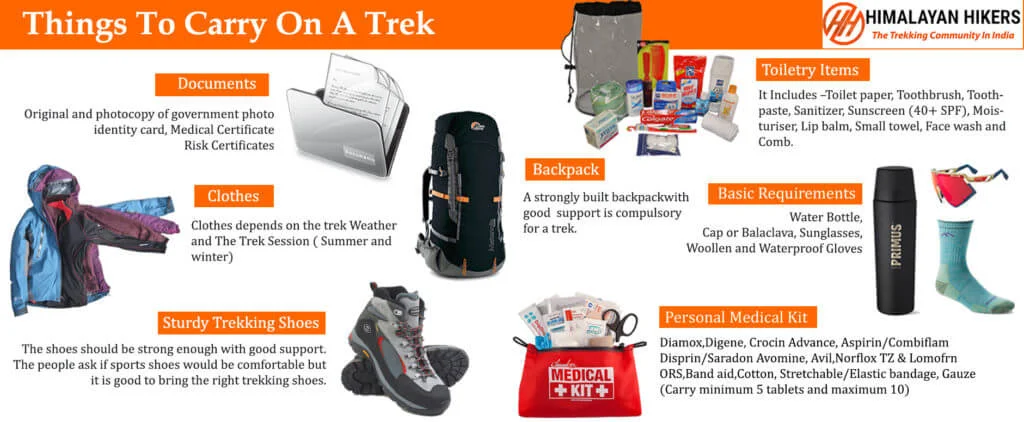
Necessary Items for trekkers
Mandatory Documents
Original and photocopy of government photo identity card- (Aadhar Card, Driving License, Voters ID, etc,)
Passport and Visa important to foreigners
Medical Certificate (First part should be filled by the Doctor and Second part by the Trekker)
Declaration Certificates
Note: – Many trekkers commit the same mistake of carrying unnecessary items on a trek which only makes the backpack heavy. It is important to know the right items to carry. It differs from season to season if you are trekking in summers then carry less layers of warm clothing and if you are trekking in winters carry enough layers to protect yourself against chilly cold.
Basic Trekking Gears
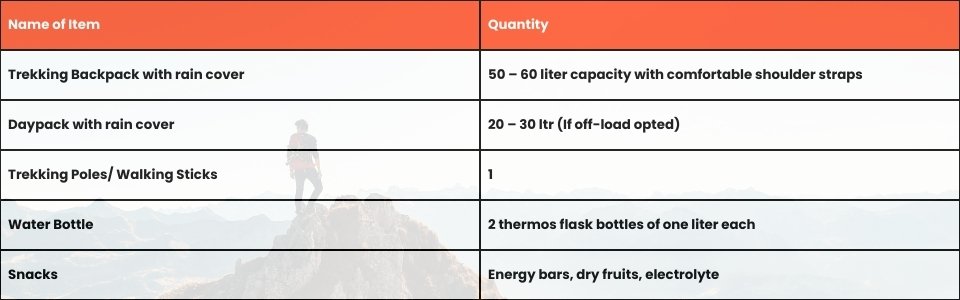
The Clothes You Should Bring On Satopanth Expedition
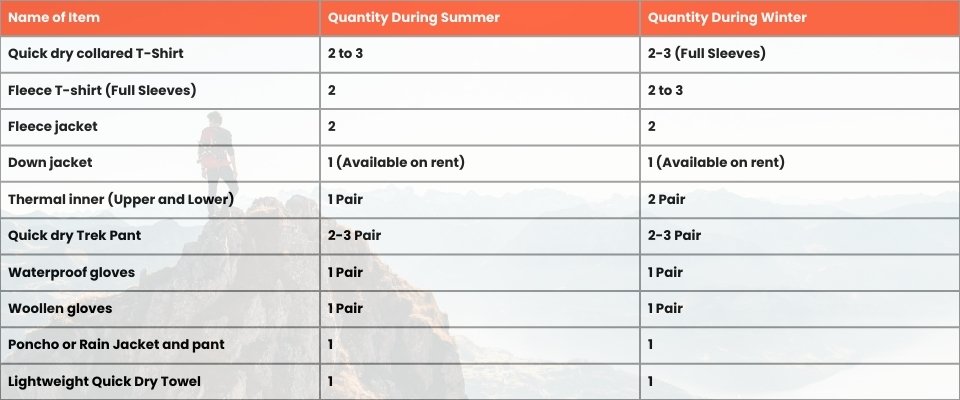
Head Gears

Foot Gears
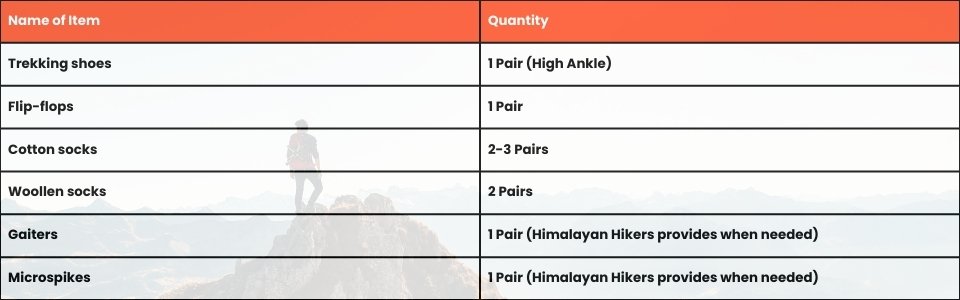
Personal Care Essentials

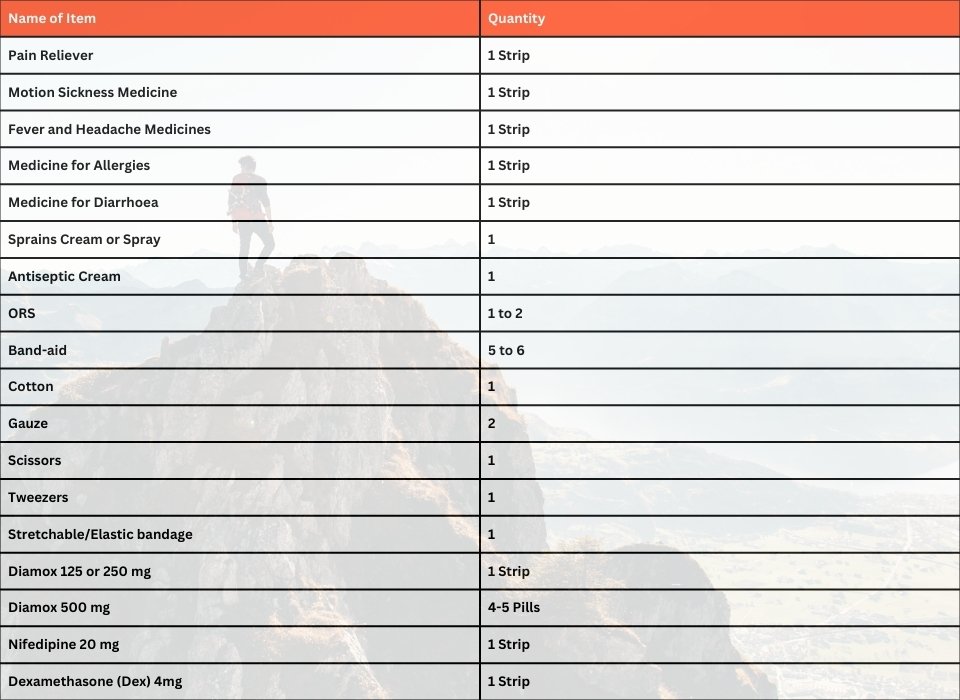
Carry a Personal Medical Kit
Are you Looking for Trekking Equipment on Rent?
If any trekker requires trekking equipment on rent, Himalayan Hikers offers the best-quality gear available for rental. Many individuals are in need of such equipment, and renting provides a cost-effective solution, allowing them to access high-quality gear at an affordable price without the need for a significant investment for short-term use.
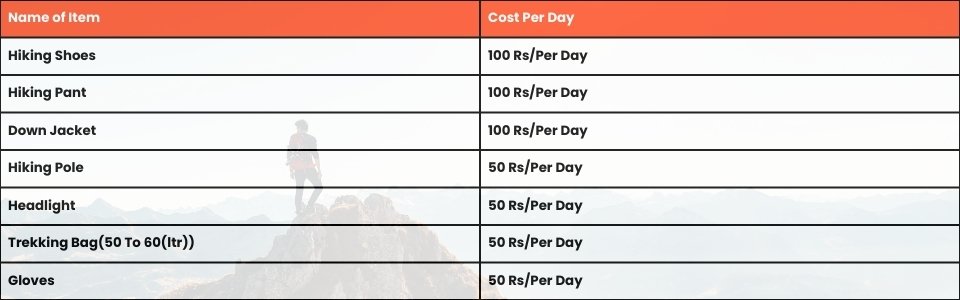
Trek Equipment You can book directly on first day at the Base Camp.
Note:-
Please take all medicines only when prescribed by the doctor. In case you face any problem during your trek,
discuss and take advice from the Professional guide.
The Trek is one of the most popular treks in Uttarakhand, Himachal,Kashmir,Laddakh,Sikkim,Nepal, requiring both physical preparation and mental readiness. Although it is categorized as a moderate trek, reaches an elevation of over 12,720 feet and traverses remote Himalayan terrain, which can be physically and mentally challenging. Here's how you can prepare yourself for a safe and successful accomplishment of the Trek:
Physical Fitness
Building a good fitness base is essential for every trekker. The Trek itinerary involves 5 to 6 hours of walking every day. Though the trails are well-marked, they are often bumpy and include steep uphill sections, which may affect your stamina. You can overcome your physical limitation with a 6-week training program that you can begin about 2 months before your Trek. Your 6-week fitness routine should include

Pro Tip: If you have time, you can skip the Sunday training and go for a long-distance walk or mini day-hike (7–10 km) with a loaded backpack to simulate real trekking conditions. A short 1-day hike around your city/town can help a lot.
Mental Preparation
Physical strength is only half the journey, the other half is mental resilience. The trail takes you through remote clearings, steep climbs, cold starry nights, and no mobile connectivity. Be prepared to:
(I) - Detach from the digital world.
(II) - Embrace basic mountain living (camping, toilet tents, limited electricity).
(III) - Push through moments of fatigue, weather discomfort, or altitude effects.
A positive mindset, patience, and the ability to adapt will carry you farther than muscle ever could.Himalayan Hikers is a reputable trekking company that places a high priority on safety. Here are some of the safety measures they take to ensure the safety of their clients during the Trek:
Experienced Guides: Himalayan Hikers hires experienced and certified guides who are well-versed in the terrain, weather conditions, and local culture. These guides have first-hand knowledge of the routes and are equipped to handle any emergency situations that may arise.
Proper Gear: The company provides all the necessary gear and equipment to their clients to ensure comfort and safety during the trek.
Hygiene and Sanitation: Himalayan Hikers places great emphasis on hygiene and sanitation during the Trek. They provide clean drinking water, hand sanitizers, and toilet tents to ensure that their clients are healthy and comfortable.
Emergency Services: The company has a well-defined protocol for handling emergency situations. They have a team of trained medical professionals who are available 24/7 and can be quickly mobilized in case of an emergency.
Acclimatization: Himalayan Hikers follows a gradual acclimatization process during treks to ensure that their clients adjust to the high altitude gradually. They also monitor the health of their clients regularly and provide necessary medical attention if required.
Overall, Himalayan Hikers places a great emphasis on safety and takes all necessary measures to ensure the safety and well-being of their clients during treks.
No inclusions found.
No exclusions found.
Note: Please bring your own lunch box for the hot lunch.
Important Note
No important note.
Map not available for this trek.
No FAQs available for this trek.


