


Why This Route is Different
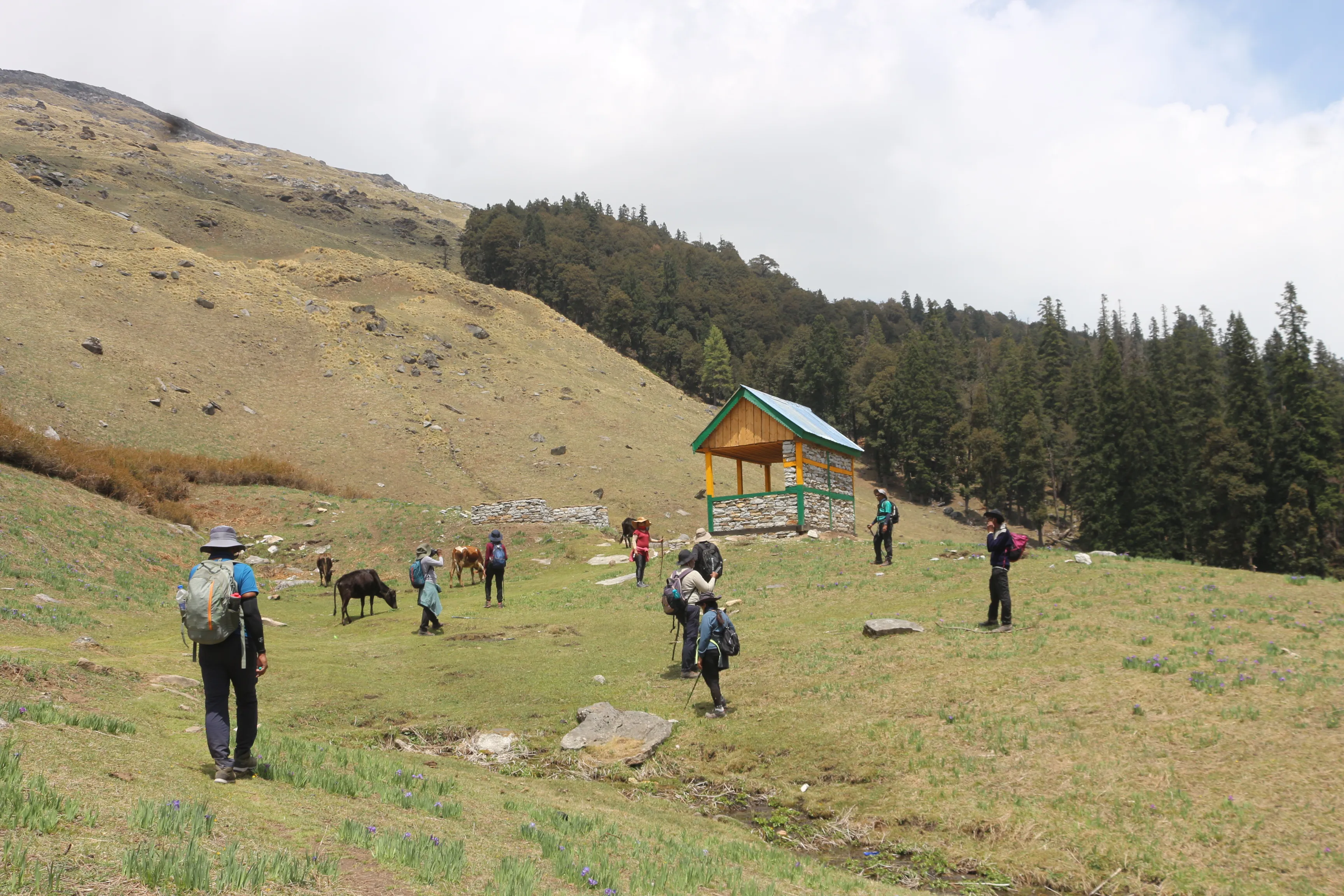
Instead of the concrete steps and crowded stalls of the main trail, our alternative path offers:
- Untouched Solitude: Swap the tourist crowds for the rustle of pine needles. This trail is rarely used, ensuring you have the mountain to yourself.
- The "Enchanted" Forest: You’ll trek through some of the densest Pine and Deodar groves in the region. The canopy is so thick that even on a sunny day, the forest floor remains cool and dappled in golden light.
- Cultural Immersion: The trail winds through remote Himalayan hamlets. You’ll see traditional wooden architecture and a way of life that hasn't changed in decades.
- The Reward: Reaching the summit of Mathan Hill (2,460m) feels more earned. From the top, you get a 360-degree panoramic view of the Parvati and Kullu valleys meeting below.
The "Grand Corridor": A Forest Like No Other
Most Himalayan treks demand constant focus on your footing along narrow, winding ridges. The Bijli Mahadev trail is a refreshing exception.
1. The Cathedral of Deodars
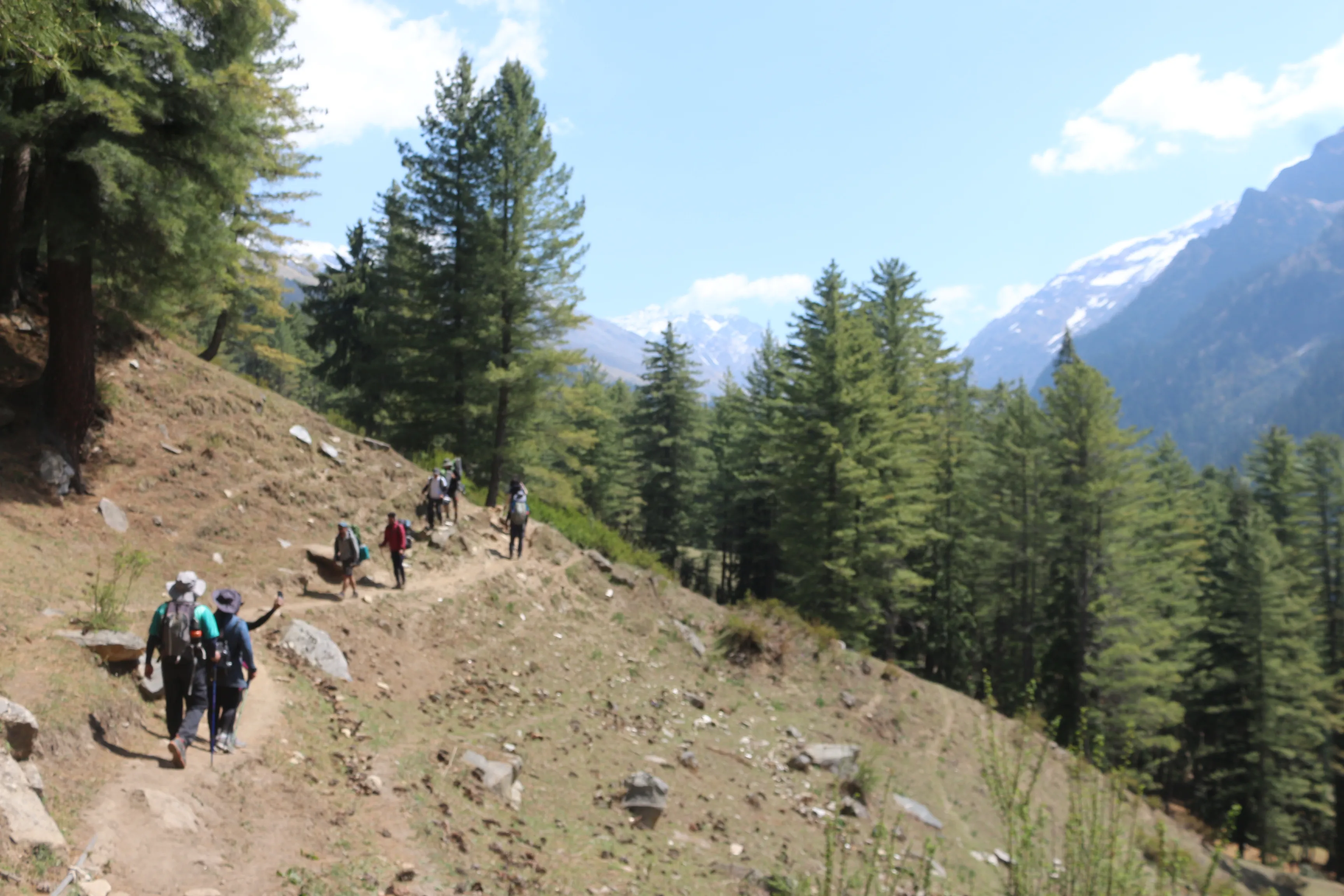
The forest here feels like a natural cathedral. Instead of single-file trekking, the broad, sweeping trails allow you to walk side-by-side with your trek mates, or find your own pocket of silence.
- The Light: Sunlight filters through the towering Deodar and Pine canopy in sharp, dramatic shafts.
- The Scent: The air is thick with the earthy, resinous perfume of ancient timber.
- The Rarity: Because the trails are wide and the terrain is gentle, we have the unique opportunity to camp deep within the forest. Falling asleep under a canopy of 100-foot trees is a "rare delight" that most high-altitude treks cannot offer.
2. The Summit: A Four-Valley Panorama
Reaching the Shiva temple at the top of Mathan Hill isn't just a spiritual milestone—it is a visual explosion. While many treks offer a view of a single valley, the summit of Bijli Mahadev acts as a geographic crossroads.
From your vantage point at 2,460 meters, the world opens up to reveal four distinct valleys:
- Kullu Valley: Stretching out in its green, river-carved glory.
- Parbati Valley: Leading your eyes toward the rugged, mysterious peaks of the east.
- Bhuntar Valley: Where you can spot the confluence of the Beas and Parvati rivers.
- Gorsa Valley: A hidden gem of a valley, often missed by the casual traveler.
3. The Golden Hour (Alpenglow)
We have timed our itinerary specifically for the Alpenglow. As the sun dips below the horizon, the Pir Panjal and Dhauladhar ranges don't just turn orange—they glow with a fierce, metallic gold. Standing at the temple as the lightning rod catches the last rays of the day is an experience that stays with you long after you’ve returned to the city.
3 Reasons the Bijli Mahadev Trek is a Himalayan Masterpiece
1. A Forest That Breathes With You
Most Himalayan forests feel like a climb; this one feels like a conversation. Just 15 minutes from Kot village, you step into a world of layered architecture.
- The "Wide-Angle" Woods: Unlike the claustrophobic, steep trails of other treks, these paths are broad and welcoming. You can see deep into the heart of the forest, where light plays hide-and-seek between ancient Deodars.
- A Sunset Under the Canopy: Usually, you wait for a summit to see the sun go down. Here, the magic happens at your campsite. As the sun dips, the forest floor—a golden carpet of dry needles—literally glows. It’s a rare, immersive "forest sunset" that feels like being inside a lantern.
2. The High-Reward "Summit Window"
The "effort-to-reward" ratio on this trek is staggering. Standing at the Bijli Mahadev temple, you aren’t just looking at one range; you are standing at a celestial crossroads.
- The Giants: You’ll find yourself eye-to-eye with the legends: Deo Tibba, Hanuman Tibba, and the sharp silhouette of Friendship Peak. To the east, the Parvati Parvat stands guard.
- The Four-Valley View: It’s rare to see four distinct geographical systems from one spot. You’ll witness the deep gorges of the Parbati and Gorsa valleys meeting the wide expanses of Kullu and Bhuntar.
- The Confluence: On clear days, look straight down. You’ll see the silver ribbons of the Beas and Parvati rivers merging in a silent, powerful embrace far below.
3. The "Cinema" on Wheels: The Drive to Kot
The trek begins long before you lace up your boots. The journey from Manali to Kot village is a masterclass in Himalayan geography.
- The River Run: First, you track the Beas River as it thunders beside the road, flanked by endless rows of apple orchards.
- The Ascent: After Kullu, the road transforms. You’ll tackle a series of sharp, exhilarating hairpin bends that lift you high above the valley floor.
- The Reveal: Just 4 kilometers before you reach Kot, the treeline breaks, and the Pir Panjal range suddenly slams into view. It’s the perfect "prologue" to the adventure that awaits on foot. Bijli Mahadev Trek ek Himalayan masterpiece hai kyunki yahan se Kullu Valley aur snow-covered mountains ka breathtaking view dekhne ko milta hai.
Ghane devdar ke jungle, peaceful trails aur Bijli Mahadev Mandir ki spiritual vibe is trek ko truly unforgettable banati hai.
Bijli Mahadev Trek Complete Guide
Our mission has always been to ensure that no trekker steps into the Himalayas without the right perspective. A trek is not just a checklist of summits; it is a serious commitment to the outdoors. Having the right information is what separates a reckless climb from a soulful journey.
This section serves as your definitive manual for the Bijli Mahadev Trek. We have distilled years of mountain experience and real-time feedback into this guide to give you a clear, honest picture of the trail.
We provide this depth of information because we want you to be more than just a visitor—we want you to be a prepared, responsible trekker who respects the mountains as much as we do.
Day 1: Arrival and Trek Start
- Arrive in Kullu / Bhuntar
- Travel to Chansari Village (starting point)
- Begin trek to Bijli Mahadev Temple
- Enjoy scenic views during the climb
- Reach top and explore the temple
- Stay overnight in camp or return to base
Day 2: Sunrise and Return
- Wake up early and enjoy sunrise view
- Spend peaceful time at the temple
- Have breakfast
- Start descent to Chansari Village
- Drive back to Kullu / Bhuntar
- Departure
Day 1
Day 2
Day 1: Arrival and Trek to Bijli Mahadev
- 6:00 AM – Arrive at Kullu / Bhuntar: Reach Kullu town or Bhuntar airport and meet your trekking guides.
- 7:00 AM – Drive to Chansari Village: Approximately 1–1.5 hours by road. This is the starting point of the trek.
- 8:30 AM – Start Trek: Begin the trek from Chansari Village. The trail is moderate, forested, and scenic.
- 10:30 AM – Short Break: Take a 15–20 min rest, hydrate, and snack on nuts or energy bars.
- 12:30 PM – Reach Bijli Mahadev Temple: Trek distance ~6 km, elevation gain ~2,460 m. Explore the temple, enjoy panoramic views of Kullu Valley.
- 1:30 PM – Lunch / Rest: Eat packed lunch or local food if available, relax at the temple area.
- 3:00 PM – Optional Exploration: Spend time taking photos, visiting nearby viewpoints, or resting.
- 5:00 PM – Descend or Stay Overnight: Either return to base village or stay in a camp/tent at the top if pre-arranged.
- 7:00 PM – Dinner and Rest: Enjoy dinner, relax, and prepare for the next day.
Day 2: Sunrise, Return, and Departure
- 5:30 AM – Wake Up for Sunrise: Witness the sunrise over the Himalayas, a perfect photo opportunity.
- 6:00 AM – Morning Prayer / Temple Visit: Spend quiet time at Bijli Mahadev Temple.
- 7:00 AM – Breakfast: Have breakfast at the camp or packed breakfast.
- 8:00 AM – Start Descent: Trek back to Chansari Village. Take breaks as needed; trail is downhill.
- 10:30 AM – Reach Chansari Village: Complete trek, hydrate, and prepare for onward travel.
- 11:00 AM – Drive to Kullu / Bhuntar: Return by road, approx 1–1.5 hours.
- 1:00 PM – Departure: Depending on your schedule, head to airport, bus station, or continue exploring Kullu Valley.
Tips & Recommendations
- Fitness: Moderate trek; good stamina helps.
- Clothing: Quick-dry trekking clothes, jacket, raincoat if in monsoon.
- Footwear: Proper trekking shoes with grip.
- Water & Snacks: Carry at least 1.5–2 liters of water and energy snacks.
- Timing: Start early to avoid afternoon sun and enjoy better views.
- Safety: Trek in groups, follow guides’ instructions, and carry a first-aid kit.
The Bijli Mahadev Temple trek is considered moderate in difficulty. Although the total distance is only around 3 km, the trail involves a continuous uphill climb. The path includes steep sections, zig-zag routes, and some stairs, which can make it physically demanding, especially for beginners. However, the trail is well-marked and safe, making it achievable for most people with basic fitness.
Key Details
- Difficulty Level: Moderate (6/10)
- Distance: Approximately 3 km (one way)
- Time Required: 1.5 to 3 hours
- Altitude: Around 2,460 meters
- Terrain: Steep climb, forest trails, and stairs
Who Can Do This Trek?
- Beginners with basic fitness
- People who do regular walking or light exercise
- Friends, groups, and families (with breaks)
Tips for a Comfortable Trek
- Start early in the morning
- Carry enough water and light snacks
- Wear good quality sports or trekking shoes
- Maintain a steady pace and take short breaks
Overall, the trek is short but slightly challenging due to its steep ascent. With proper pacing and preparation, it is a rewarding experience with beautiful views at the top.
The best time to visit Bijli Mahadev Temple is from March to June and September to November. During these months, the weather is pleasant, the skies are clear, and the trekking conditions are ideal. You can enjoy beautiful views of the Kullu Valley without extreme weather conditions.
Season-wise Guide
- Spring (March to June): Pleasant weather, greenery, and clear views – best for trekking
- Monsoon (July to August): Not recommended due to slippery trails and risk of landslides
- Autumn (September to November): Clear skies and comfortable temperature – great time to visit
- Winter (December to February): Snowfall makes the trek difficult but scenic (only for experienced trekkers)
Best Time of the Day
- Start early in the morning (6 AM – 9 AM)
- Avoid trekking in the afternoon due to heat and fatigue
Overall, spring and autumn are the most recommended seasons for a safe and enjoyable trek to Bijli Mahadev Temple.
Bijli Mahadev Temple is located near Kullu in Himachal Pradesh and can be reached through a combination of road travel and a short trek. The nearest accessible point by road is Chansari village, from where the trek to the temple begins.
By Air
- Nearest Airport: Bhuntar Airport (around 10–12 km from Kullu)
- From the airport, you can hire a taxi to reach Chansari village
By Train
- Nearest major railway station: Joginder Nagar Railway Station (~125 km)
- Better option: Chandigarh Railway Station (~270 km)
- From the station, take a bus or taxi to Kullu, then continue to Chansari
By Road
- Kullu is well-connected by road to cities like Delhi and Chandigarh
- You can take a bus (HRTC/private) or drive to Kullu
- From Kullu, drive about 20 km to reach Chansari village
Trek Route
- Starting Point: Chansari village
- Distance: ~3 km trek
- Time: 1.5 to 3 hours
- Trail: Steep uphill with clear path and scenic views
Overall, reaching Bijli Mahadev Temple is simple and convenient, with good connectivity up to the base village, followed by a short but rewarding trek.
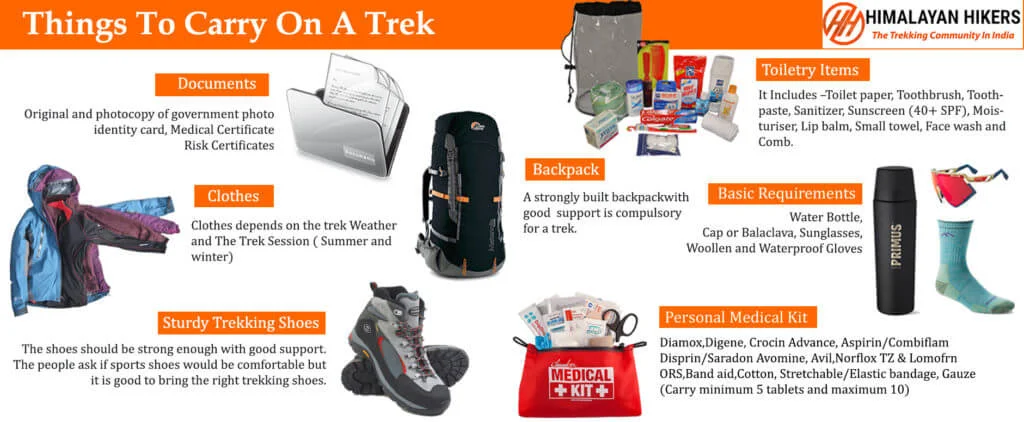
This is a basic packing list for trekking to Bijli Mahadev Temple.
Essentials
- Backpack (20–30L)
- Water (1.5–2 liters)
- Snacks (energy bars, fruits)
- Cash
Clothing
- Trekking clothes
- Light jacket
- Raincoat
- Extra socks
Footwear
- Good trekking shoes
Weather Protection
- Sunscreen
- Sunglasses
- Cap
Safety & Utility
- Phone
- Power bank
- Torch
- First aid kit
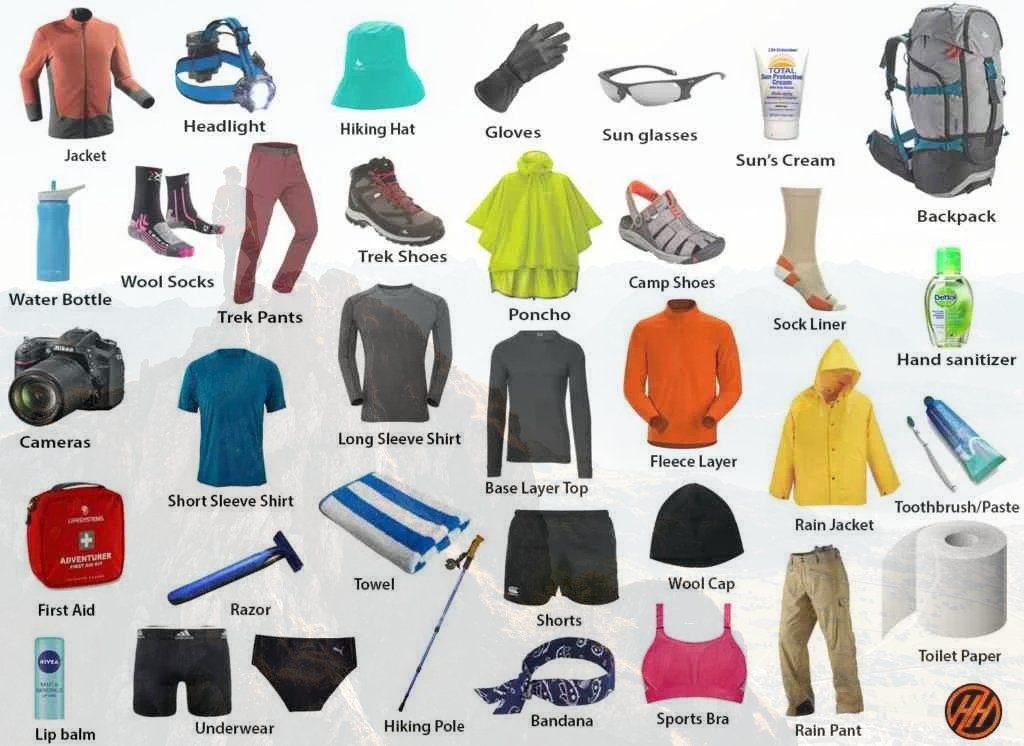
This guide will help you prepare for a safe and enjoyable trek.
Physical Preparation
- Walk or jog daily (2–4 km)
- Practice stairs climbing
- Do light exercises like squats and stretching
Pack Smart
- Carry only essential items
- Use a comfortable backpack
- Keep water and snacks handy
Plan Your Timing
- Start early in the morning
- Avoid afternoon heat
- Keep 2–3 hours for climbing
Food and Water
- Eat a light meal before starting
- Carry snacks like dry fruits
- Drink water regularly
Safety Tips
- Wear good grip shoes
- Carry a power bank and first aid
- Do not trek alone if inexperienced
Trekking with Himalayan Hikers ensures a safer and more organized experience in the mountains.
Experienced Guides
- Professional trek leaders with mountain experience
- Knowledge of routes and weather conditions
- Support in case of emergencies
Medical Safety
- First aid kits available during the trek
- Guides trained in basic medical assistance
- Quick response in case of injury or sickness
Proper Planning
- Well-planned itinerary
- Safe camping locations
- Regular weather monitoring
Group Safety
- Trekking in groups reduces risk
- Better coordination and communication
- No one gets left behind
Equipment and Support
- Quality equipment provided
- Support staff available throughout
- Guidance at every stage of the trek
No inclusions found.
No exclusions found.
Important Note
No important note.
Map not available for this trek.
No FAQs available for this trek.


