
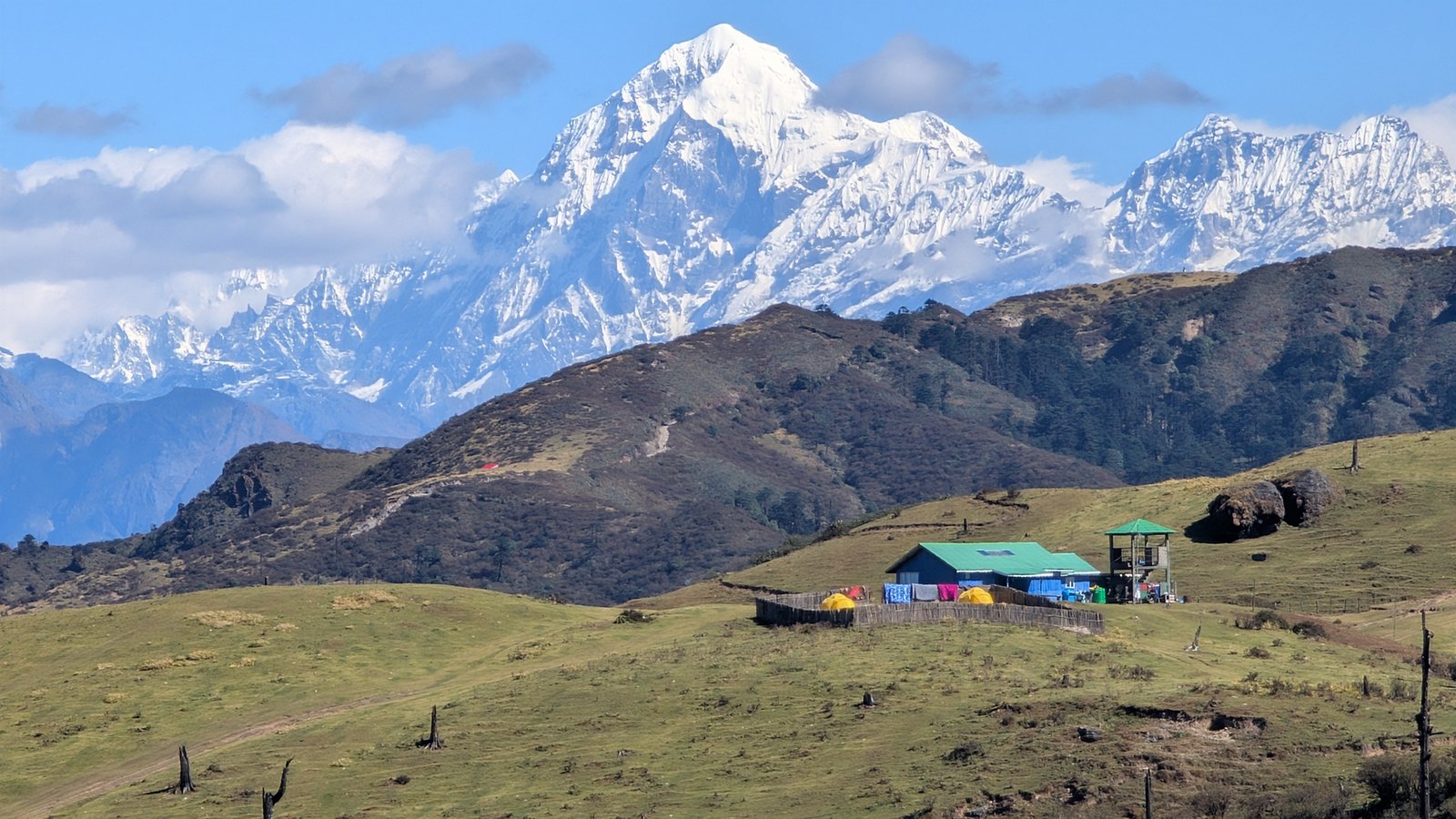


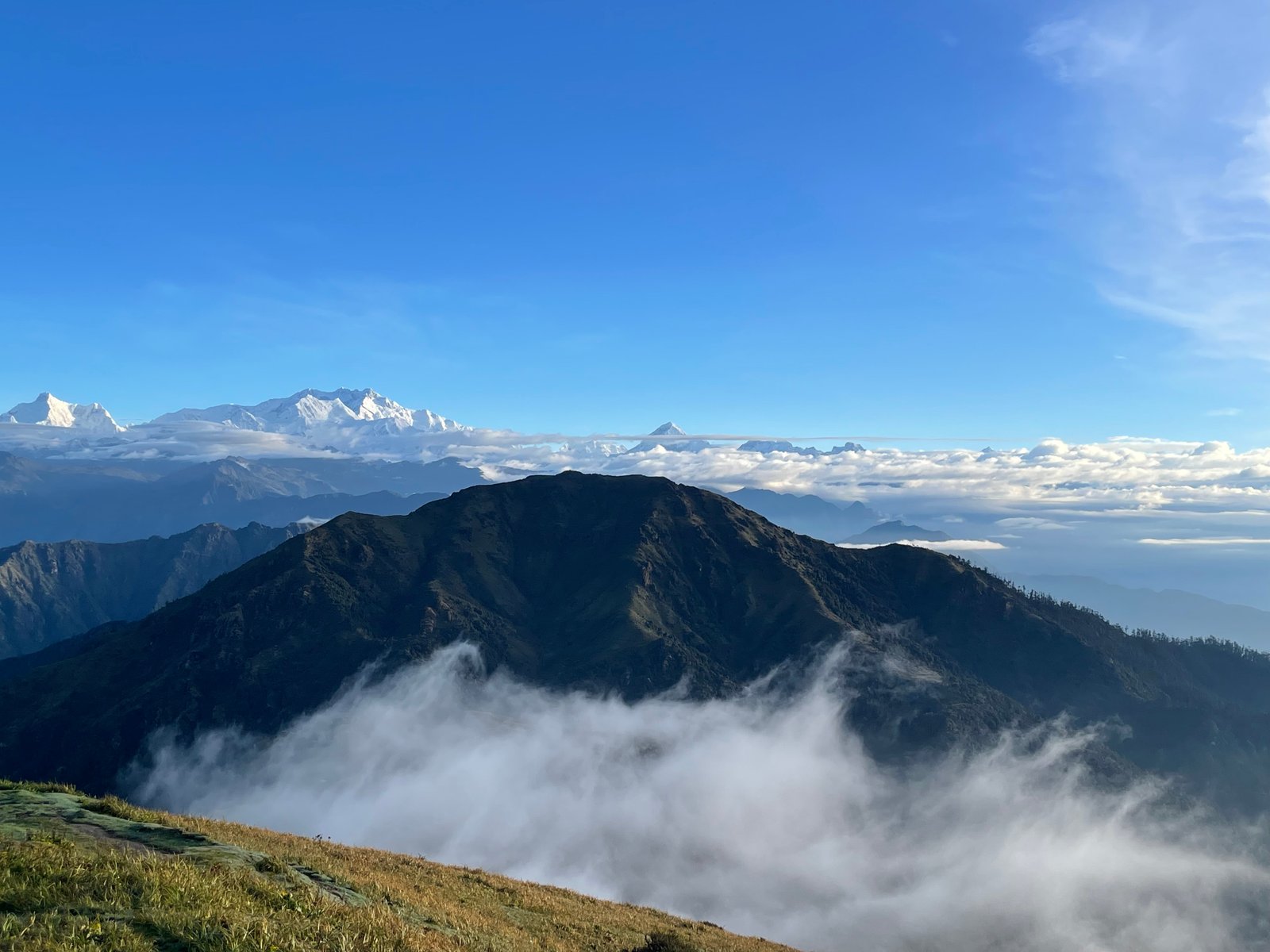
Prospect over the nurturing trails of Singalila National Park. Villages of Samanden and Gorkhey seem painted across nature’s canvas, such is their beauty. Come across varied terrains focusing on the delight they provide. High altitude ridge situated at a towering height of 3636 m. Get a panoramic view of many snow-covered peaks like Kanchenjunga, Kumbhkarna, Shimbho and more. Border crossing experience with two distinct lands yet extremely similar cultures. Highly welcoming people of Nepal would make trekkers yearn for more.
Some of the Trek Highlights
The route to the peak of Sandakphu follows the Singalila Ridge and passes along the border between India and Nepal. Although the Everest peaks are only seen from Sandakphu, from the beginning, the Kangchenjunga fury is with the walkers. The trek starts from Kopidana, a lesser-used, beautiful basecamp village and ends at Sepi.
This long walk, which can be completed in a few days and includes several campsites, provides a stunning view of the endless horizon along with one-of-a-kind sunsets and sunrises.
The Sandakphu journey passes through Singalila National Park, which is home to a diverse range of flora and fauna. This moderately difficult climb offers a variety of experiences while exploring the richness and beauty of long-range scenic panoramas. It is suitable for both novice and expert hikers. The trail becomes greener and more picturesque as it progresses.
Things to Look Out For
- The trek is certain to provide unrivalled feelings of accomplishment
- Sunrise from Tumling is one of the best Himalayan sunrises
- Countless photogenic peaks make this trek ideal for aesthetic photography
- Trail through old yet dynamic villages of Nepal with exposure to local culture
- Majestic sight of the Sleeping Buddha under the glistening rays of dawn
Views During the Journey
- Mesmerizing on-and-off views of Kanchenjunga ranges while trekking to Tumling
- On clear days, witness peaks like Lhotse, Everest, Nuptse, Baruntse, Chamling, Chomolonzo, Machapucchare, extending to the Annapurna range
- Trekkers can trace the Goecha La cleft among the frontline peaks
- Pass by a black water lake near a town, prayer flags fluttering, a small waterfall, and a Buddhist temple radiating calm serenity
- Discover the magnificent Sri River, locally known as Sri Khola
Nearby Places to Visit
- Manebhanjan – a small town near Darjeeling with houses and camps for trekkers
- Chitrey – adorned with lush greenery, pines, firs, and beautiful monasteries
- Tonglu – a magical milestone with Tonglu Lake offering a unique experience
- Bikeybhajan – known for rugged terrain and challenging ascents before Sandakphu
Altitude Covered in Sandakphu Trek
Kopidana – 6400 ft
Tumling – 9600 ft
Kalapokhri – 10,400 ft
Sandakphu – 12,000 ft
Sepi – 6234 ft
Sandakphu Trek Complete Guide
Our mission has always been to ensure that no trekker steps into the Himalayas without the right perspective. A trek is not just a checklist of summits; it is a serious commitment to the outdoors. Having the right information is what separates a reckless climb from a soulful journey.
This section serves as your definitive manual for the Sandakphu Trek. We have distilled years of mountain experience and real-time feedback into this guide to give you a clear, honest picture of the trail.
We provide this depth of information because we want you to be more than just a visitor—we want you to be a prepared, responsible trekker who respects the mountains as much as we do.
Day 1 – Drive from NJP to Kopidana (6400 feet) (84 km) (5 hours)
Day 2 – Kopidana to Tumling (9700 feet) (11 km) (5–6 hours)
Day 3 – Tumling to Kalapokhri (10,400 feet) (14 km) (6–7 hours)
Day 4 – Kalapokhri to Sandakphu (11,929 feet) (6 km) (3–4 hours)
Day 5 – Sandakphu to Sepi (6230 feet) (15 km) (6–7 hours)
Day 6 – Sepi to NJP (140 km) (5 hours)
Day 1
Day 2
Day 3
Day 4
Day 5
Day 6
Day 1 – NJP to Kopidana
Altitude: NJP (374 ft / 114 m) → Kopidana (6,400 ft / 1,951 m)
Altitude Difference: 6,026 ft / 1,837 m
Drive Distance: 84 km
Drive Duration: Approx. 5 hours
Stay: Overnight at a teahouse or guesthouse in Kopidana
Meal: Dinner
The journey begins from New Jalpaiguri (NJP) Railway Station. On the way, trekkers pass through scenic tea gardens and charming villages of Darjeeling and Sikkim, including Sukhipokhri and Rimbik. Kopidana, the stop for the day, is a peaceful village surrounded by lush greenery, ideal for resting and acclimatizing after the drive.
Day 2 – Kopidana to Tumling
- Altitude: Kopidana (6,400 ft / 1,951 m) → Tumling (9,700 ft / 2,957 m)
- Altitude Difference: 3,300 ft / 1,006 m
- Trek Distance: 11 km
- Trek Duration: Approx. 5–6 hrs
- Stay: Overnight at teahouse in Tumling
- Meal: Breakfast, Lunch, Dinner
Today’s trek begins through dense rhododendron and oak forests, with occasional glimpses of Kanchenjunga. The trail is moderately steep and offers stunning mountain views. Tumling, a small Himalayan hamlet, provides cozy teahouses where trekkers can relax after the day’s journey.
Day 2 – Kopidana to Tumling
Altitude: Kopidana (6,400 ft / 1,951 m) → Tumling (9,700 ft / 2,957 m)
Altitude Difference: 3,300 ft / 1,006 m
Trek Distance: 11 km
Trek Duration: Approx. 5–6 hrs
Stay: Overnight at a teahouse in Tumling
Meal: Breakfast, Lunch, Dinner
Today’s trek begins through dense rhododendron and oak forests, with occasional glimpses of Kanchenjunga. The trail is moderately steep and offers stunning mountain views. Tumling, a small Himalayan hamlet, provides cozy teahouses where trekkers can relax after the day’s journey.
Day 4 – Kalapokhri to Sandakphu
Altitude: Kalapokhri (10,400 ft / 3,170 m) → Sandakphu (11,929 ft / 3,636 m)
Altitude Difference: 1,529 ft / 466 m
Trek Distance: 6 km
Trek Duration: Approx. 3–4 hrs
Stay: Overnight stay at a teahouse in Sandakphu
Meal: Breakfast, Lunch, Dinner
Today’s short but steep climb leads to the highest point of West Bengal – Sandakphu. From here, trekkers can enjoy panoramic views of the Himalayan range, including Mt. Everest, Kanchenjunga, Lhotse, and Makalu. Evening at Sandakphu is ideal for sunset photography and acclimatization.
Day 5 – Sandakphu to Sepi
Altitude: Sandakphu (11,929 ft / 3,636 m) → Sepi (6,230 ft / 1,899 m)
Altitude Difference: 5,699 ft / 1,737 m
Trek Distance: 15 km
Trek Duration: Approx. 6–7 hrs
Stay: Overnight stay at a teahouse in Sepi
Meal: Breakfast, Lunch, Dinner
Today involves a long but scenic descent through forests, tea gardens, and quaint villages. Sepi is an impressive village surrounded by greenery, with the Srikhola spring adding charm to the landscape. Trekkers can relax here and enjoy the peaceful environment after the tiring trek.
Day 6 – Sepi to NJP
- Altitude: Sepi (6,230 ft / 1,899 m) → NJP (374 ft / 114 m)
- Altitude Difference: -5,856 ft / -1,785 m
- Drive Distance: 140 km
- Drive Duration: Approx. 5 hrs
- Meal: Breakfast, Lunch
The journey back to New Jalpaiguri begins after breakfast. Trekkers will drive through scenic villages and valleys, with optional stops for refreshments in Siliguri. Arrival at NJP marks the end of the trek, giving trekkers time to relax after the long journey.
Difficulty Level
Even though the ridges are relatively average in elevation, a reasonable level of physical fitness is still recommended. Trekkers are advised to physically prepare themselves prior to this trek. The trek does not involve high ascents or steep descents, but trekkers will have to cover long distances every day.
Any medical assistance required will be provided at any point during the journey; however, trekkers must consult their medical professional before beginning any trek. We also strongly advise trekkers to learn about altitude sickness and notify our team immediately if any symptoms appear.
Is It Safe?
Set amidst lower altitudes, safety concerns regarding the Sandakphu Trek among beginner trekkers are understandable. To address these concerns, we confirm that the teams of Himalayan Hikers have calculated all possible contingencies should anything go off schedule.
Our professionals strive to provide the best trekking experience possible. A collaborative approach, relaxed mindset, and respectful communication with fellow trekkers are highly appreciated.
Weather Conditions
Weather conditions depend on the time of year trekkers choose to travel. Easier trails and a less confusing journey make this trek ideal during autumn, winter, and spring. The weather during these seasons is generally favorable for trekking, offering safer trails and comfortable elevations.
Best Time to Visit Sandakphu Trek
The Sandakphu Trek is best experienced between October and April, when the weather conditions are most suitable for trekking. During this period, the skies are generally clear, offering stunning views of the Himalayan peaks.
Daytime temperatures usually range between 8°C to 15°C, making it comfortable for trekking, while nights can become quite cold, often dropping to near or below freezing temperatures. Trekkers should be well-prepared for these variations in climate.
Key Points of Sandakphu Trek
- The difficulty level of the trek is moderate, suitable for beginners with good fitness.
- Proper physical training and body conditioning are essential before the trek.
- High-quality gear and warm clothing are necessary to handle cold and sub-zero temperatures.
- Trekking shoes are the most important piece of equipment and should be comfortable with good grip.
- High altitude requires proper acclimatization to avoid health issues.
- The trek offers beautiful landscapes, so carrying a good camera with extra battery backup is recommended.
- The backpack weight should ideally not exceed 8–10 kg for a comfortable trekking experience.
How to Reach – Connectivity and Transactions
Connectivity along the Sandakphu Trek route can be limited and unpredictable. Trekkers are advised to complete all important work, communication, and online transactions in advance before starting the journey.
- Walkie-talkies may be provided to trekkers for communication during emergencies.
- Mobile networks may not work consistently in remote areas.
- Inform family or contacts in advance about limited connectivity during the trek.
ATM and Cash Availability
- The last reliable ATMs are available near New Jalpaiguri Junction (NJP) and Bagdogra Airport (IXB).
- ATMs in remote areas may not function properly or may run out of cash.
- Trekkers are strongly advised to carry sufficient cash for the entire trek.
How to Reach Sandakphu Trek
If you are traveling from a metropolitan city in India or from abroad, your first goal should be to reach New Jalpaiguri Junction (NJP) or Bagdogra Airport (IXB), which serve as the main entry points for the trek.
- New Jalpaiguri Junction and Bagdogra Airport are well connected to major cities across India.
- Trekkers should plan and book their transport in advance for a smooth journey.
Important Travel Notes
- No fixed transportation schedules are provided before reaching NJP or Bagdogra Airport.
- Timings and availability may change due to weather or local conditions.
- Trekkers are advised to contact the support team via call or email for guidance.
Pickup and Reporting
- Pickup services are arranged from fixed points such as airports, railway stations, and bus stands.
- Trekkers should reach the pickup location at least 2 hours in advance.
- In case of delays, inform the team as early as possible.
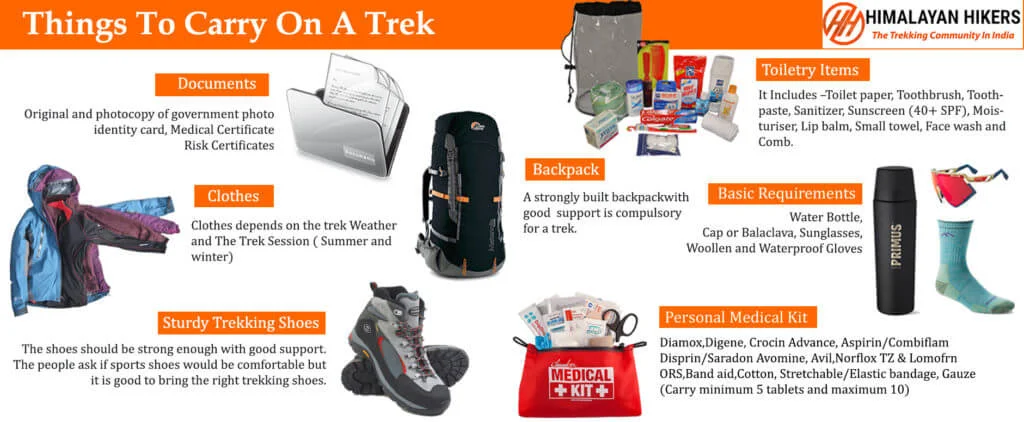
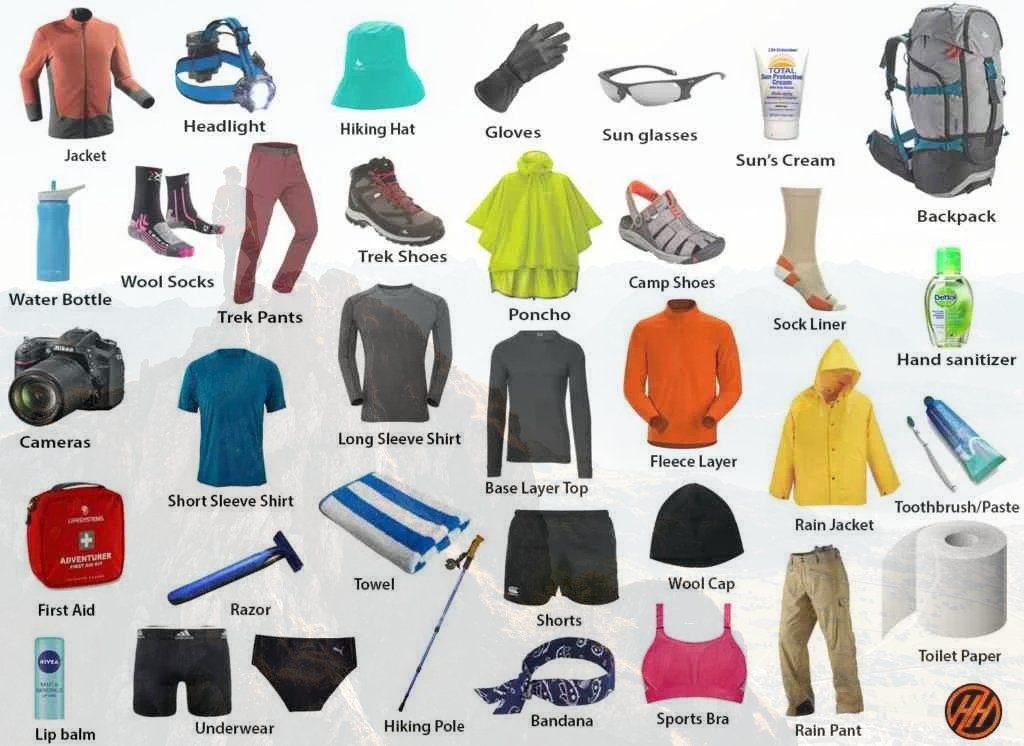
Sandakphu Trek – What to Pack (Things to Carry)
Clothing
- Thermal base layers – 1 to 2 pairs (top & bottom)
- Fleece jacket or down jacket – 1
- Waterproof and windproof jacket – 1
- Trekking pants – 2 to 3 pairs
- Quick-dry t-shirts – 3 to 4
- Warm hat – 1
- Gloves – 1 to 2 pairs
- Scarf or buff – 1
- Woolen socks – 3 to 5 pairs
Footwear
- Trekking shoes (water-resistant with good grip) – 1 pair
- Comfortable shoes/sandals (for campsite) – 1 pair
Backpack Essentials
- Backpack (40–50 liters) – 1
- Rain cover for backpack – 1
- Daypack (optional) – 1
Health and Safety
- First aid kit – 1
- Personal medications – as required
- Water bottle (1 liter) – 1 to 2
- Water purification tablets/filter – 1 set
- Sunscreen (SPF 30+) – 1
- Lip balm – 1
- Sunglasses (UV protection) – 1
Accessories
- Trekking poles – 1 pair
- Headlamp/flashlight – 1
- Extra batteries – 1 set
- Power bank – 1
- Charging cables – 1 set
- Camera/mobile – 1
Personal Items
- Toiletries kit – 1
- Towel – 1
- Tissue paper / wet wipes – 1 pack
- Hand sanitizer – 1
- Snacks / energy bars – 5 to 10 (depending on duration)
- Reusable bags – 1 to 2
Documents
- Valid ID proof – 1
- Trek permits – as required
- Travel insurance – 1
How to Prepare for the Goecha La Trek (Week-wise Plan)
| Week | Focus | Preparation Details |
|---|---|---|
| Week 1–2 | Build Basic Stamina | Start with walking or jogging for 20–30 minutes daily. Include light exercises like squats and stretching to improve flexibility and strength. |
| Week 3–4 | Increase Endurance | Increase workout to 40–50 minutes. Add stair climbing or incline walking. Start carrying a light backpack (2–3 kg) during walks. |
| Week 5 | Strength & Practice | Focus on strength training (lunges, planks, step-ups). Go for long walks or short hikes (8–10 km) with a 4–5 kg backpack. |
| Week 6 | Final Preparation | Reduce intensity, continue light walks and stretching. Check gear, ensure shoes are comfortable, and focus on rest and hydration. |
Safety with Himalayan Hikers
Safety is a key aspect of trekking in the Himalayan region. Trekking with experienced Himalayan hikers or professional guides on the Sandakphu Trek ensures a secure, well-organized, and enjoyable journey through remote mountain trails.
Experienced Guides
- Certified and experienced guides with deep knowledge of the Sandakphu route.
- Familiar with local terrain, weather patterns, and trekking conditions.
- Provide continuous support and guidance throughout the trek.
Health and Altitude Safety
- Guides monitor trekkers for any signs of altitude sickness.
- Proper acclimatization and pacing are followed during the trek.
- Immediate assistance is provided in case of health-related issues.
Emergency Support
- First aid kits are carried by guides at all times.
- Trained staff handle basic medical situations effectively.
- Quick coordination for evacuation or medical help if required.
Safe Trekking Practices
- Well-planned itinerary to avoid fatigue and overexertion.
- Use of safe and established trekking routes.
- Regular breaks and proper pace maintained during the trek.
Group Safety
- Trekking in groups improves coordination and safety.
- Reduces the chances of getting lost in forest or mountain trails.
- Encourages teamwork and mutual support among trekkers.
Accommodation: Day 1st accommodation in hotel. Day 2nd to Day 14th accommodation in Tea House.
Permit: All Necessary Trek permit. Transportation: NJP to NJP, Both Way by Flight.
Offloading: 10 kg Offloading facilities for every trekker (we provide duffle bag individually).
Medical Support: Strong Medical kit, Oxygen can, Oximeter.
Safety Equipment: Micro Spike and Gaiter (as per snow condition)
Group Leader: Experienced Trek leader.
Additional Service: Cloakroom room facility available at Lukla.
Food Service: Three time meal include (Breakfast, Lunch and Dinner)
Trek Completion Certificate.
Transport - 4,000 /- INR. NJP to NJP and return by car.
Emergency evacuation and hospitalization charges.
Insurance cost not included. For trekkers aged 50 and above, personal insurance is mandatory (no trek permit will be issued without insurance).
Important Note
Note: You must carry your original Voter and Aadhaar cards with you when traveling Sandakphu Trek.
Note 1: In the event that an extra day is required for the trekking itinerary due to unforeseen weather conditions, government orders, socio political unrest, self-injury or any others illness during trek. Additional cost of ₹3,500/- (Three Thousand Five Hundred Indian Rupees) per day will be incurred. This cost must be paid by the trekkers.
Note 2: In case any trekker is injured or medically not fit to carry out the trek, He or She has to descend, we could be arranged for the same however the trekkers have to bear the expenses for the descend. The same is applicable for someone wiling not to continue the trek.
Map not available for this trek.
The best time to visit Sandakphu is from October to April. During this period, the weather is clear, and trekkers can enjoy stunning views of the Himalayan peaks.
The trek is considered moderate in difficulty. It is suitable for beginners with good physical fitness and basic preparation.
No prior trekking experience is mandatory, but good stamina and basic fitness are required to complete the trek comfortably.
The highest point of the trek is Sandakphu, which stands at an altitude of approximately 3,636 meters (11,929 ft).
Trekkers stay in basic lodges, homestays, or trekking huts along the route. Facilities are simple but comfortable.
Although the altitude is moderate compared to other Himalayan treks, some trekkers may still experience mild symptoms. Proper acclimatization and hydration are important.
Essential items include warm clothing, trekking shoes, backpack, water bottle, first aid kit, snacks, and personal essentials.
Mobile network connectivity is limited and unreliable in many parts of the trek. It is advisable to inform family members in advance.
Yes, the trek is generally safe when done with proper planning or with experienced guides. Following safety guidelines is important.
It is recommended to keep your backpack weight between 8 to 10 kg for a comfortable trekking experience.


